Choose a 31.5- or 32-inch 4K 16:9 monitor if inspecting map labels on a conventional full-screen layout matters most. A 34-inch ultrawide makes more sense if you want horizontal room for references beside the game, provided your game handles 21:9 as you want. For either route, check desk fit and the resolution and refresh rate available through your PC or console connection.
Who each screen suits
Map-detail learners
If you pause to inspect labels, routes and landmarks, a large 4K 16:9 screen lets you prioritise fine detail without choosing an ultrawide layout. BenQ UK and ASUS ROG United Kingdom list 31.5-inch 4K models that illustrate this route.
Panoramic setup users
If you keep a map, notes or a guide beside the game, horizontal desktop space may matter more to you. LG UK lists a 34-inch 21:9 model, though its width and curve make desk fit worth checking.
Fast-play, multi-device gamers
If you learn routes during live matches, check the refresh mode available through your actual PC or console connection. The stated maximum for a monitor is not a promise that every connected device can use it.
What matters when choosing
31.5- or 32-inch 4K 16:9
Choose it when: you want to inspect map detail on a large, conventional full-screen layout.
Bear in mind: 4K places greater demands on graphics hardware than 3440 × 1440 at comparable settings, and 16:9 does not provide the same horizontal desktop width.
34-inch 21:9 ultrawide
Choose it when: space for a map or guide beside the game is central to how you learn.
Bear in mind: a wider desktop does not guarantee a wider in-game view; check the game’s aspect-ratio and interface behaviour, as well as desk fit.
| Concern |
What to check |
Who this matters to |
| Map detail and layout |
Compare resolution, screen size and stated pixel density. Check the frame rate your PC can deliver at the resolution you intend to use. |
If I revisit small labels and landmarks, I want room to inspect them without changing the game’s familiar full-screen layout. Around 33% of consumers put map detail and layout first. |
| Horizontal space |
Check the game’s 21:9 support and interface layout. Measure the available desk width and depth. |
Keeping a route guide beside the game would help me more than prioritising fine detail alone. For around 27% of consumers, extra horizontal space is the primary concern. |
| Refresh and compatibility |
Match the intended resolution and refresh rate to the monitor input, cable and PC or console output mode. |
When I learn a route during a fast match, I need the display mode to work with the device I actually use. Smooth play and connection compatibility come first for around 27% of consumers. |
| HDR and room setup |
Look for a named VESA DisplayHDR or DisplayHDR True Black tier if HDR matters. Check room lighting, positioning and the inputs you need. |
In a bright room or a multi-device setup, I need a screen I can position and connect comfortably rather than relying on an HDR label. Around 13% of consumers prioritise HDR and setup needs. |
Buying pitfalls
-
Choosing by diagonal size alone
A 32-inch 4K 16:9 screen and a 34-inch ultrawide have different resolutions and shapes, despite both being large monitors.
Compare the exact resolution and aspect ratio, then measure the space needed for the screen and stand.
-
Assuming every device reaches the advertised refresh rate
The usable mode depends on the monitor input, cable, PC or console output and the game’s frame rate.
Check the monitor’s input-specific modes against the device you intend to connect.
-
Treating any HDR label as equivalent
An unqualified HDR description does not establish the same performance as a named certification tier. VESA sets performance requirements for its DisplayHDR certifications.
If HDR influences your choice, check the exact VESA DisplayHDR or DisplayHDR True Black certification for that model.
-
Leaving old-monitor disposal until delivery day
A large monitor can be awkward to move, so the seller’s collection or take-back arrangements may affect your replacement plans.
Ask the seller how an old monitor can be handed over and keep it safe until you have arranged disposal.
Brands to consider
LG UltraGear
LG UK lists the 34GS95QE-B as a 34-inch 21:9 OLED option for a wide-screen setup.
- LG UK specifies 3440 × 1440, 240 Hz and an 800R curve for this model.
- Check whether your game handles 21:9 as you want and whether the curved screen fits your desk.
BenQ MOBIUZ
BenQ UK lists the 31.5-inch EX321UX as a 4K 16:9 Mini LED option.
- BenQ UK specifies 3840 × 2160, 144 Hz, DisplayHDR 1000 and KVM functionality for the EX321UX.
- Check the resolution and refresh mode available through the connection you plan to use.
ASUS ROG
ASUS ROG United Kingdom lists the 31.5-inch PG32UCDM as a 4K QD-OLED option with a stated 240 Hz maximum.
- ASUS specifies HDMI 2.1, DisplayPort 1.4 DSC and USB-C power delivery for this model.
- Follow the model’s OLED-care guidance if you expect to leave static maps on screen for extended periods; panel-care features are not a guarantee against wear.
Acer Predator
Acer United Kingdom lists the 32-inch Predator X32 FP as a 4K Mini LED option.
- Acer specifies DisplayHDR 1000, up to 160 Hz, four HDMI 2.1 ports and KVM for the X32 FP.
- Its stated connection modes are specific to this model; check the mode for your own device and input.
Joybuy monitor choices
These choices cover 34-inch ultrawide screens for horizontal space and large 4K screens for map detail. Compare each model’s exact display format and connection modes against your game and device before choosing.
 No image available
LG UltraGear 34GX900A-B 34-inch OLED gaming monitor
Consider this large-screen option if horizontal room for map references matters to you. Its product name identifies a WQHD OLED display with a stated 240 Hz refresh rate; check your game’s ultrawide layout and the display mode available from your device.
If you leave static map content on screen for long periods, follow the model’s OLED-care guidance.
View on Joybuy
 No image available
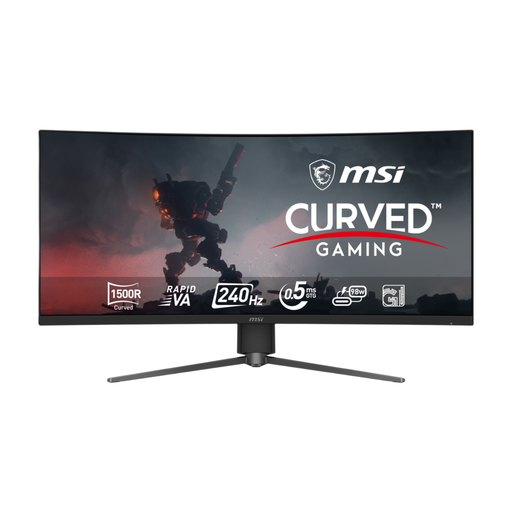
MSI MPG 346CQRF X24 34-inch UWQHD monitor
This curved, wide-screen model is worth considering if you want map references beside play. The product name specifies 240 Hz, Rapid VA and Adaptive Sync; check your game’s ultrawide interface behaviour and the refresh mode available through your connection.
View on Joybuy
 No image available
Lenovo R34w-30 34-inch UWQHD gaming monitor
Consider this model if a large, wide canvas is your main reason for changing screens. Confirm its exact pixel resolution, the input-specific refresh mode and how your game presents its interface on an ultrawide display.
View on Joybuy
 No image available
Dahua 32-inch 4K 165 Hz curved OLED gaming monitor
This is a large 4K option to consider when map detail takes priority over ultrawide desktop space. The product name specifies 3840 × 2160 and 165 Hz; check the available mode for your PC or console. If HDR is important, confirm whether the model has a named VESA certification rather than treating its HDR400 wording as one.
View on Joybuy
 No image available
Samsung Odyssey Gaming OLED G8 LS32DG802SUXXU 32-inch Ultra HD monitor
Consider this large Ultra HD screen if map detail is your priority, but confirm its aspect ratio before choosing it for a conventional full-screen layout. Check the resolution and refresh mode supported by your intended input and follow the manufacturer’s OLED-care guidance for extended static-map use.
View on Joybuy
Common questions
Is a 34-inch ultrawide automatically better for learning multiplayer maps?
No. Choose an ultrawide if horizontal space helps your setup and your game handles 21:9 as you want; choose a large 4K 16:9 screen if inspecting detail within a conventional full-screen layout matters more.
Can any PC or console use a monitor’s maximum refresh rate?
No. The available resolution and refresh combination depends on the monitor input, cable and connected device. For the Predator X32 FP specifically, Acer states 4K at 120 Hz through HDMI 2.1 for PS5 and Xbox Series X, and 144 Hz on PC; check the manual for the model you choose.
Is an HDR label enough to compare gaming monitors?
No. If HDR affects your decision, check for the exact VESA DisplayHDR or DisplayHDR True Black certification and tier. An unqualified HDR label does not establish that a monitor meets those certification requirements.
What should I do with an old monitor when I replace it?
Arrange an appropriate electrical-waste handover rather than treating the old monitor as ordinary household rubbish. Ask the seller about its take-back or collection process before ordering, particularly if transporting a large screen will be difficult.


