SDR timeline reviewers
Editors checking cuts, framing and graphics for standard SDR delivery who need a 4K workspace, stated Rec.709 or BT.709 support and a comfortable desk setup.


For mainly SDR timeline review, start with a 4K monitor that explicitly supports Rec.709 or BT.709 and fits your desk and computer connections. If the screen informs client approval or grading, plan for ongoing colour verification; consider specialised HDR features when your footage or delivery workflow requires them. A wide colour gamut or factory calibration report alone does not establish continuing accuracy.
Editors checking cuts, framing and graphics for standard SDR delivery who need a 4K workspace, stated Rec.709 or BT.709 support and a comfortable desk setup.
Editors whose display informs grading, client approval or repeatable delivery decisions, making calibration and verification part of the workflow.
Creators inspecting HDR footage or deliverables who need the relevant HDR formats and a display setup suited to that work.
Decide whether the monitor is chiefly for SDR review, repeatable colour decisions or HDR inspection before comparing screen size and connections.
Choose when: You mainly check cuts, framing and SDR output in Rec.709 or BT.709.
Bear in mind: A stated colour-space specification or factory report does not verify your complete display setup over time.
Choose when: Client approval or grading calls for regular measurement and repeatable presets.
Bear in mind: Calibration features still require a defined delivery standard and verification of the signal path.
Choose when: You need to inspect footage or deliverables in specified HDR formats.
Bear in mind: Peak brightness alone cannot establish whether an HDR monitoring workflow is suitable.
| Concern | What to check | Who this matters to |
|---|---|---|
| SDR colour consistency | Check the exact model for Rec.709 or BT.709 support, then establish how you will verify the active display setup. | When SDR colour affects delivery, I need a suitable viewing mode and repeatable results. Around 36% of consumers put SDR colour consistency first. |
| Timeline workspace | Compare 27-inch and 31.5–32-inch 4K screens at your desk distance, including the stand adjustment you need. | I want the timeline, preview and controls to remain comfortable to view together. For around 29% of consumers, usable workspace is the primary concern. |
| Laptop and desk setup | Match the computer’s video output and charging requirements to the monitor’s ports and power-delivery rating. | If I edit from a laptop, I want the connection and screen position to work with my desk routine. Around 21% of consumers place that setup first. |
| HDR inspection | Confirm the required HDR formats, computer output and calibration workflow; assess brightness specifications in that context. | I need to inspect an HDR version, not just view it on a 4K screen. HDR capability is the leading need for around 14% of consumers. |
Resolution describes the pixel canvas, not the monitor’s SDR colour mode, calibration workflow or HDR format support.
For SDR review, check Rec.709 or BT.709 support on the exact model. For HDR work, check the formats and monitoring workflow you actually use.
A factory report does not establish how an individual monitor, computer output and active mode will perform throughout its use.
Where colour decisions are consequential, plan to verify the whole display chain and repeat that check as needed.
That workflow may also call for a compatible measurement device or a calibration service.
Monitor power-delivery ratings and laptop video and charging requirements vary.
Compare the monitor’s connection and stated wattage with your laptop and cable requirements before relying on a single connection.
You may still need a suitable cable, dock or separate laptop charger.
A replaced monitor is waste electrical equipment, so disposal is part of planning a replacement.
GOV.UK says waste electrical products can go to a local household waste recycling centre. You can also ask the seller about an applicable take-back arrangement.
The DesignVue PD3225U illustrates a 31.5-inch 4K route for SDR editing alongside laptop-based desk work.
The PA32UCXR is an HDR-focused 32-inch 4K Mini-LED model for workflows that require defined HDR formats.
The ColorEdge CG2700X is a 27-inch 4K option for editors organising work around repeatable colour management.
The U3225QE represents a large 4K hub-monitor route for an SDR timeline desk centred on a laptop.
These 4K displays offer different screen formats and connections for reviewing a timeline. Check the exact model’s Rec.709 or BT.709 support before making SDR colour decisions, and assess HDR or calibration claims against your own workflow.
 No image available
Consider this large-screen model if HDR inspection is part of your timeline workflow; confirm the required HDR format and calibration process before relying on it for colour decisions.
The listed variant is a 32-inch 4K Mini-LED display with Dolby Vision, HDR10, 120 Hz refresh rate and Thunderbolt 3. Check its Rec.709 or BT.709 mode for SDR work.
 No image available
This large 4K screen is an option for arranging a timeline and preview; check its SDR picture modes and your calibration workflow before using it for delivery decisions.
The listed model has a 4K 240 Hz and Full HD 480 Hz dual mode, plus DisplayPort and HDMI 2.1 connections.
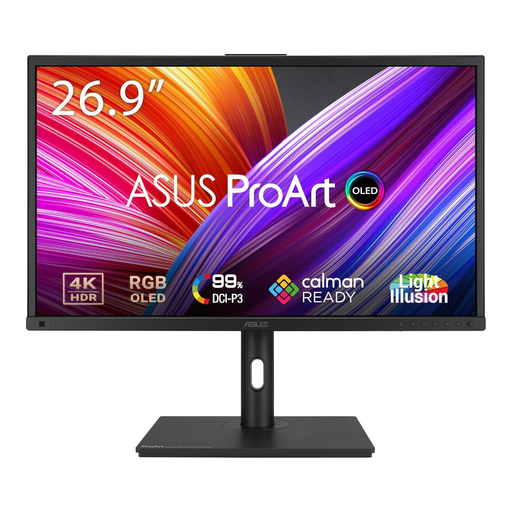 No image available
Consider the 27-inch format when a smaller screen suits your desk. For SDR review, confirm the exact Rec.709 or BT.709 mode and how you will check colour consistency over time.
The listed variant is an OLED 4K UHD monitor.
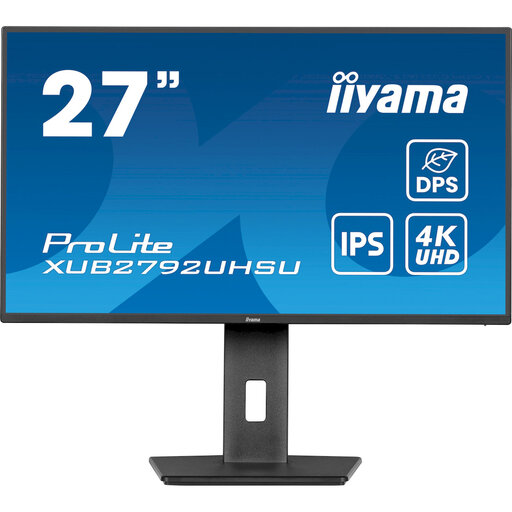 No image available
This 27-inch display may suit a compact timeline desk. Check Rec.709 or BT.709 support and the connections your computer needs before choosing it for SDR review.
The listed variant is a 4K UHD monitor; screen size and resolution alone do not establish colour-management suitability.
 No image available
The large 4K format may suit a desk-based timeline and preview. Confirm its SDR picture mode before making colour decisions, and match its USB-C charging rating to your laptop.
The listed variant has a curved OLED panel, 165 Hz refresh rate and USB-C with 65 W power delivery.
Yes, an explicit Rec.709 or BT.709 specification is a useful selection check for SDR review. BenQ UK lists 100% Rec.709 for the PD3225U, while Dell UK lists 100% BT.709 for the U3225QE; use the relevant mode and verify the display setup when colour affects delivery.
A factory report alone does not establish continuing accuracy across your monitor and computer output path. For recurring colour-critical work, plan for measurement and re-verification; DisplayCAL describes verification measurements for the display chain, and EIZO specifies an integrated self-calibration sensor on the CG2700X.
Only if the laptop, monitor connection and cable meet the required video and charging specifications. BenQ UK specifies 85 W power delivery for the PD3225U, while Dell UK specifies up to 140 W for the U3225QE; neither rating establishes compatibility with every laptop.
Take it to an appropriate electrical-waste collection route rather than putting it in general household waste. GOV.UK says waste electrical products can be taken to a local household waste recycling centre; ask your seller whether a take-back arrangement applies to your replacement purchase.