Detail-first space-sim players
If small cockpit displays and lunar terrain are your priorities, start with a 32-inch 4K format and check whether your GPU can run the simulator at settings you find acceptable.


A 32-inch 4K monitor is a starting point if terrain detail and cockpit instruments matter most in a conventional single-screen view. Choose a 34-inch ultrawide instead if your simulator supports 21:9 and you value more horizontal cockpit space. In either case, check what your device can output and the frame rate it can sustain; the monitor’s refresh-rate specification cannot make the game produce more frames.
If small cockpit displays and lunar terrain are your priorities, start with a 32-inch 4K format and check whether your GPU can run the simulator at settings you find acceptable.
If you want more horizontal space on one screen, consider a 34-inch ultrawide after checking how your simulator handles 21:9 and positions its interface.
If the same screen must serve detailed simulations and faster games, a dual-resolution mode may be useful. Dell UK lists the Alienware AW2725QF with 4K at 180Hz and Full HD at 360Hz; check which mode you would actually use.
For a single-screen lunar-simulation setup, decide whether detail, motion, viewing width or a manageable GPU load matters most, then check the intended game and source device.
| Concern | What to check | Who this matters to |
|---|---|---|
| Terrain and instrument detail | Compare native resolution and screen size; check in-game performance and whether the cockpit interface remains readable. | If small instruments and distant terrain are my priority, I want enough detail without making the simulator too demanding for my PC. Roughly 37% of consumers would put detail first. |
| Smooth motion | Check the game’s frame rate at your chosen resolution and the refresh and variable refresh rate modes available through your connection. | During landing manoeuvres and faster games, I care about motion my device can actually deliver. Around 27% of consumers would prioritise that responsiveness. |
| Cockpit width | Confirm 21:9 support, field-of-view and interface behaviour, and whether the screen fits your desk. | With room for only one monitor, I would rather see more of a compatible simulator’s cockpit across the screen. About 18% of consumers would make horizontal viewing space their primary need. |
| GPU load | Compare expected performance at 2560 × 1440 and 3840 × 2160; confirm your device’s supported output modes. | If my hardware struggles at 4K, I would accept less fine detail to keep the simulation practical to run. Roughly 18% of consumers would put that hardware constraint first. |
A 240Hz monitor can refresh at that rate, but it cannot display unique frames the PC has not produced. Monitor refresh rate and game frame rate are not the same thing.
Check the intended simulator on your hardware at your target resolution before treating a higher refresh-rate mode as a priority.
A 21:9 screen is useful for this setup only if the simulator handles the aspect ratio and places its cockpit interface acceptably.
Check the specific game’s current aspect-ratio, field-of-view and interface settings before choosing a 3440 × 1440 display.
LG UK advises that a static image left on an OLED monitor for a long time may cause faint marks. A persistent instrument panel or paused menu makes that relevant to lengthy simulation sessions.
Follow the monitor maker’s panel-care instructions and avoid leaving static screens displayed unnecessarily.
Dell UK lists distinct Alienware formats for different one-monitor priorities, rather than one configuration that suits every simulation setup.
LG’s UK range includes large OLED ultrawide and dual-mode options for buyers who have space for them.
Samsung UK describes the Odyssey OLED G8 G80SD as a 32-inch 4K QD-OLED option with smart features.
These choices cover 4K detail, a smaller dual-mode display and a wider single-screen format. Match each monitor to your simulator’s interface and your device’s output before deciding.
 No image available
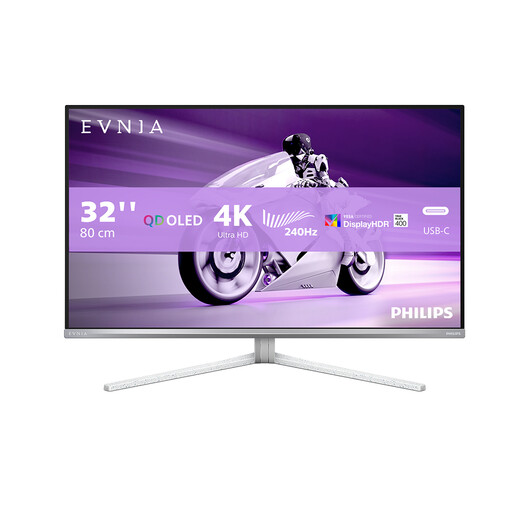
Consider this 4K model if a conventional single-screen view and fine scene detail are priorities. Check the exact refresh-rate mode and what your source device can deliver before buying.
 No image available
Its stated 4K 240Hz and Full HD 480Hz modes offer different priorities for simulation and faster games. Check that your device supports the mode you want and that cockpit text is comfortable to read on a 27-inch screen.
 No image available
This is another 4K option for a single-screen terrain and cockpit view. Check your simulator’s frame rate at 4K and confirm adaptive-sync compatibility if you need it.
 No image available
Consider its wider format if your simulator supports the intended cockpit view on one screen. Check interface placement, desk space and device output; avoid leaving static displays on the OLED panel for extended periods.
 No image available
Its UHD format makes it relevant when fine detail on one screen is the priority. The listed refresh-rate figures conflict, so confirm the exact model’s supported modes and your device’s output before choosing it for motion performance.
No. The monitor’s refresh rate does not determine how many frames the game produces. Check your PC’s frame rate in the intended simulator at the resolution you plan to use.
It can use supported 1440p output modes, but the connected display must support the relevant settings. PlayStation says the PS5 can test 1440p SDR or HDR output at 60Hz or 120Hz and variable refresh rate; use the console’s screen and video settings to test the display you intend to connect.
Avoid leaving a fixed cockpit interface or paused menu on screen unnecessarily. LG UK says a static image displayed for a long time may cause faint marks on an OLED monitor and recommends using its Image Cleaning function as instructed.
Check your retailer’s electrical-equipment take-back arrangements or your local authority’s electrical-waste service. GOV.UK describes waste electrical and electronic equipment measures as supporting recovery, reuse and recycling rather than disposal with ordinary household waste.