Hosts matching pasta to a sauce
You have a dish in mind and want the 500g pack to suit it, whether you are serving a spaghetti-based meal, a thick sauce or a pasta bake.


Choose the 500g pasta shape to suit the dish: spaghetti for a meal built around long strands and sauce, or tubes such as rigatoni and penne for thicker sauces and bakes. If someone needs gluten-free pasta, choose a specifically labelled pack and check its current ingredients and allergen information. Plan the number of packs around your portions and the rest of the menu rather than treating 500g as a fixed guest count.
You have a dish in mind and want the 500g pack to suit it, whether you are serving a spaghetti-based meal, a thick sauce or a pasta bake.
You need to distinguish standard wheat pasta from a specifically labelled gluten-free option and check the exact pack before serving guests.
You want to work out whether one 500g pack covers the diners or whether the menu calls for additional packs.
For a world food night, settle any dietary requirements before matching the pasta to the recipe and deciding how many packs to use.
| Concern | What to check | Who this matters to |
|---|---|---|
| Shape and sauce | Choose long strands for a spaghetti-based dish or tubes such as rigatoni and penne for a thicker sauce or bake. ASDA describes its rigatoni for thick, creamy sauces; Marks & Spencer positions its penne for bakes and ragù. | If the planned dish centres on a particular sauce or cooking method, the pasta shape needs to fit that recipe. About 42% of consumers put that match first. |
| Dietary suitability | Read the ingredients and allergen statement on the exact pack. ASDA lists wheat in its standard spaghetti and labels its Free From spaghetti gluten-free. | When serving someone who needs gluten-free pasta, a familiar shape is not enough: the specific pack must meet their requirements. For about 33% of consumers, dietary suitability is the primary concern. |
| Portions and packs | Check the pack’s dry-portion guidance against the guest count and whether pasta is the main dish. ASDA describes its 500g standard spaghetti as six servings using 75g dry pasta per serving. | If I am cooking for a group, I need to know whether one pack covers the intended portions without assuming everyone will eat the same amount. Roughly 25% of consumers prioritise pack planning. |
The standard wheat pasta and gluten-free spaghetti described by ASDA have different ingredients; the same pack size does not make them interchangeable.
Choose a specifically labelled gluten-free product when required, then read the current ingredients and allergen information on that pack.
Spaghetti gives a meal long strands, while ASDA describes its ridged rigatoni for thick, creamy sauces and Marks & Spencer positions penne for pasta bakes.
Decide whether the recipe calls for strands or tubes before choosing a pack.
ASDA’s six-serving guidance for its 500g standard spaghetti uses a 75g dry portion. Your required quantity may differ with the menu and intended portions.
Count the diners and decide whether pasta is the main dish before settling on one pack or more.
Ingredients and allergy information can change, which matters particularly when you are serving someone with a dietary restriction.
Check the current label for the exact product you intend to serve.
Barilla lists a 500g Spaghetti N°5 for meals built around long pasta strands.
ASDA lists 500g standard spaghetti and rigatoni alongside a separately labelled Free From spaghetti.
Marks & Spencer lists 500g pasta in several shapes and specialist ranges, including penne and Made Without options.
These are standard 500g spaghetti options for a sauce-led meal, including single packs and multipacks for those who need several packs. Check the current label if a guest has a dietary restriction.
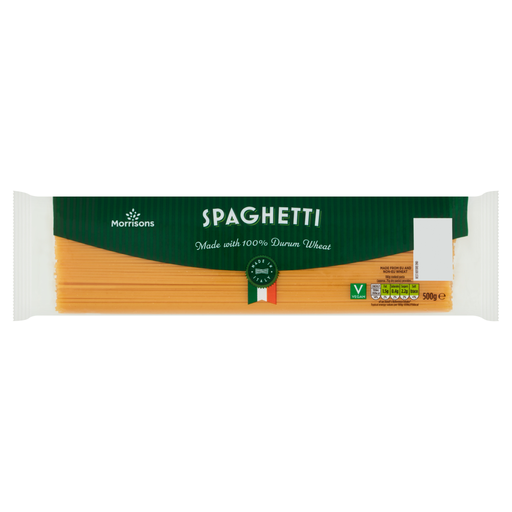 No image available
A single pack for a sauce-led dish. This is a wheat pasta option; check the current allergen information before serving.
 No image available
A bundle for a menu needing several 500g packs or for multiple meals, rather than a purchase limited to one pack. It contains wheat; check the current allergen information.
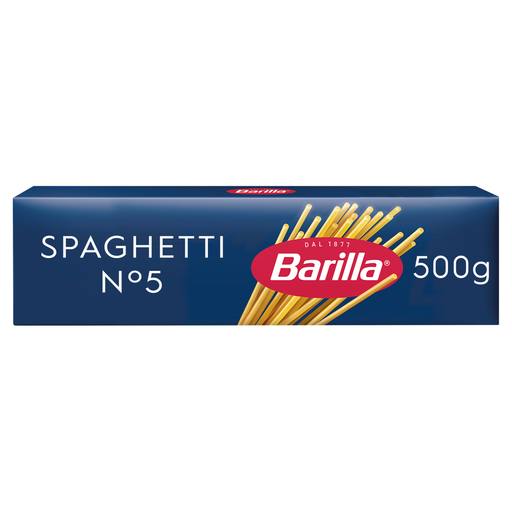 No image available
A single pack for a spaghetti-based meal. It contains wheat; check the current label for allergen information, including any mustard or soya warning.
 No image available
A bundle for several spaghetti-based meals or a menu requiring more than one pack. It contains wheat; check the current label for allergen information, including any mustard or soya warning.
 No image available
A single pack for a spaghetti-based dish. It contains wheat; use the current pack to check allergens, cooking directions and portion guidance.
Use the portion guidance on the pack rather than a fixed guest count. ASDA describes its 500g standard spaghetti as six servings at 75g dry pasta per serving; plan additional pasta if your intended portions or menu require it.
Choose the shape around the dish: spaghetti for a meal intended to use long strands, or tubes for a thicker sauce or bake. ASDA describes its rigatoni for thick, creamy sauces, while Marks & Spencer positions its penne for bakes and ragù.
Do not treat standard wheat pasta as gluten-free. ASDA’s standard spaghetti contains wheat, while its separate Free From spaghetti is labelled gluten-free and lists cornflours and rice flour; check the current label of the exact pack before serving.
Check the exact pack’s current ingredients, allergen statement and cooking directions. This is particularly important when a guest has a dietary restriction or you are cooking more than one pasta variety.