
24/7 Customer Support

Free returns

Same-day & Next-day Delivery

Quality Guaranteed

Unlock Your Welcome Offers: FREE Delivery | Up to 80% OFF | Free 30-day JoyPlus trial
Download the APP
Finding a fridge freezer that fits a non-standard gap can be a frustrating exercise. In many UK homes, from city flats with galley kitchens to older properties with quirky layouts, the standard 60cm appliance simply will not fit. This leaves you searching for a 50cm fridge freezer, a category where making the right choice is critical to avoid disappointment.
As a Joybuy Product Recommendation Officer, my role is to help you navigate the market and focus on what truly matters. Many shoppers are caught out by a few common pitfalls that turn a promising purchase into a daily inconvenience.
By understanding these potential issues, you can focus on the specifications that deliver genuine, long-term value.
To ensure your new narrow fridge freezer is a help, not a hindrance, pay close attention to these three non-negotiable details.
You have measured the gap and know you need a 50cm wide fridge freezer. That is the first step, but it is not the last. Before you add anything to your basket, you must verify three measurements:
In a galley kitchen or a corner placement, the direction the door opens can make or break the appliance's usability. A reversible door fridge freezer gives you the flexibility to hinge the door on the left or the right. When comparing models, look for confirmation that the process is straightforward and does not require purchasing a separate kit. This single feature provides the freedom to position your appliance for the most practical access, regardless of your kitchen's layout.
For a 50cm model, a total capacity of around 170 litres (like that found in a Midea fridge freezer of this size) is quite common. However, how that space is configured is what counts. A good design will include:
A well-organised interior makes a 170l fridge freezer feel far more spacious and practical than a poorly designed one with a slightly larger stated capacity.
We have filtered the options to match specific household needs, focusing on models that solve the common problems associated with compact appliances.
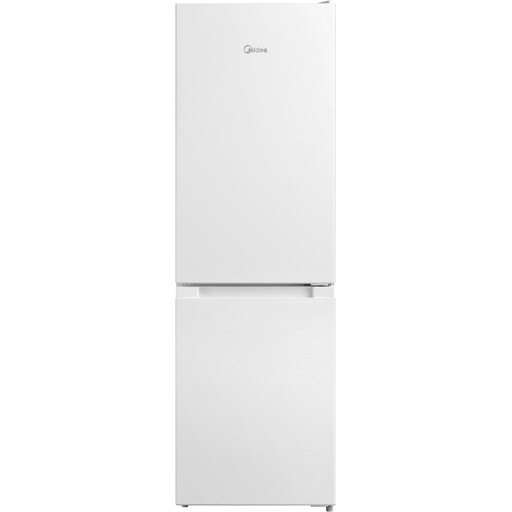
Why This Fits Their Persona: Its classic white finish and true 50cm width make it a seamless fit for traditional or smaller kitchens where every centimetre counts and a clean aesthetic is preferred. It is an ideal choice for individuals or couples in their first flat.
It directly counters the "unusable capacity" trap with adjustable glass shelves and a dedicated crisper, allowing you to customise the layout for taller items and fresh produce.
Features a straightforward reversible door system for flexible installation and a surprisingly generous 173L capacity for its compact footprint.
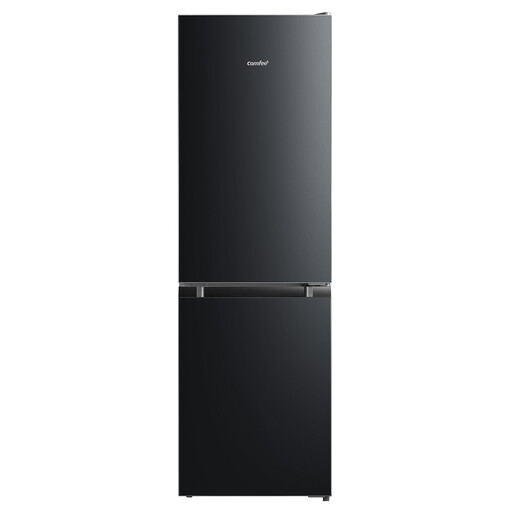
Why This Fits Their Persona: The sleek black finish is perfect for contemporary open-plan living spaces where appliances are on show and need to complement a modern decor. Its quiet operation is a major benefit when your living and kitchen areas are one.
At just 39dB, it directly addresses the "quiet deception" pitfall by operating at a low noise level that will not intrude on conversations or quiet evenings at home.
Combines a modern aesthetic with practical features like Low Frost technology to reduce maintenance, a 4-star freezer rating and a reversible door for placement flexibility.
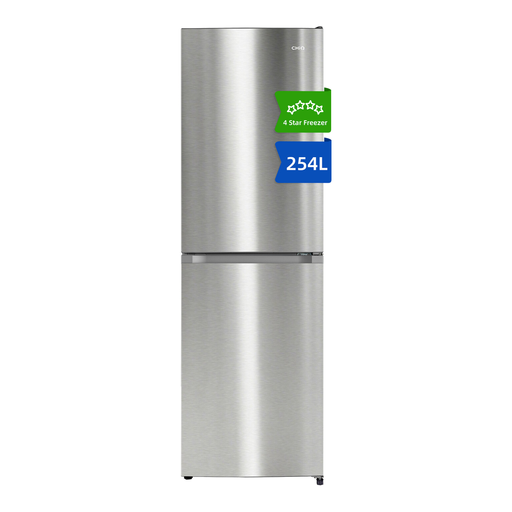
Why This Fits Their Persona: For those with a gap slightly wider than 50cm, this 54cm model offers a significant capacity boost. It is ideal for small families or couples who need more storage than a typical 50cm unit can provide, without jumping to a standard 60cm size.
Its tall, slim design maximises vertical space, providing a large capacity without a wide footprint. The Low Frost technology also reduces the maintenance headache often associated with basic static freezers.
A premium stainless steel finish and a very generous 254L capacity make it a great value choice for those who can accommodate the slightly larger 54cm width.
We have compiled a complete, real-time list of products that fully satisfy these strict selection criteria and UK safety regulations.
This is a critical step for ensuring your appliance runs efficiently. As a general rule, most manufacturers recommend leaving at least 5cm of clearance at the back and on both sides, plus around 10cm at the top. This allows air to circulate and heat to dissipate from the compressor. Always consult the specific model's installation manual for precise figures.
For most people, yes. A standard static freezer will require manual defrosting every few months as ice builds up. A 'Low Frost' model significantly reduces the rate of ice formation, meaning you may only need to defrost it once a year. A 'Total No Frost' system prevents ice build-up entirely. While these models can be slightly more expensive upfront, they save you a regular chore and maintain better energy efficiency over time.
It is strongly advised not to. A freestanding fridge freezer is designed to dissipate heat from its external surfaces, particularly the back and sides. Enclosing it within a tight-fitting cupboard without purpose-built ventilation will trap this heat, forcing the compressor to work much harder. This leads to higher energy consumption, poor cooling performance and can significantly shorten the lifespan of the appliance.