
24/7 Customer Support

Free returns

Same-day & Next-day Delivery

Quality Guaranteed

Unlock Your Welcome Offers: FREE Delivery | Up to 80% OFF | Free 30-day JoyPlus trial
Download the APP
A 512GB USB flash drive can store large video libraries, photo collections, project files and game data in a compact format. However, high capacity alone does not guarantee useful performance. Some drives advertise impressive speeds that only apply in specific conditions, while others offer a single connector that quickly becomes inconvenient when you move between a laptop, phone and tablet.
As the Joybuy Product Recommendation Officer, I focus on practical specifications rather than promotional language. These are the main details to check before buying.
A listing may show a figure such as 1090MB/s USB flash drive, but this is generally an “up to” figure measured under particular conditions. Your actual result depends on the host device, file type, operating system, cable, port and the amount of data being transferred.
Small files often transfer more slowly than one large video file. A USB 2.0 port will also limit performance, even if the drive supports a faster standard. Check both the drive specification and the capabilities of your computer, phone or tablet.
A traditional USB-A memory stick may work well with an older desktop or laptop, but many newer phones, tablets and slim laptops use USB-C. Buying an adaptor can add cost and create another item to lose.
A dual-interface USB flash drive with both USB-A and USB-C connectors is more practical for cross-device use. Nevertheless, check the exact port arrangement and whether your smartphone supports external storage or USB On-The-Go functionality.
A zinc alloy USB drive can provide a sturdy outer shell and a more substantial feel, but metal construction does not automatically make a drive waterproof, dustproof or drop-proof. Sliding and flip-cover mechanisms can also wear if handled roughly.
Look for clear information about the casing, connector protection and intended use. Regardless of the material, keep the drive dry, avoid severe impact and maintain a second backup of important files.
A 512GB drive is suitable for large folders, media projects and regular backups, but the available space shown by your operating system will be lower than the stated capacity because of formatting and system management. If you regularly work with 4K footage or RAW images, leave spare capacity for temporary files and editing caches.
For lighter file transfers, a 256GB drive may offer a more economical starting point. Capacity should match your workflow rather than simply choosing the largest number.
USB 3.2 Gen 2 can support faster transfers than USB 3.0 or USB 2.0, but the complete connection must support the relevant standard. A USB 3.2 Gen 2 flash drive connected to a slower port will operate at the lower port’s limit.
The MOVESPEED 512GB YSUWD10-512GSY lists read speeds of up to 1090MB/s and write speeds of up to 1030MB/s, with USB-A and Type-C interfaces. Its specification also states compatibility with USB 3.1, USB 3.0 and USB 2.0. These figures should be treated as maximum manufacturer specifications, not a guaranteed result for every device.
Compact flash drives are convenient for travel, university work and mobile backups. During prolonged high-speed transfers, a metal casing may feel warm. The 256GB flip-cover model specifically notes that warmth can occur during sustained transfers, while the zinc alloy body acts as a heat sink.
This is different from waterproofing or impact resistance. Avoid covering the drive during use, exposing it to moisture or leaving it in direct heat. Safely eject it after transfers to reduce the risk of file corruption.
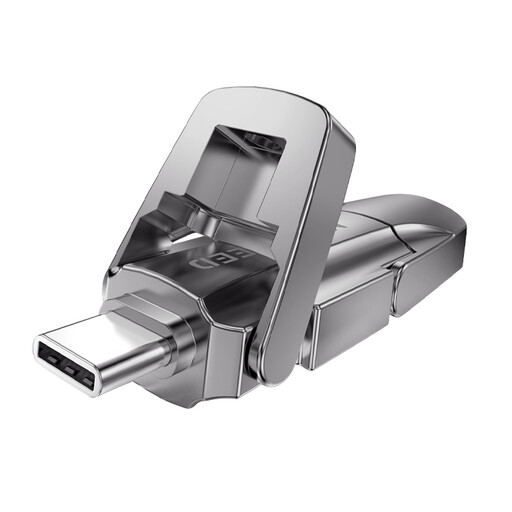
Why This Fits Their Persona: A suitable option for students, home users and commuters who want fast portable external storage without immediately paying for 512GB.
It includes both USB-A and USB-C connectors, reducing reliance on separate adaptors, while its stated speeds are presented as maximum figures rather than universal guarantees.
256GB capacity, dual interface, up to 1090MB/s read and 1030MB/s write, plus a zinc alloy flip-cover design.
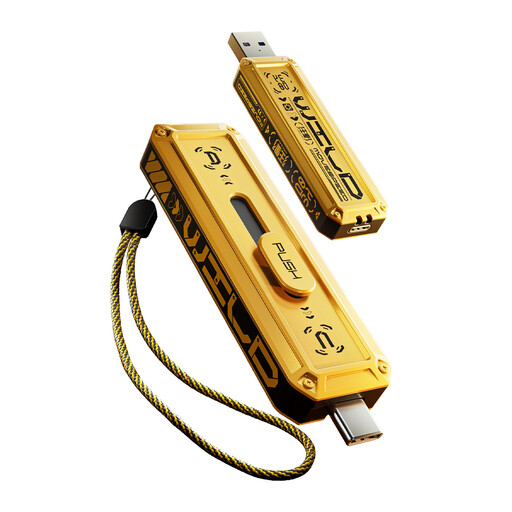
Why This Fits Their Persona: Designed for users who want high capacity and a compact metal body for moving work files, photos and media between compatible UK devices.
Its USB-A and Type-C arrangement supports cross-device use, while the push-slide mechanism helps keep connectors protected when the drive is stored.
512GB capacity, 3D NAND flash, zinc alloy housing and stated read/write speeds of up to 1090MB/s and 1030MB/s.

Why This Fits Their Persona: A practical match for content creators, photographers and mobile users transferring large video files or backups between USB-C and USB-A equipment.
The flip cover protects the connector when carried, but the product guidance still advises avoiding water, extreme temperatures and heavy impacts.
512GB capacity, USB-A and Type-C connectors, 3D NAND flash and stated speeds up to 1090MB/s read and 1030MB/s write.
We have compiled a complete, real-time list of products that fully satisfy these strict selection criteria and UK safety regulations.
It can be, provided the phone supports external USB storage and has a compatible USB-C port or adaptor. Check the phone’s file-management support before purchase. Some video applications may also restrict where recordings can be saved.
Lifespan varies with flash type, write frequency, heat, storage conditions and handling. Frequent large writes can place greater wear on the memory than occasional document transfers. Keep at least one additional backup and replace a drive if it develops connection, copying or file-reading errors.