
24/7 Customer Support

Free returns

Same-day & Next-day Delivery

Quality Guaranteed

Unlock Your Welcome Offers: FREE Delivery | Up to 80% OFF | Free 30-day JoyPlus trial
Download the APP
A 55-inch 4K Smart TV can become the centre of a living room, gaming setup or home cinema. However, comparing models by screen size and resolution alone can lead to costly compromises. A television may advertise HDR, high refresh rates or immersive sound while offering limited brightness, basic connectivity or an interface that does not include the services you use.
The most useful approach is to match the panel, smart platform and connections to how you watch television. The following guide explains the specifications that matter and highlights suitable options for different UK households.
All the models below use 3840 × 2160 4K Ultra HD resolution, but their display technologies differ. A standard LED panel, QLED, Neo QLED or OLED screen can produce noticeably different contrast, colour and viewing results.
HDR support is also not a single standard. Some televisions support HDR10 or HLG, while others add Dolby Vision or HDR10+. Check the exact formats supported by your preferred streaming services, console or disc player instead of assuming that “HDR Smart TV” guarantees the same picture on every model.
Marketing terms such as motion enhancement or frame interpolation can make movement appear smoother, but they are not always the same as a high native refresh rate. A 50 or 60 Hz television may be perfectly adequate for ordinary television and films, whereas sports viewers and console gamers may benefit from 100, 120, 144 or 165 Hz hardware.
Also check which inputs support the advertised rate. A gaming TV with HDMI 2.1, VRR and ALLM is more useful for compatible consoles than a model that only advertises a high processing figure.
A Smart TV with Wi-Fi should provide dependable access to your preferred apps, but platforms vary. Google TV, Tizen Smart TV and VIDAA Smart TV each organise content differently. Freely TV availability is another practical consideration for UK households wanting live and on-demand television over broadband.
Built-in speakers can also vary considerably. A 20 W, two-channel system is not equivalent to a 2.1.2-channel system with Dolby Atmos processing. If you plan to add a soundbar, check for eARC and leave enough space beneath the screen.
For standard broadcast television, a 50 or 60 Hz panel may be sufficient. If you watch football, motorsport or fast action, a 100 Hz or higher panel can offer smoother motion. Gamers should check for:
Some models offer very high refresh rates, but the result depends on the source device, cable and game settings.
UK energy labels run from A to G, with the rating shown separately for SDR and HDR in many listings. Compare the stated kWh usage per 1,000 hours rather than relying only on the letter grade.
Measure your furniture before buying. Several 55-inch televisions are approximately 123 cm wide, while stand-leg spacing can determine whether the set fits your unit. For wall mounting, check the VESA pattern, wall strength and ventilation clearance. Use a suitable bracket and follow the manufacturer’s installation instructions.
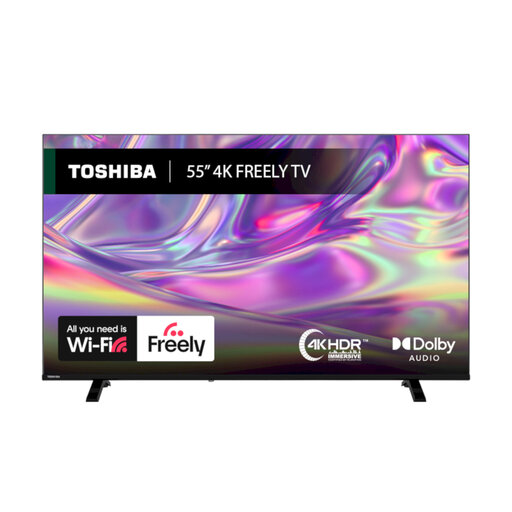
Why This Fits Their Persona: It combines a 55-inch Direct LED screen, VIDAA Smart TV, Freely TV support and common streaming apps for straightforward living-room viewing.
The listing specifies Dolby Vision, HDR10 and HLG rather than using HDR as an unexplained headline feature. It also states the one-year manufacturer warranty.
Freely over Wi-Fi, Dolby Audio, Ethernet, Bluetooth and a stated D energy class.
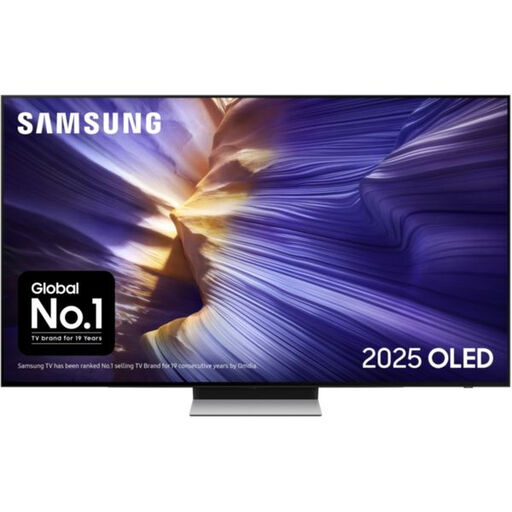
Why This Fits Their Persona: The OLED panel suits viewers prioritising contrast for films, premium streaming and console gaming.
Its listing identifies OLED technology, 144 Hz supported refresh rate, VRR, ALLM and four HDMI ports, making the specification easier to verify.
60 W 2.1.2-channel audio, Dolby Atmos, Tizen Smart TV and eARC.
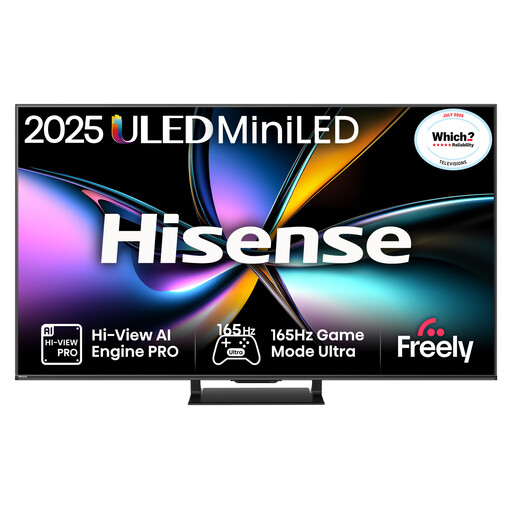
Why This Fits Their Persona: It is suited to competitive gamers, sports viewers and households wanting substantial built-in audio.
The listing states a native 165 Hz rate, four HDMI 2.1 ports, VRR and ALLM, rather than relying only on motion-processing terminology.
Mini LED with QLED colour, Dolby Atmos and a 2.1.2-channel audio system.
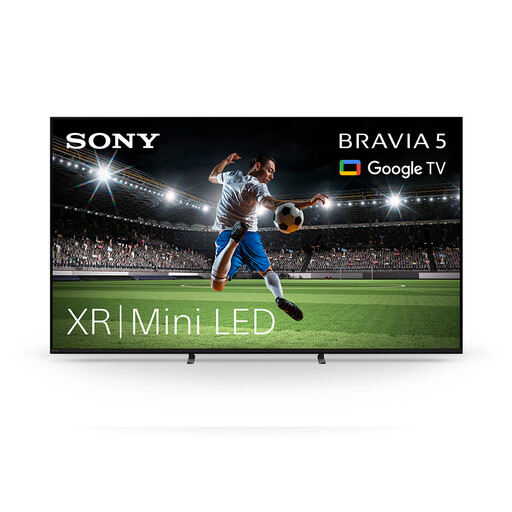
Why This Fits Their Persona: Google TV and Google Cast make it a practical choice for households combining streaming subscriptions, phone casting and console entertainment.
The product description clearly identifies Mini LED, the XR Processor, Google TV and Acoustic Multi Audio instead of presenting smart functions as a generic feature.
Google Cast, Google TV and Dolby Vision/Atmos support as listed.
We have compiled a complete, real-time list of products that fully satisfy these strict selection criteria and UK safety regulations.
Usually, yes. A 55-inch screen commonly suits medium and larger living rooms, but viewing distance, furniture width and viewing angle matter. Measure the stand area and check the screen’s dimensions with and without its feet before ordering.
Consumption varies by panel, brightness, picture mode and HDR content. Use the product’s stated kWh per 1,000 hours figure and compare both SDR and HDR values. Energy-saving modes and automatic brightness controls may reduce everyday consumption, although actual usage depends on settings.
Not necessarily. HDMI 2.1 is useful if you want features such as 4K at 120 Hz, VRR and ALLM on compatible equipment. For casual gaming, a television with HDMI, a game mode and suitable input lag may be adequate. Always check the number of HDMI 2.1 ports, as not every port may support the same capabilities.