What matters when choosing a bar?
Decide when you intend to eat it, then check the exact flavour against your exclusions. The figures on a 45g bar and a 64g bar describe different portions, so compare both per-bar values and serving sizes.
| Priority | What to check | Your needs |
|---|
| Food exclusions |
Read the exact flavour’s ingredients, highlighted allergens and “may contain” statements. Check each exclusion separately; vegan does not mean gluten-free or nut-free. |
“I need this particular pack to fit my gluten, dairy, egg or nut exclusion—not just to carry a broad free-from description.” |
| Pre-run carbohydrate |
Compare carbohydrate per bar and portion size with the food and timing you normally tolerate. Do not use protein grams alone as a pre-run fuel measure. |
“If I eat shortly before the 5k, I want to know what carbohydrate the bar contributes.” A 2021 endurance study published in Frontiers in Sports and Active Living examined pre-event meals, not protein bars or 5k performance. |
| Comfort near the start |
Check fibre per bar and whether the ingredients include sugar alcohols or polyols. Try the same portion and timing during training. |
“An unfamiliar bar close to the start is a risk I would rather avoid.” A 2025 Sports Medicine review discusses adjusting fibre for gastrointestinal comfort around exercise; Quest Nutrition also says tolerance to sugar alcohols varies. |
| Snack timing |
Distinguish a bar intended as immediate pre-run food from one kept for after the run or well before it. Recheck its allergen fit at either time. |
“For a later snack, I may choose a protein-focused bar even if its carbohydrate and fibre profile does not suit my pre-run routine.” |
Brand and product-line references
These examples show why claims must be checked at product and flavour level; they do not describe every bar made by each brand.
nākd.
Tesco Groceries describes its listed Cocoa Hazelnut Protein Bar as gluten-free, dairy-free and suitable for vegans.
- The listed 45g bar provides 15g carbohydrate, making the per-bar figure useful when comparing pre-run options.
- The Tesco listing names peanuts and hazelnuts and warns of possible soya and other nuts. Its 7.2g fibre per bar is also worth considering near a run.
PhD
PhD presents its listed Smart Bar Plant flavour as a vegan, dairy-free protein snack.
- PhD lists 23g protein, 6.9g carbohydrate and 15g fibre per 64g bar for its listed product.
- A Joybuy salted-caramel Smart Plant listing gives different nutrition figures and lists malt extract containing gluten. Do not apply one listing’s gluten-free claim or nutrition figures to another variant without checking the pack.
Myprotein
Vegan Carb Crusher is a plant-protein snack, but vegan status does not make this product gluten-free.
- Its vegan formulation offers an option for shoppers seeking a plant-protein bar where its full ingredient declaration fits their needs.
- Myprotein lists wheat flour and malted wheat flour. It also warns that the bar may contain milk, peanuts and nuts and is not suitable for people with peanut or nut allergies.
Quest
Quest describes its protein bars as gluten-free; this is a route for gluten avoidance only when the other ingredients also fit.
- Quest Nutrition says its original protein bars contain up to 21g protein per bar.
- The bars use dairy-based proteins, and Quest says tolerance to their sugar alcohols varies. Check the exact bar before using it near a run.
Barebells
Barebells ranges need product-level allergen checks rather than a brand-wide free-from assumption.
- Its FAQ distinguishes allergen information across original, soft and selected vegan bars, giving shoppers product-line details to check against a pack.
- Barebells says all its bars contain nuts or may contain traces of nuts. Original and soft bars contain lactose or may contain traces, while selected vegan bars contain wheat protein and gluten.
Grenade
Grenade bars require flavour-specific checks when milk or gluten matters.
- The ingredient declaration for the Joybuy Fudged Up listing identifies its milk-based protein blend, making dairy suitability clear for that product.
- Grenade UK says its products made in a factory handling wheat cannot be certified gluten-free, and identifies its OREO protein-bar variants as not gluten-free. Do not extend a claim from one flavour to the range.
Joybuy protein-bar options
These bars and flapjacks offer options to assess for a 5k routine, including pre-run food and later snacks. Compare each exact pack’s carbohydrate, fibre and allergen declarations with your intended timing and exclusions.
 Image unavailable
Trek Salted Caramel Protein Flapjacks, 3 × 50g
If considering a flapjack before a 5k, compare its per-flapjack carbohydrate, fibre and serving size with food you have tolerated during training. Check the exact pack’s gluten and milk information, soya ingredients, and peanut and nut warnings against your exclusions.
View on Joybuy
 Image unavailable
Nakd Peanut Delight, 4 × 35g
This named peanut bar calls for a peanut-allergen check before any consideration of run timing. Confirm that the listing and delivered pack both identify Peanut Delight in the stated 35g size: information accompanying this item also describes a different Cocoa Hazelnut 45g bar, whose nutrition and allergen details must not be assumed to apply here.
View on Joybuy
 Image unavailable
Nature Valley Protein Salted Caramel Nut Bars, 4 × 40g
For a later protein snack, check whether the exact pack fits your gluten requirement and whether its milk, soya, peanut and almond declarations fit your exclusions. If you want it before a run instead, check carbohydrate and fibre per 40g bar and try that serving during training.
View on Joybuy
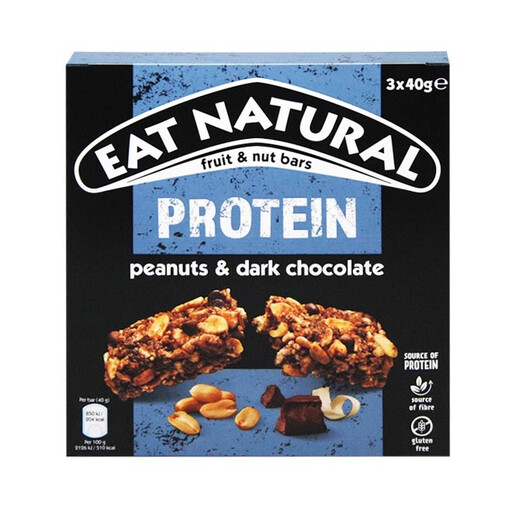 Image unavailable
Eat Natural Protein-Packed Peanuts & Chocolate Bars, 3 × 40g
Peanuts are part of this named variant, so it is not an option for someone avoiding peanuts. Check the current pack for other allergens and any gluten-free claim before treating it as a free-from choice; for pre-run use, compare carbohydrate and fibre per 40g bar with your usual snack.
View on Joybuy
 Image unavailable
Nature Valley Protein Peanut & Chocolate Bars, 4 × 40g
This peanut variant may be considered as a later snack if its full allergen declaration fits your needs. Check the exact pack for its gluten-free claim and milk and soya ingredients; if eating it before a 5k, also check fibre alongside carbohydrate and test the 40g serving during training.
View on Joybuy
Questions about bars around a 5k
Is a high-protein bar suitable immediately before a 5k?
Not on protein content alone. Compare its carbohydrate, fibre and serving size with a pre-run routine you already tolerate. A 2021 Frontiers in Sports and Active Living study examined carbohydrate in pre-event meals and endurance exercise; it was not a test of protein bars before a 5k.
Does vegan mean gluten-free, dairy-free and nut-free?
No. Myprotein lists wheat flour and malted wheat flour in Vegan Carb Crusher and warns that it may contain milk, peanuts and nuts. Barebells says selected vegan bars contain wheat protein and gluten. Check every exclusion on the exact product.
Does a gluten-free claim cover other allergens?
No. A gluten-free claim addresses gluten, not whether a bar contains milk, peanuts, tree nuts or other ingredients you avoid. Read the current ingredient list and precautionary allergen statements separately.
Which allergen information should I use before eating a bar?
Check the current physical pack for the exact flavour before eating it, even if you used an online listing to choose it. Compare its ingredients and “may contain” statements with your exclusions, particularly if the listing describes a different variant or pack size.
Can I eat a high-fibre bar before a run?
That depends on the portion, timing and your experience with the exact bar. A 2025 Sports Medicine review discusses adjusting fibre intake for gastrointestinal comfort around exercise; try an unfamiliar bar during training rather than first eating it before an event.


