Runners deciding whether to snack
For a short 5k, the first decision is whether you want food beforehand. If you do, consider when you will eat and whether the snack provides carbohydrate.


For a short 5k, an extra snack may not be needed; if you do eat beforehand, the British Dietetic Association advises a low-fat, carbohydrate-led snack or light meal rather than relying on salted peanuts for pre-run carbohydrate. If you need to avoid nuts, peanuts or another allergen, choose by the exact pack’s ingredients and precautionary statements, not by a general ‘free from’ label.
For a short 5k, the first decision is whether you want food beforehand. If you do, consider when you will eat and whether the snack provides carbohydrate.
Whether you are running or buying for someone else, check the particular product for the allergen that matters. A broad free-from category does not settle that question.
If you need to avoid more than one ingredient, check each requirement separately. A gluten-free or milk-free claim does not, by itself, answer a question about nuts or peanuts.
Decide whether you need a pre-run snack, then check its timing, nutritional information and every allergen you need to avoid.
| Priority | What to check | Your needs |
|---|---|---|
| Whether to eat | Consider when you last ate and the length of your run. University College London Hospitals NHS Foundation Trust says a snack may not be needed for shorter activity, though individual circumstances matter. | If I have eaten beforehand, I may not want another snack just because I am running a 5k. |
| Pre-run fuel | Compare carbohydrate and fat on the same per-100g or per-serving basis. The British Dietetic Association advises a low-fat, high-carbohydrate snack or light meal two to three hours before exercise. | If I want food before running, I am looking for carbohydrate and a time to eat that works for my run, rather than assuming nuts serve the same purpose. |
| Specific allergens | Read the current ingredients and any ‘may contain’ statement for the exact product. Check nuts and peanuts by name where either matters. | I need to know whether this particular pack meets the exclusions I am shopping for, not simply whether its range says ‘free from’. |
| Multiple exclusions | Check each claim separately, including gluten and milk if relevant. Asda lists a gluten- and milk-free digestive biscuit that may also contain nuts. | A gluten-free option still needs a separate nut check if I avoid nuts. |
| Packaged or counter food | Check the information for the form of food you will buy. Sainsbury’s and M&S warn that they cannot guarantee the absence of allergens in specified in-store preparation areas. | For strict avoidance, I want information about the exact item, rather than assuming a retailer’s packaged free-from range also describes its bakery or café food. |
A named exclusion does not establish that other allergens are absent. Asda’s gluten- and milk-free digestive biscuits, for example, carry a ‘may also contain Nuts’ statement.
Check the current pack for each ingredient you need to avoid and read its precautionary allergen statement.
KP Original Salted Peanuts list 5.6g carbohydrate and 51g fat per 100g. That differs from the low-fat, carbohydrate-led pre-exercise snack advised by the British Dietetic Association.
If you want food before a 5k, compare the nutrition panel with your timing and snack needs. Peanuts are not an option for someone who must avoid them.
Ingredients and allergen information can change. Sainsbury’s, Tesco and Asda direct shoppers to check packaging rather than rely solely on product information online.
Read the pack you are about to use, particularly when buying a familiar product with changed packaging.
Sainsbury’s advises allergy shoppers to avoid specified open in-store food areas because it cannot guarantee allergen absence. M&S gives a similar warning for food prepared in its in-store kitchens, bakeries, cafés and coffee shops.
For strict allergen avoidance, use information that applies to the exact item and how it is prepared; do not assume a packaged range’s label covers counter food.
These examples show why nutritional information and free-from wording need to be read at product level; a brand or range name does not establish suitability for every snack it sells.
KP Original Salted Peanuts are a peanut snack for people who can eat the relevant allergens, not a nut-free choice.
The range can help you look for a named dietary exclusion, but the wording must be checked on each product.
Its own-brand allergen lists can help narrow a search before checking a particular pack.
M&S distinguishes packaged-food labelling from food prepared in its in-store facilities.
An Asda product illustrates why a free-from claim must be matched to the allergen you need to avoid.
These are packaged crispbread and bar options to consider if you want a snack around a 5k. Compare their current nutrition panels for your intended timing, and check each pack separately for any allergen you need to avoid; none should be treated as nut-free on the strength of this selection.
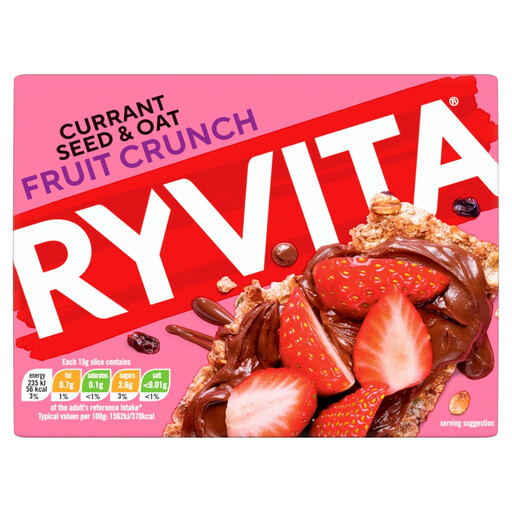 No image available
If you are considering this crispbread before a run, compare its carbohydrate and fat information with when you plan to eat. Check the pack’s ingredients and allergen statements for every exclusion that matters to you.
 No image available
This protein-bar multipack is a different format from a crispbread snack. If you want food before running, compare its carbohydrate and fat per bar, then check the current pack for nuts, peanuts and any other allergens you avoid.
 No image available
For this Golden Caramel variant, use its own per-bar nutrition and allergen label when deciding whether it fits a pre-run snack. Do not assume it has the same ingredients or precautionary statements as another Grenade flavour.
 No image available
If a flapjack suits the snack format you want, compare its carbohydrate and fat per 50g bar with your pre-run plans. Check the actual pack for gluten, nuts, peanuts and any other allergens relevant to you; do not infer one exclusion from another.
 No image available
This pack contains four 60g bars. Before choosing one as a pre-run snack, read its own nutrition panel and the current ingredients and precautionary allergen statement, particularly if you avoid nuts or peanuts.
No. University College London Hospitals NHS Foundation Trust says an additional snack may not be needed for shorter activity. If you do want food before running, the British Dietetic Association advises a low-fat, high-carbohydrate snack or light meal two to three hours before exercise; KP Original Salted Peanuts, at 5.6g carbohydrate and 51g fat per 100g, are not a like-for-like carbohydrate-led choice.
No. Those claims name particular exclusions, not every allergen. Asda’s gluten- and milk-free digestive biscuit listing says the product may also contain nuts, so check the current pack for the specific allergens you avoid.
It is a precautionary statement about possible unintended allergen presence, rather than a statement that nuts are an intended ingredient. The Food Standards Agency describes this purpose of ‘may contain’ labelling; read it alongside the ingredients when deciding whether a product meets your avoidance needs.
Use it to narrow your choices, then read the physical pack before eating. Sainsbury’s recommends checking packaging because ingredients can change, while Tesco and Asda also warn that product information may change.
Do not assume they are. Sainsbury’s advises allergy shoppers to avoid specified open in-store food areas because it cannot guarantee allergen absence. M&S says its in-store kitchens, bakeries, cafés and coffee shops handle major allergens and cannot guarantee that their food is allergen-free.