
24/7 Customer Support

Free returns

Same-day & Next-day Delivery

Quality Guaranteed

Unlock Your Welcome Offers: FREE Delivery | Up to 80% OFF | Free 30-day JoyPlus trial
Download the APP
A reliable combination square is a cornerstone of any serious workshop, whether you're a professional carpenter or a dedicated DIY enthusiast. Yet, choosing the right one can be a frustrating exercise. The market is filled with tools that look the part but fail to deliver the precision and durability required for quality work. Before you make a purchase, it's crucial to understand the common pitfalls that lead to wasted money and inaccurate projects.
As a Joybuy Product Recommendation Officer, my role is to help you navigate these choices by focusing on what truly matters. Let's look at the frequent issues with subpar combination squares and how to avoid them.
Many find themselves with a tool that quickly becomes a source of frustration. Here are three common traps to watch out for:
To ensure your next carpenter's measuring tool is an asset, not a liability, focus on these non-negotiable specifications.
The longevity of a combination square is determined by its materials. Look for a ruler, or blade, made from stainless steel. This provides superior resistance to rust and bending compared to standard steel. The head of the square, which holds the ruler, should be made from a durable material like zinc alloy or cast iron. A well-machined head with a solid locking mechanism, often featuring a brass bolt, ensures the ruler stays firmly in place during use.
This is where precision truly lies. The most reliable squares feature laser-etched markings. Unlike printed or stamped scales, laser etching creates deep, permanent marks that will not wear away over time. Ensure the tool includes both metric (150mm combination square) and imperial (6-inch) scales to handle any project requirement. These clear markings are essential for its function as a 45/90 degree square.
A good combination square is more than just a ruler. A crucial feature is a built-in engineer's square with level. This small but vital spirit level allows you to check for level and plumb without reaching for another tool. Another valuable addition is a removable scriber, a sharp pin usually stored within the head of the square, perfect for making fine, precise marks on wood or metal. This all-in-one functionality makes the adjustable set square an incredibly efficient tool.
Based on these practical criteria, here are some recommendations matched to specific user profiles.
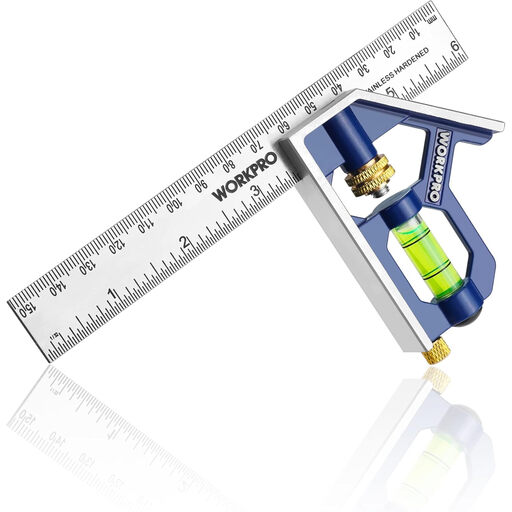
Why This Fits Their Persona: This is a workhorse tool for carpenters, engineers and metalworkers who need reliability day in, day out. Its combination of a stainless steel ruler and a sturdy zinc alloy body is built to withstand the rigours of a UK building site or workshop environment.
The precision laser-etched scales will not fade or wear off. The robust construction and reliable locking nut prevent the ruler from slipping, ensuring consistent accuracy for every measurement.
An all-in-one solution with a built-in spirit level and scriber, reducing the number of tools you need to carry. The durable, rust-resistant materials ensure a long service life.
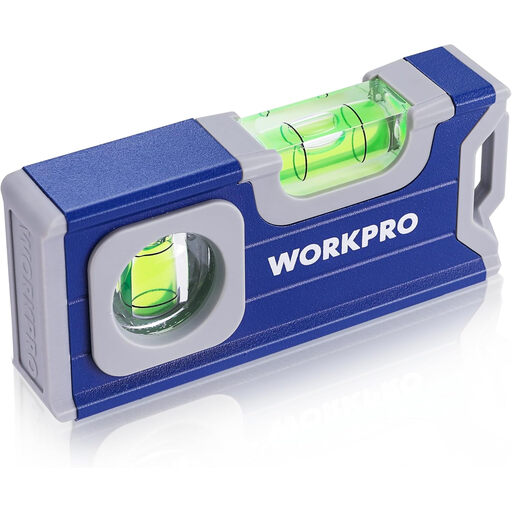
Why This Fits Their Persona: This is for the installer, plumber or electrician who frequently works with metal pipework, conduit or steel frames in tight areas. When a full combination square is too cumbersome, this compact level provides fast, accurate readings.
It solves the problem of trying to use the wrong tool for the job. Instead of struggling with a larger square in a tight cabinet or frame, this provides a purpose-built solution for quick levelling.
The strong magnetic V-groove base attaches securely to pipes and other metallic surfaces for hands-free operation. Its compact size makes it extremely portable and easy to use in awkward spaces.
We have compiled a complete, real-time list of products that fully satisfy these strict selection criteria and UK safety regulations.
To check the 90-degree angle, place the head firmly against a known straight edge (like the factory edge of a piece of plywood). Draw a fine line along the ruler. Flip the square over to the other side of your line and slide it up to the line. If the ruler's edge aligns perfectly with the line you drew, your square is accurate.
An engineer's square, or try square, typically has a fixed 90-degree angle and is primarily used for checking and marking right angles with high precision. A 6 inch combination square is more versatile; its head can slide along the ruler, allowing it to be used as a depth gauge, height gauge and for marking both 90-degree and 45-degree angles. It also often includes a spirit level and a scriber.
Even with a stainless steel ruler, it is good practice to wipe the tool down with a dry cloth after use, especially in damp conditions. For long-term storage, applying a light coat of paste wax or camellia oil to the metal surfaces provides an excellent protective barrier against moisture and corrosion.