Older adults eating adequately
Skimmed milk may suit someone who wants to limit fat. The NHS identifies milk and dairy as sources of protein and calcium; check the nutrition panel of the milk being bought.


Skimmed milk can suit an older adult who is eating adequately and wants to limit fat while still getting protein and calcium from milk. A 6-pint bottle makes sense only if the exact milk type meets their needs and the household can use it within the product’s date and opened-life instructions. If appetite is poor or weight is falling, seek individual nutrition advice rather than making lower-fat milk the default; East Suffolk and North Essex NHS Foundation Trust advises energy- and protein-dense foods in that situation.
The right milk and pack size depend on both the older person’s nutritional circumstances and how quickly the household uses an opened container.
Skimmed milk may suit someone who wants to limit fat. The NHS identifies milk and dairy as sources of protein and calcium; check the nutrition panel of the milk being bought.
Before choosing a 3.408L bottle, consider whether it can be used within its labelled opened life and use-by date. A smaller bottle or separate cartons may better match slower household use.
Do not choose skimmed milk solely because it is lower in fat. East Suffolk and North Essex NHS Foundation Trust advises energy-, protein- and micronutrient-dense foods when nutritional intake is a concern; follow the person’s individual care advice.
Start with the person’s nutritional needs, then check the milk type, container size and storage instructions together.
| Priority | What to check | Your needs |
|---|---|---|
| Protein, calcium and fat | Read the exact product’s protein, calcium, fat and saturated-fat values, including whether figures are per 100ml, per 100g or per serving. The NHS identifies milk and dairy as sources of protein and calcium. | I’m looking for a lower-fat milk for someone who is eating adequately, without assuming that its fat content tells me everything about its nutrients. |
| Poor appetite or weight loss | Check any existing nutrition or care plan before choosing a lower-fat milk. East Suffolk and North Essex NHS Foundation Trust advises energy-, protein- and micronutrient-dense foods when intake is inadequate. | If eating has become difficult or weight is falling, I need advice suited to that person rather than choosing skimmed milk by default. |
| Milk type and pack size | Check both words and volume: Tesco’s 3.408L, 6-pint example is semi-skimmed, while Marks & Spencer’s cited skimmed example is 2.272L. Six 1-litre cartons are a different format from one 6-pint bottle. | I want to be sure a larger pack is actually skimmed if that distinction matters, and that its container size suits how we use milk. |
| Storage after opening | Follow the particular product’s refrigeration, opened-life and date instructions. Marks & Spencer says its 2.272L skimmed milk is best consumed within three days of opening; Tesco says its 6-pint semi-skimmed milk is best within five days. | Will we finish each opened bottle or carton in time, or would smaller units make more sense? |
| Individual restrictions | Check the ingredients and allergen label, and follow any existing dietary or swallowing plan. The Food Standards Agency identifies milk as an allergen. | Where there is a milk allergy or a prescribed diet, the person’s specific requirements come before a general choice between skimmed and semi-skimmed. |
A lower-fat choice may not fit a plan focused on getting more energy and protein into a smaller amount of food or drink. East Suffolk and North Essex NHS Foundation Trust advises nutrient-dense foods when intake is inadequate.
If the person is eating less or losing weight, use their existing clinician or dietitian advice, or ask for individual guidance before changing their milk.
Pack size does not identify milk type: Tesco’s cited 3.408L bottle is semi-skimmed.
Read the milk type and volume separately. If skimmed milk is important, a smaller bottle or separate UHT cartons are different formats to consider.
Opened-life instructions differ. Marks & Spencer states three days for its cited skimmed bottle, Tesco states five days for its cited 6-pint semi-skimmed bottle, and Ocado’s Cravendale listing states seven days for its filtered semi-skimmed product.
Estimate actual use before choosing a container, and follow the date and storage directions on the one you buy.
Unused milk may need to be discarded if the household cannot finish an opened container in time.
A milk allergy or an existing nutrition plan can change which products are appropriate. The Food Standards Agency identifies milk as an allergen.
Check the exact label and follow the person’s care plan; ask a clinician or dietitian about poor intake, unintended weight loss or uncertainty over dietary restrictions.
These examples illustrate differences in milk type, format and labelled storage life; they are not a list of products currently available on Joybuy.
Marks & Spencer’s cited British skimmed milk is a 2.272L fresh-bottle example for someone who wants skimmed milk without choosing a 6-pint container.
Tesco’s cited 3.408L, 6-pint fresh bottle addresses the large-container requirement, but its milk type is semi-skimmed.
The cited filtered semi-skimmed product is a different format to consider when the labelled life after opening matters more than a 6-pint bottle.
Morrisons British UHT skimmed milk offers a carton format rather than one large fresh bottle.
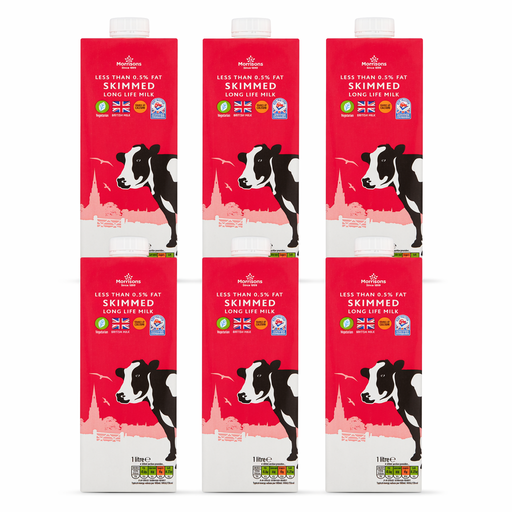
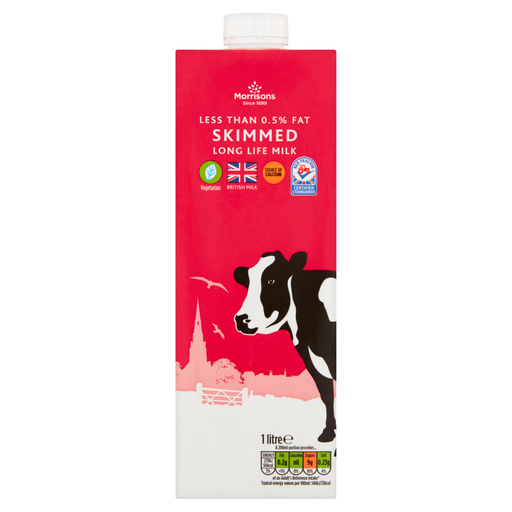
These Morrisons UHT skimmed options come as a six-pack of 1-litre units or a single 1-litre carton. Both differ from a fresh 6-pint bottle; choose a pack size that matches how much milk will be used.
 No image available
The separate units may suit a household that wants to open skimmed milk as needed rather than open one large bottle. This is not a fresh 6-pint bottle. Store unopened units as directed on the pack; refrigerate an opened carton and use it within three days, following its date instructions.
 No image available
A single 1-litre carton may suit lower-volume use better than opening a large bottle. It is neither a 6-pint pack nor fresh milk. Refrigerate after opening and use within three days, following the carton’s date instructions.
It can be an option for someone eating adequately who wants to limit fat; the NHS identifies milk and dairy as sources of protein and calcium. If appetite is poor or weight is falling, seek individual nutrition advice rather than assuming skimmed milk is the right default.
Buy that size only if its milk type is suitable and it can realistically be used within the exact product’s date and opened-life instructions. Tesco says its cited 6-pint semi-skimmed bottle is best used within five days of opening; that timing does not apply to every milk.
Do not infer calcium content from fat content alone. Royal United Hospitals Bath NHS Foundation Trust lists milk of all types at approximately 240–268mg calcium per 200ml glass; check the nutrition panel for the product you choose.
Ask for advice suited to their circumstances rather than relying on skimmed milk as a nutritional solution. East Suffolk and North Essex NHS Foundation Trust advises energy-, protein- and micronutrient-dense foods when nutritional intake is a concern; follow any existing clinician or dietitian plan.
No. The Food Standards Agency identifies milk as an allergen. Check the exact label and seek individual advice about a suitable alternative where needed.