Small-desk reaction-drill player
You want room to position your mouse and keyboard, and are willing to use secondary key functions in exchange for a 60% footprint.


Choose a 60% keyboard if making room for your mouse is the main constraint; adjustable actuation and Rapid Trigger matter if you specifically want to tune repeated or directional inputs. A 75% board keeps more dedicated keys for typing and shortcuts, but takes up more desk space. Before buying, check the exact UK layout, connection mode and any game or event rules for advanced input features.
You want room to position your mouse and keyboard, and are willing to use secondary key functions in exchange for a 60% footprint.
You want to experiment with adjustable actuation and Rapid Trigger for repeated presses or movement inputs, rather than choosing a keyboard for its size alone.
You practise or play at the desk but also want easier access to navigation keys and shortcuts. A UK-ISO option may matter for everyday typing.
Decide how much desk space the keyboard can occupy before comparing input settings. Then check whether its key layout will work for everything else you do at that desk.
| Concern | What to check | Who this matters to |
|---|---|---|
| Desk footprint and mouse room | Compare 60% and 75% layouts, then check whether you can comfortably use secondary functions for keys omitted from a 60% board. | If mouse movement feels cramped on my small desk, I want room to reposition the keyboard without losing access to commands I use often; around 42% of consumers put desk footprint first. |
| Actuation and key reset | Check the adjustment controls and Rapid Trigger settings for the exact model, as well as the rules of the games or events you use. | For drills with repeated presses, I want to tune when keys activate and reset without making accidental inputs; roughly 33% of consumers put input tuning first. |
| Everyday keys and UK layout | Check which keys have dedicated positions and select the UK-ISO or UK Layout configuration explicitly if you need it. | When the same desk is for work and gaming, I want convenient navigation keys and a familiar typing layout; about 25% of consumers put everyday key access and layout first. |
A 60% board frees desk space by omitting dedicated function, navigation and numpad keys. If you use those commands frequently, relying on secondary functions may be inconvenient.
List the keys you use during practice, games and work. Choose 60% if their secondary functions suit you; otherwise consider a 75% layout.
Razer's published 0.48 ms result measures switch actuation to USB-host receipt under its stated 0.1 mm and 8,000 Hz test settings. It is not an end-to-end measure of game response or human reaction time.
Consider such figures alongside whether you can control the actuation settings and position the keyboard comfortably for consistent drills.
UK and US layouts can be selectable configurations of a product. The choice affects the keys and legends you receive.
Check that the selected configuration says UK Layout or UK-ISO in the basket or order summary before paying.
Keychron states that the K2 HE is compatible exclusively with Gateron Double-Rail Magnetic switches.
If you plan to change switches, check compatibility for the exact keyboard model before ordering replacement parts.
The 60HE+ is a compact Hall-effect option for buyers who want adjustable inputs while keeping the keyboard footprint small.
The Huntsman V3 Pro Mini 8KHz is a 60% analog-optical option for buyers interested in configurable inputs and a manufacturer-listed high polling rate.
The K2 HE offers a 75% wireless magnetic-switch layout for buyers who want adjustable actuation and more dedicated everyday keys.
These keyboards cover several ways to balance a compact desk setup with keys for everyday use, from a 60% layout to 75%. Check the selected layout variant before choosing one for UK typing.
 No image available
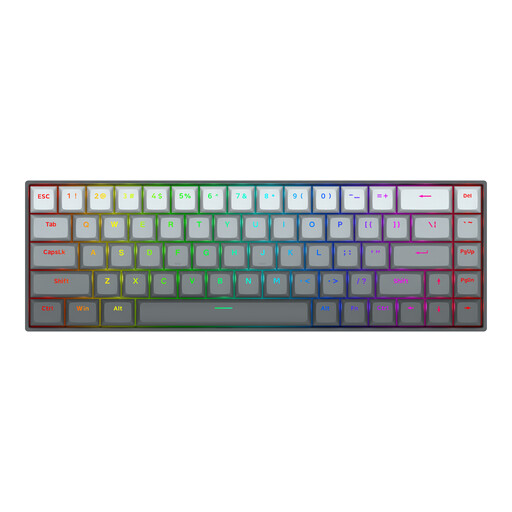
Consider this 65% analog gaming keyboard if you want a compact layout without choosing 60%. The named variant is UK Layout; a 65% board still occupies more space than a 60% model.
 No image available
Its 68-key format suits a desk where keyboard space is limited. The product name specifies 8,000 Hz polling and Rapid Trigger, but also specifies US Layout; check the exact switch variant if its feel matters to you.
 No image available
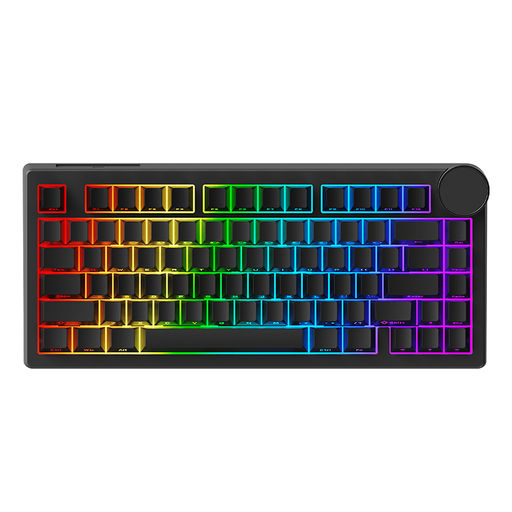
This 75% model is worth considering when the desk is also used for typing and shortcuts, provided its larger footprint suits your space. Its name specifies a wired magnetic-switch design, black side-engraved keycaps and a metal knob; confirm the selected keyboard layout if UK-ISO is important.
 No image available
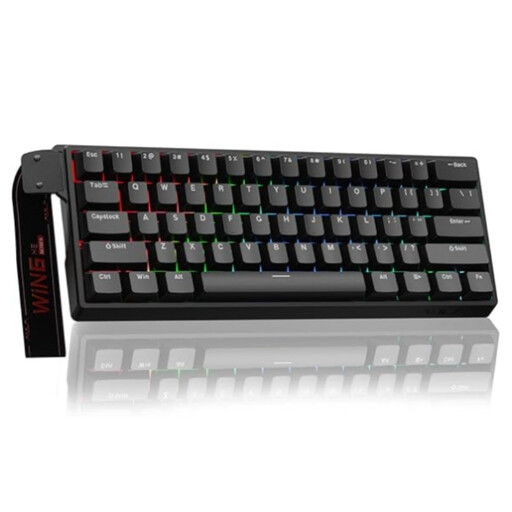
The 60% layout is suited to prioritising mouse room if you can use secondary functions for omitted keys. The name specifies adjustable actuation, Rapid Trigger and 8,000 Hz polling; confirm the exact key layout before buying if you need UK-ISO.
 No image available
Its 60% layout suits a desk where mouse room takes priority over dedicated navigation keys. Check this exact variant's UK layout and polling specification before buying; do not assume it is the separately named 8KHz model.
Yes, if freeing mouse room matters more to you than having dedicated function, navigation and numpad keys. Check that you can comfortably use secondary functions for the commands you need during games and everyday work.
Not automatically: choose a setting you can use without accidental presses. If your keyboard offers adjustable actuation or Rapid Trigger, test the controls in the drills or games you intend to use and check any applicable event rules.
Select UK-ISO or UK Layout in the exact product configuration and check that choice again before payment. A UK-facing product page alone does not establish the selected variant; Razer, for example, shows both US and UK layout choices for a Huntsman V3 Pro Mini configuration.
No. Keychron states that the K2 HE is compatible exclusively with Gateron Double-Rail Magnetic switches, so check the keyboard's compatibility statement before ordering replacements.
Check your local council's electrical-recycling arrangements or a retailer take-back option. UK government guidance describes the Waste Electrical and Electronic Equipment framework for recovery, reuse and recycling, while the practical collection route depends on the arrangements available to you.