
24/7 Customer Support

Free returns

Same-day & Next-day Delivery

Quality Guaranteed

Unlock Your Welcome Offers: FREE Delivery | Up to 80% OFF | Free 30-day JoyPlus trial
Download the APP
Finding the right hob is a crucial step in creating a kitchen that is both functional and stylish. For most UK homes, the 60cm built-in hob is the standard size, but the choice of technology, style and features can feel overwhelming. Whether you are undertaking a full kitchen renovation or simply replacing an old appliance, you need a hob that suits your cooking habits, safety needs and design vision.
This guide is designed to cut through the clutter. As a Joybuy Product Recommendation Officer, my role is to provide clear, practical advice to help you compare the different types of hobs available—from traditional gas to modern induction—and make a confident choice for your home.
Making the right decision comes down to understanding a few key differences. Here are the most important factors to consider for your new built-in electric hob or gas model.
The most significant choice you will make is the hob's heating technology. Each has distinct advantages.
Your daily interaction with the hob will be through its controls, which also impact how easy it is to maintain.
All built-in hobs require careful installation. A 60cm gas hob must be fitted by a Gas Safe registered engineer. Most electric hobs, particularly powerful induction models, need to be hardwired into your home's mains electricity by a qualified electrician. Always check the product's power rating (Total Connected Load) to ensure it is compatible with your home's electrical system.
Modern hobs come with essential safety features. Look for a child lock to prevent accidental activation and residual heat indicators, which show when a zone is still hot to the touch after use.
After analysing the market for models that offer a great balance of performance, features and value, here are our recommendations.
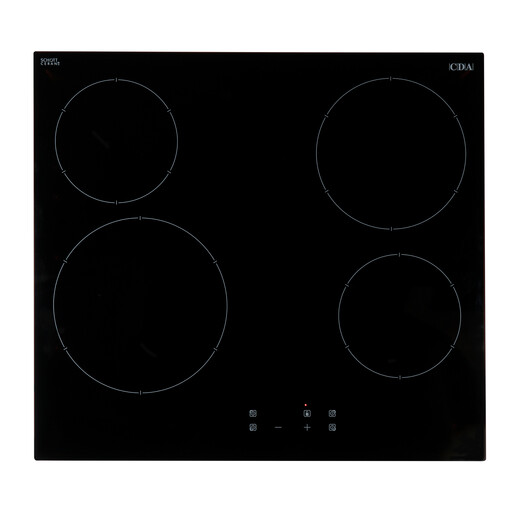
Why It Stands Out: This hob delivers a premium, minimalist aesthetic without a high-end price tag. Its frameless design allows it to sit almost flush with your worktop, while the intuitive touch controls provide precise power adjustment across nine levels, making it both stylish and highly functional.
Pros:
Who is it for? This is an excellent choice for anyone seeking a reliable and affordable 60cm ceramic hob that combines modern design with straightforward, user-friendly operation.
View Details & Price for the CDA HC6621FR
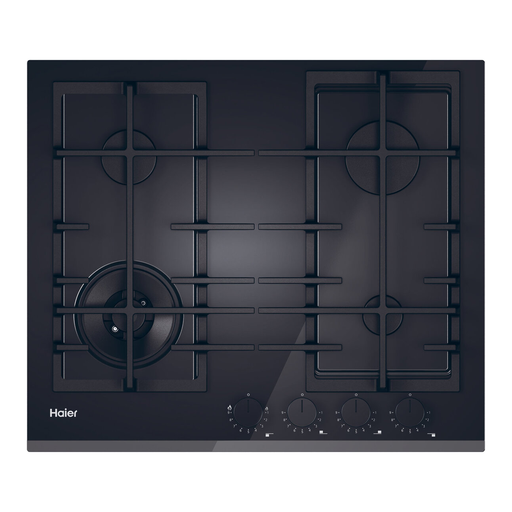
Why It Stands Out: This Haier model successfully merges the raw power of gas with the elegance of glass. The standout feature is Preci Flame, which provides nine distinct and repeatable flame levels, taking the guesswork out of gas cooking and giving you control that rivals electric hobs.
Pros:
Who is it for? Ideal for home cooks who love the traditional control of a 60cm gas hob but want a more contemporary look and the convenience of a wipe-clean surface.
View Details & Price for the Haier Gas on Glass Hob
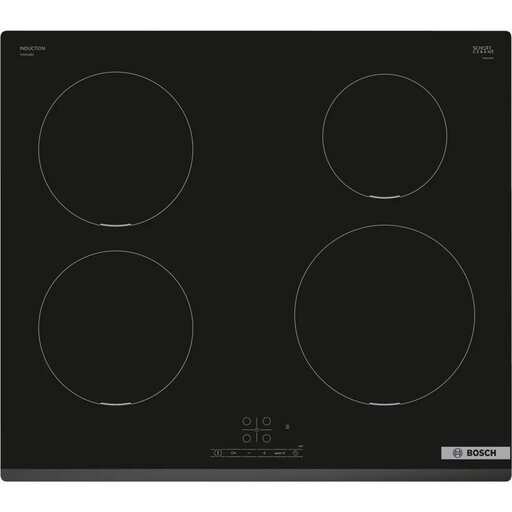
Why It Stands Out: Representing the pinnacle of speed and efficiency, this Bosch induction hob is built for performance. The PowerBoost function can boil water in a fraction of the time of other hob types, while the 17-level TouchSelect controls offer unparalleled precision for the most demanding culinary tasks.
Pros:
Who is it for? Perfect for busy families and tech-savvy cooks who prioritise speed, energy efficiency and the highest standards of safety in their 60cm induction hob.
View Details & Price for the Bosch PIE631BB5E
While these three models represent excellent choices across different technologies, your perfect hob might have different features or a different finish. If you are still exploring, we have a wider selection to suit every kitchen and budget.
Explore our full range of built-in hobs
The key difference is the heating method. A ceramic hob heats its glass surface, which in turn heats the pan. An induction hob uses a magnetic field to heat the pan directly. This makes induction much faster, more energy-efficient and safer, as the hob surface itself does not get as hot.
Yes, you do. Cookware for induction hobs must have a base made of a ferrous or magnetic material (like cast iron or some stainless steel). An easy way to check your existing pans is to see if a magnet will stick firmly to the bottom. If it does, it is induction-compatible.
This depends on the fluctuating unit prices of gas and electricity. While gas has often been cheaper per unit, it is much less efficient. A gas hob transfers only about 40-50% of its energy to the pan. A 60cm induction hob, by contrast, is around 85-90% efficient. This high efficiency can often make induction cheaper to run overall, despite potentially higher electricity unit costs.