
24/7 Customer Support

Free returns

Same-day & Next-day Delivery

Quality Guaranteed

Unlock Your Welcome Offers: FREE Delivery | Up to 80% OFF | Free 30-day JoyPlus trial
Download the APP
A great kitchen extractor fan does more than just clear the air. It’s a central part of your kitchen's design, helping to remove steam, lingering cooking smells and grease. But with so many styles and features, choosing the right 60cm cooker hood for your standard-sized hob can feel overwhelming.
As the Joybuy Product Recommendation Officer, my role is to help you navigate the options. This guide cuts through the clutter, focusing on practical advice and highlighting a few standout models to help you find an appliance that fits your kitchen and your cooking style.
Making the right choice comes down to a few key factors. Understanding these will ensure your new kitchen vent is both effective and a pleasure to use.
This is the most important decision and depends entirely on your kitchen's layout.
Many modern cooker hoods, including those we recommend, can be installed in either ducted or recirculating mode, offering excellent flexibility.
These two figures determine the performance and usability of your cooker hood.
We've selected a few models that offer a great balance of style, performance and practical features for UK homes.
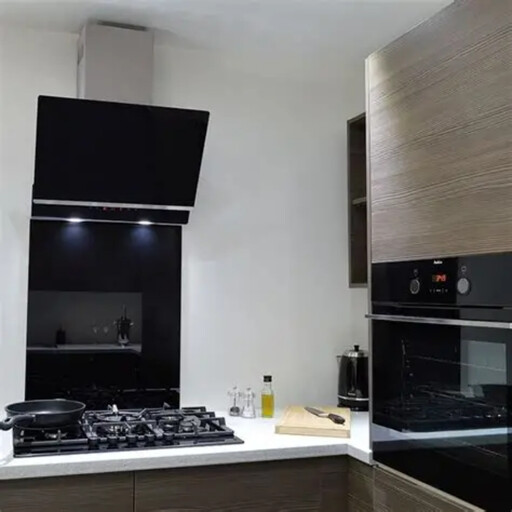
Why It Stands Out: The CDA EVA60BL is a statement piece. Its sleek, black glass angled extractor hood design provides a modern, space-efficient alternative to traditional boxy hoods, offering more headroom over the hob. It combines this striking aesthetic with powerful and flexible performance.
With a maximum extraction rate of 615 m?/h on its boost setting, it can handle intense cooking sessions with ease. The touch controls are intuitive and the bright LED lights provide excellent visibility over your cooking area.
Pros:
Who is it for? Those with a modern kitchen who want a cooker hood that is both a high-performance appliance and a design feature.
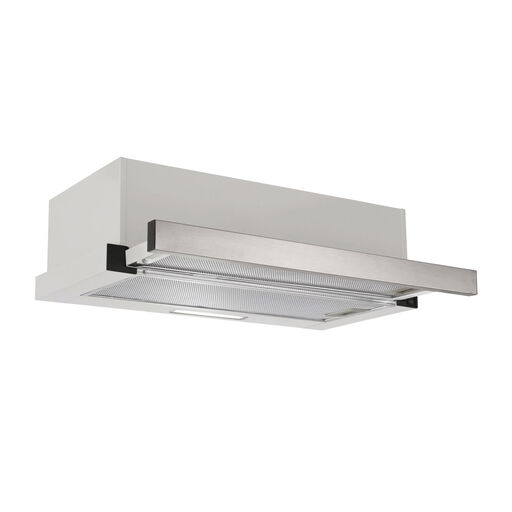
Why It Stands Out: For those who prefer a minimalist look, the CANDY telescopic cooker hood is an excellent choice. It integrates seamlessly under a cabinet, sliding out when needed and tucking away when not in use. This makes it perfect for smaller kitchens or anyone wanting to maintain clean, unbroken lines in their cabinetry.
Despite its compact form, it offers a solid extraction rate of 332 m?/h and operates at a quiet 64 dB, ensuring a fresh and peaceful kitchen environment. The classic stainless steel cooker hood finish is timeless and easy to clean.
Pros:
Who is it for? Homeowners with limited space or those seeking a minimalist, built-in appliance that doesn't dominate the kitchen's visual style.
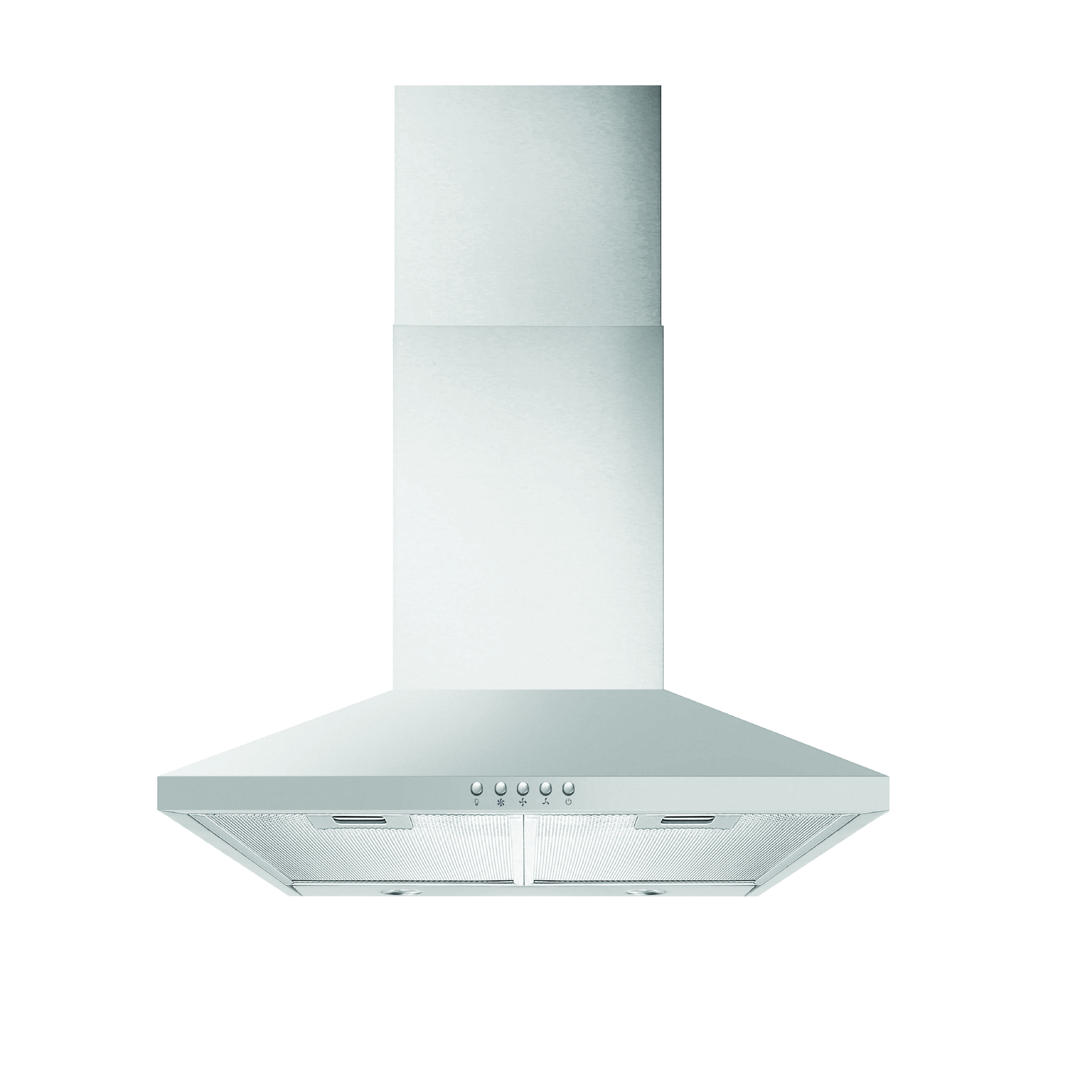
Why It Stands Out: The CDA ECH63SS is a classic and reliable chimney cooker hood. Its T-shaped design and stainless steel finish are versatile, fitting well into a wide range of traditional and contemporary kitchens. It offers straightforward functionality with three-speed push-button controls.
With a maximum extraction rate of 475 m?/h, it provides a solid level of performance for everyday cooking needs. The adjustable chimney height also allows for a flexible fit between your hob and ceiling, making it a dependable choice for many standard kitchen layouts.
Pros:
Who is it for? Anyone looking for a traditional, no-nonsense kitchen extractor fan that delivers reliable performance and a classic look.
If the models above aren't quite what you're looking for, or if you need a more compact, under-cabinet solution, there are other options available. For a streamlined and integrated look, you might consider a different type of built-in model.
Explore our full range of Visor Extractor Hood models for more discreet and space-saving choices.
1. How powerful does my 60cm cooker hood need to be? For a standard 60cm hob, an extraction rate between 300 m?/h and 600 m?/h is generally effective. If you frequently cook with strong smells (like frying fish or using a wok), aim for the higher end of this range. The CDA EVA60BL, with its 615 m?/h boost, is a good example for intensive cooking.
2. What is the difference between a ducted and a recirculating kitchen extractor fan? A ducted extractor fan vents air, steam and odours outside your home through a pipe. A recirculating cooker hood filters the air through charcoal filters to remove odours and then releases the cleaned air back into the kitchen. Ducted is often more effective, but recirculation is a great solution when external venting isn't an option.
3. How often should I clean or replace my cooker hood filters? Metal grease filters, like those found in all the recommended models, should be cleaned regularly—typically once a month, depending on use. Most are dishwasher-safe. If you are using a recirculating cooker hood, the internal charcoal filters cannot be cleaned and will need to be replaced every 3-6 months to remain effective at neutralising odours.