
24/7 Customer Support

Free returns

Same-day & Next-day Delivery

Quality Guaranteed

Unlock Your Welcome Offers: FREE Delivery | Up to 80% OFF | Free 30-day JoyPlus trial
Download the APP
As a Joybuy Product Recommendation Officer, my role is to help you navigate the market and make informed choices. When selecting a significant appliance like a wine cooler, it's easy to be swayed by marketing claims. For wine enthusiasts planning a kitchen upgrade, a 60cm dual zone wine cooler is often the centrepiece, but a few common oversights can lead to disappointment and wasted money. This guide highlights the critical factors to consider, ensuring your investment protects your wine collection for years to come.
Before you buy, be aware of these three frequent purchasing pitfalls:
To ensure you select a capable and reliable appliance, focus on these non-negotiable features. Understanding them will empower you to see past the marketing jargon and choose a cooler that truly meets your needs.
A genuine wine cooler for red and white collections must have two independently controlled compartments. Look for specific temperature ranges that cater to both types:
This is arguably the most critical technical specification for any cooler intended for kitchen integration.
Manufacturers often state the maximum capacity based on standard 75cl Bordeaux-style bottles. If your collection includes wider Burgundy, Rh?ne or Champagne bottles, the actual number of bottles you can store will be lower. When looking at a 46 bottle wine fridge, for example, consider the shape of your preferred wines and check if the shelving is adjustable or removable to accommodate larger formats.
We have identified several models that meet these strict criteria. Instead of a simple list, we have matched them to specific user needs to help you find the perfect fit.
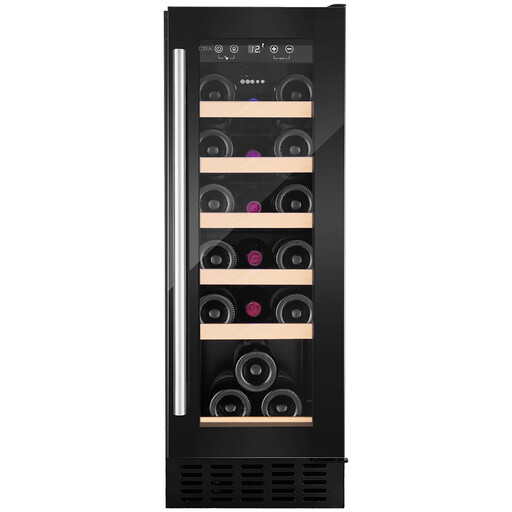
Why This Fits Their Persona: This user needs a high-performance cooler for a standard 60cm kitchen space but wants the freedom to use it as a freestanding wine cooler in a dining or utility room if their layout changes. The versatile black wine cooler finish complements most modern interiors.
The CDA CFWC604BL features a front-venting grille, directly countering the installation myth. It is genuinely designed for built-under placement without overheating. Its dual zones also avoid the single-zone compromise for mixed collections.
True installation flexibility (freestanding or built-under) and a generous 46 bottle capacity. The UV-protected glass and reversible door add practical value.
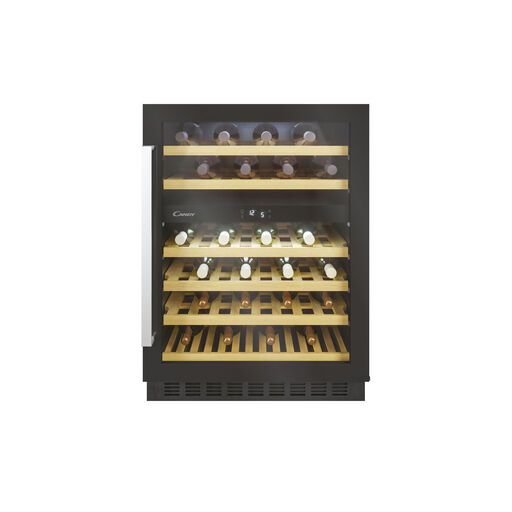
Why This Fits Their Persona: This user is planning a complete kitchen renovation and requires a high-capacity appliance that integrates flawlessly into a tall housing unit for a clean, professional finish. Aesthetics and capacity are their top priorities.
As a purpose-built integrated model, it is engineered for enclosure within cabinetry. Its dual-zone system is designed specifically for storing a mixed collection, avoiding both the installation and temperature compromises from the outset.
Offers a seamless, built-in aesthetic for a high-end kitchen look. The 46 bottle capacity and quiet operation (39 dB) are ideal for open-plan living spaces.
We have compiled a complete, real-time list of products that fully satisfy these strict selection criteria and UK safety regulations.
Running costs depend on the appliance's energy efficiency and your electricity tariff. Most modern wine coolers, including G-rated models under the new 2021 label, are designed to be efficient. Their annual energy consumption is often comparable to that of a small under-counter refrigerator. You can find the specific annual consumption (in kWh) on the product's energy label to calculate a more precise running cost.
If you are a competent and confident DIYer, installing a built-under wine cooler is achievable. The key is to follow the manufacturer's instructions precisely, especially regarding the required recess dimensions and ensuring the unit is level. However, for fully integrated models that require fitting a cabinet door, professional installation is often recommended to ensure a perfect, seamless finish and correct alignment.
While a single-zone cooler is sufficient for storing only red wine, a dual zone wine cooler provides superior flexibility and future-proofs your investment. It allows you to set one zone for long-term cellaring (around 13°C) and the other to a slightly warmer serving temperature (16-18°C). Furthermore, it gives you the option to properly chill a bottle of white or sparkling wine for guests at a moment's notice.