
24/7 Customer Support

Free returns

Same-day & Next-day Delivery

Quality Guaranteed

Unlock Your Welcome Offers: FREE Delivery | Up to 80% OFF | Free 30-day JoyPlus trial
Download the APP
Selecting a new hob is a central part of any kitchen update. For most UK homes, the standard 60cm electric hob offers the perfect balance of cooking space and seamless integration. But with the choice between ceramic and induction and a host of different features, finding the right model can feel overwhelming. This guide is designed to simplify your decision, breaking down the key considerations and highlighting some noteworthy options to help you find a hob that fits your cooking style and kitchen design.
Before diving into specific models, let's cover a few essential points. Understanding these will help you narrow down your options and choose with confidence.
The most significant choice you'll make is the heating technology. Both offer a sleek, flat black glass hob surface, but they work very differently.
4 zone ceramic hob is a popular and often more affordable choice. They are compatible with all types of flat-bottomed cookware. The surface stays hot for a while after being switched off, which is indicated by residual heat lights.60cm induction hob uses magnetism to heat the pan directly, not the glass surface. This makes it incredibly fast, energy-efficient and responsive to temperature changes. The surface itself stays much cooler, making it safer and meaning spills are less likely to burn on, creating an easy clean hob. The main consideration is that you must use pans with a ferrous (magnetic) base.Today's hobs come with features designed for convenience and safety. Look out for:
built-in electric hob models feature a touch control hob panel. This provides a completely flat surface that is easy to wipe clean and offers precise temperature adjustment.A built-in electric hob is designed to fit flush into your worktop. Always check the required cut-out dimensions against your space. Most electric hobs, particularly powerful induction models, need to be hardwired into your home's mains electricity by a qualified electrician. This is not a DIY job and is crucial for safety and compliance with UK regulations.
Here are a few models that stand out for their features, performance and design.
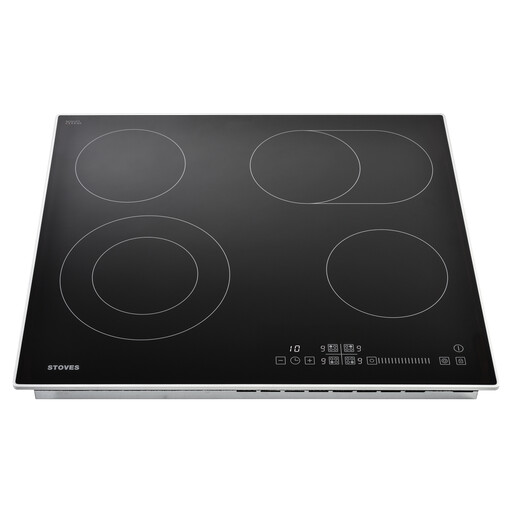
Why It Stands Out: This Stoves ceramic hob combines straightforward functionality with clever design. The SliderTouch controls are intuitive, allowing you to adjust the power with a simple swipe. Its key feature is the inclusion of two dual zone cooking areas, which provide excellent flexibility for using both small and large pans efficiently.
Pros:
Who is it for? This is an excellent choice for home cooks looking for a reliable and flexible ceramic hob that offers more versatility than basic models, without the need for induction-specific cookware.
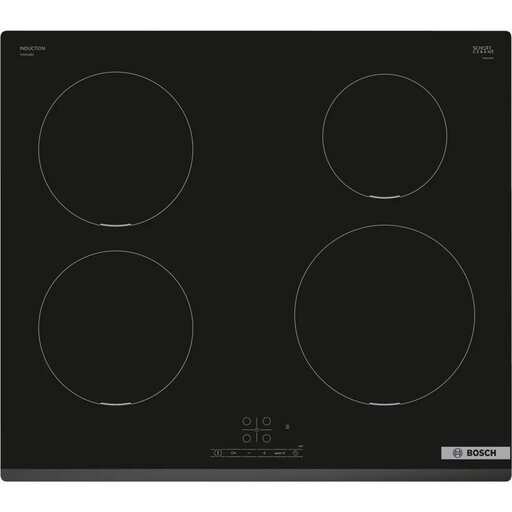
Why It Stands Out: The Bosch induction hob is engineered for speed and precision. The PowerBoost function can be applied to any zone, providing a significant surge of power to boil water or sear meat in a fraction of the time. Smart features like QuickStart, which automatically detects a pan's position, streamline the cooking process.
Pros:
Who is it for? Ideal for busy households and keen cooks who value speed, energy efficiency and precise temperature control. If you want to spend less time waiting and more time cooking, this is a strong contender.
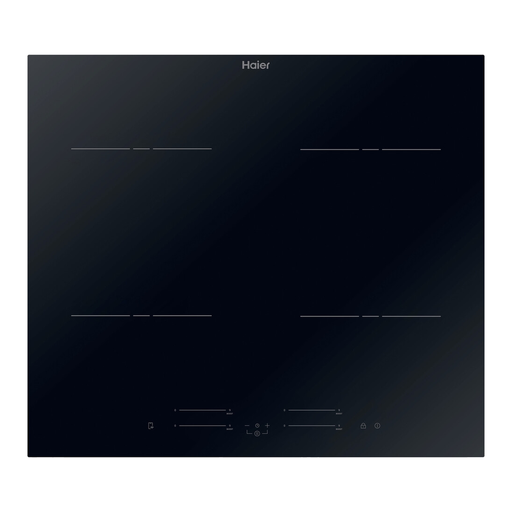
Why It Stands Out: This Haier induction hob is a leading example of a smart induction hob. Its standout features are the Multislider controls and Wi-Fi connectivity. Each zone has its own dedicated slider for immediate, direct control, while the hOn app opens up a world of guided recipes and remote monitoring for ultimate convenience and peace of mind.
Pros:
Who is it for? This hob is perfect for the tech-savvy user who loves connected home devices and wants a helping hand in the kitchen. The guided cooking and remote features make it a truly modern cooking assistant.
The models featured here represent just a small selection of what's available. If you're looking for different features, sizes or price points, there are many other hobs to explore.
Browse Our Full Range of Electric Cooking Burners
1. Do I need special pans for a 60cm induction hob? Yes, you do. Induction hobs require cookware with a magnetic base. Materials like cast iron and some stainless steel ranges are compatible. A simple way to check your existing pans is to see if a magnet sticks firmly to the bottom. Aluminium, copper and glass pans will not work unless they have a specific induction-compatible base bonded to them.
2. Is a ceramic hob difficult to clean? A ceramic hob is generally easy to clean, thanks to its flat glass surface. For daily cleaning, a simple wipe with a damp cloth and a special ceramic hob cleaner is usually sufficient. The key is to clean spills as soon as the hob has cooled down. Sugary spills should be removed carefully while still warm (following manufacturer instructions) to prevent them from pitting the glass.
3. Can I install a built-in electric hob myself? In the UK, it is strongly recommended and often legally required that any hardwired kitchen appliance, such as a built-in electric hob, be installed by a qualified electrician. This ensures the connection is safe, compliant with wiring regulations and does not invalidate your home insurance or the product's warranty.