
24/7 Customer Support

Free returns

Same-day & Next-day Delivery

Quality Guaranteed

Unlock Your Welcome Offers: FREE Delivery | Up to 80% OFF | Free 30-day JoyPlus trial
Download the APP
Upgrading your kitchen is an exciting project, but choosing the right appliances can feel overwhelming. If you've decided on a new hob, you've likely discovered the benefits of induction cooking: rapid heat, precise control and improved safety. The 60cm induction hob is a popular choice for UK homes, fitting neatly into standard worktop spaces while offering ample cooking room.
But with so many features available, from smart connectivity to flexible cooking zones, how do you find the right model for your home? This guide cuts through the clutter, offering practical advice to help you compare key features and find a hob that suits your cooking style and installation needs.
Making an informed choice comes down to understanding a few core features. Here’s what to look for when comparing models.
One of the most important distinctions is how the hob connects to your home's electricity.
A standard 4 zone induction hob provides four distinct heating areas, which is perfect for most daily cooking tasks. However, if you enjoy using larger or irregularly shaped cookware, you may want more versatility.
An induction hob with a flexible zone (often called a 'bridge' or 'link' zone) allows you to digitally combine two adjacent cooking zones into one large, continuous area. This is ideal for griddle pans, fish kettles or large casserole dishes, ensuring even heat distribution across the entire base of the pan.
Modern hobs have moved away from physical dials. A touch control hob offers a sleek, easy-to-clean surface. Controls can range from a single slider that you use to select a zone and then adjust the power, to more advanced multi-slider controls that provide a dedicated slider for each zone.
For those who love a connected home, a smart induction hob with WiFi is the latest innovation. These hobs connect to an app on your smartphone, allowing you to monitor cooking remotely, access guided recipes that automatically set the hob's temperature and receive notifications.
We've selected a few standout models that cater to different needs, from the tech-savvy cook to the DIY renovator.
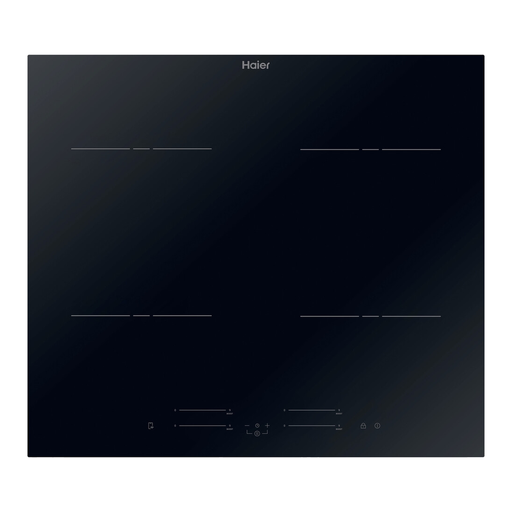
Why It Stands Out: This Haier induction hob is built for the modern, connected kitchen. Its standout feature is the Wi-Fi connectivity and hOn app, which acts as a personal cooking assistant. The multislider controls also offer a level of precision that keen cooks will appreciate, with a dedicated touch slider for each of the four zones.
Pros:
Who is it for?: The tech-savvy homeowner who wants a smart induction hob with WiFi that integrates seamlessly into their connected lifestyle and offers advanced control.
View Details for the Haier HAISJ64MC
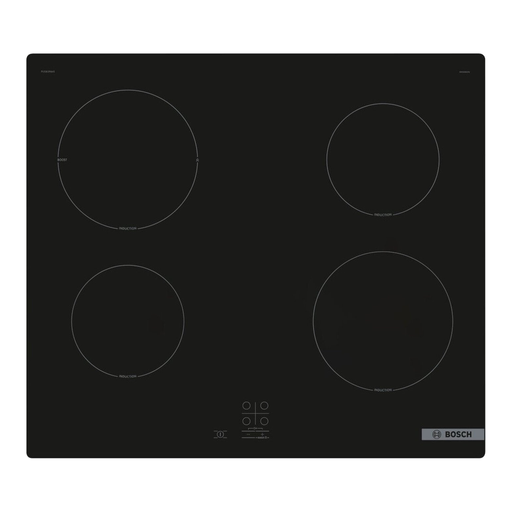
Why It Stands Out: The key appeal of this Bosch induction hob is its simplicity. As a 13 amp induction hob, it features a 'Plug & Play' design, meaning it can be plugged directly into a standard wall socket without needing an electrician for hardwiring. Despite this, it still packs in useful features like PowerBoost for rapid heating.
Pros:
Who is it for?: Anyone looking for a straightforward upgrade without the hassle or expense of professional hardwiring, such as DIY renovators or those replacing an old electric hob.
View Details for the Bosch PUG61RAA5B
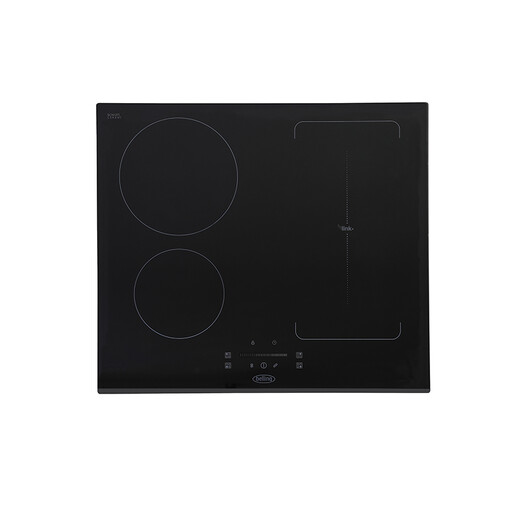
Why It Stands Out: The Belling induction hob is designed for cooking flexibility. Its Link+ feature allows you to combine two zones into one large cooking area, making it an excellent induction hob with a flexible zone. This is perfect for accommodating large griddle pans or fish kettles, giving you more freedom in the kitchen.
Pros:
Who is it for?: The enthusiastic home cook who frequently uses a variety of pan sizes and needs the versatility of a flexible cooking zone.
View Details for the Belling ComfortCook IHL603
While a black induction hob with touch controls offers a sleek, modern look, we understand it might not be for everyone. If you prefer the tactile feedback of physical dials, you may want to explore other options.
For those who find knobs more intuitive, take a look at our curated selection of electric hobs with knobs.
Yes, you do. Induction hobs work by using magnets to generate heat directly in the cookware. Therefore, your pots and pans must have a ferromagnetic base (i.e., a magnet will stick to it). Most modern cookware is labelled as induction-compatible, but you can easily test your existing pans by seeing if a fridge magnet sticks firmly to the bottom.
Yes. A 13 amp induction hob is specifically designed with a power management system. This system intelligently distributes the available power across the zones in use. While it may limit the maximum power if all four zones are on full blast simultaneously, it is more than sufficient for everyday cooking and can still boil water rapidly using boost functions.
Cleaning a touch control hob is straightforward. First, ensure the hob is off and completely cool—a residual heat indicator will usually show when it's safe. Wipe away any loose debris, then use a soft, damp cloth and a small amount of specialist ceramic hob cleaner. Buff it dry with a clean microfibre cloth. Avoid using abrasive sponges, scouring pads or harsh chemical cleaners, as these can scratch or damage the glass surface.