
24/7 Customer Support

Free returns

Same-day & Next-day Delivery

Quality Guaranteed

Unlock Your Welcome Offers: FREE Delivery | Up to 80% OFF | Free 30-day JoyPlus trial
Download the APP
As a Joybuy Product Recommendation Officer, my role is to help you navigate the crowded market of kitchen appliances. When it comes to upgrading your cooktop, the 60cm induction hob has become a popular choice in UK homes for its speed, safety and sleek appearance. However, not all hobs are created equal, and marketing claims can often lead to buyer's remorse.
This guide cuts through the clutter, highlighting the common traps to avoid and the essential features to look for, ensuring you choose an appliance that truly fits your cooking style and kitchen design.
Many shoppers are drawn in by impressive feature lists, only to find their new hob is frustrating to use daily. Here are three frequent issues we see and how to sidestep them.
To ensure your new electric induction cooktop performs as expected, focus on these non-negotiable technical details.
A typical built-in induction hob with four zones will have a total connected power load between 6,000W and 7,400W. This is a critical figure. In the UK, this level of power means the hob cannot be plugged into a standard 13A wall socket.
This is arguably the most important feature for cooking versatility.
The user interface dictates your daily interaction with the hob. Look for controls that are intuitive and responsive.
Instead of a generic list, we've matched specific models to different user needs, helping you find the right fit for your lifestyle.
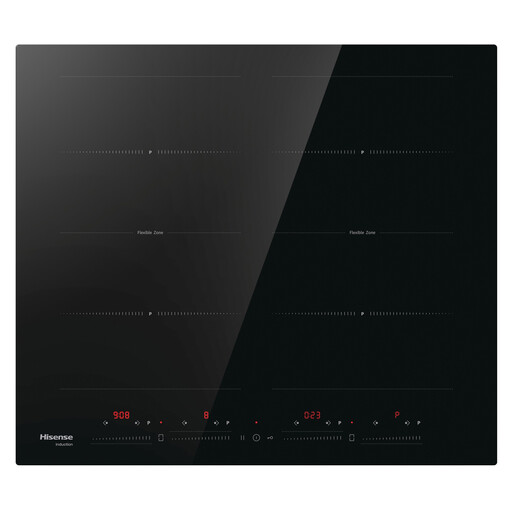
Why This Fits Their Persona: This user needs a reliable and versatile hob for preparing daily family meals, from boiling pasta quickly to using a large griddle for a weekend breakfast. Safety and ease of use are paramount.
The Area Flex feature directly solves the inflexible zone problem, allowing two zones to be combined for larger pans. The four individual slider controls provide a far more intuitive experience than basic touch buttons, avoiding control panel frustration.
The combination of a flexible cooking zone and precise, individual slider controls offers excellent versatility and user-friendliness for busy kitchens. Features like Rapid Boil and a Child Lock add practical value.
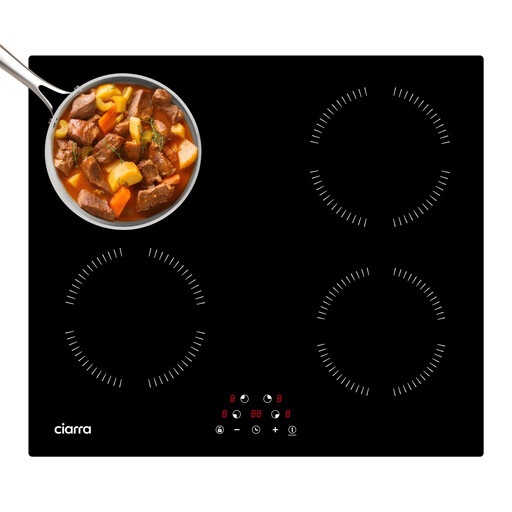
Why This Fits Their Persona: This buyer is focused on achieving a modern kitchen aesthetic and the core benefits of induction cooking—speed and efficiency—without paying for premium features they may not use. Value for money is the top priority.
This model focuses on delivering the essentials well. It provides a straightforward touch control interface and all the necessary safety functions (Child Lock, Pan Detection, Overheat Protection), avoiding the pitfalls of overly complex or unreliable systems at a lower price point.
It offers a solid 6000W total power output with 9 power levels for precise control. It's a functional and reliable 4 zone induction hob that integrates seamlessly into standard 60cm cabinetry.
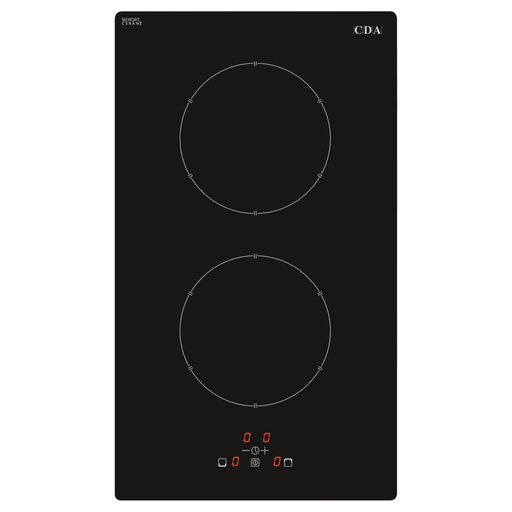
Why This Fits Their Persona: This user is designing a bespoke kitchen and wants to mix and match cooking surfaces. They might want two induction zones next to a gas wok burner or a teppanyaki grill, rather than a standard four-zone layout.
It completely sidesteps the "one-size-fits-all" trap of a standard 60cm hob. By offering a modular 30cm unit, it provides the flexibility to create a truly personalised cooking station tailored to specific needs, ensuring no space or function is wasted.
Its key advantage is modularity. The 2.8kW power load may allow for installation on a 13A supply (subject to an electrician's confirmation), simplifying installation compared to more powerful hobs.
We have compiled a complete, real-time list of products that fully satisfy these strict selection criteria and UK safety regulations.
Here are answers to a few common questions UK buyers have about switching to induction.
Yes, you do. Induction cooking works using electromagnetism, so your pots and pans must be made of a ferrous (magnetic) material. Materials like cast iron and magnetic stainless steel work perfectly. Aluminium, copper and glass pans will not work unless they have a specific magnetic plate bonded to their base. An easy way to check your existing cookware is to see if a fridge magnet sticks firmly to the bottom.
While the purchase and installation cost can be higher than other hob types, an energy efficient hob like induction typically has lower running costs. Because it heats the pan directly with over 90% efficiency, it uses significantly less electricity to boil a pint of water than a ceramic (around 70% efficient) or gas hob. The exact cost depends on your electricity tariff and usage, but it is generally the most economical electric cooking method.
It is strongly recommended that you do not. A built-in induction hob is not a plug-in appliance. It must be hardwired into a dedicated, high-amperage circuit by a qualified and certified electrician. This is crucial for safety and to ensure compliance with UK wiring regulations (BS 7671). Incorrect installation can be a serious fire hazard and will invalidate your home insurance and the product's warranty.