
24/7 Customer Support

Free returns

Same-day & Next-day Delivery

Quality Guaranteed

Unlock Your Welcome Offers: FREE Delivery | Up to 80% OFF | Free 30-day JoyPlus trial
Download the APP
A 65-inch QLED 4K Smart TV can turn a UK living room into a more immersive space for films, sport, streaming and gaming. However, a large screen and impressive specification list do not automatically guarantee the right purchase.
The main challenge is separating useful performance features from marketing language. Before choosing a 65-inch 4K TV, check the panel technology, supported refresh rate, HDMI specification, HDR formats, smart platform and running costs. The right combination depends on how you watch rather than on the longest feature list.
A QLED television generally uses a quantum-dot layer to improve colour reproduction and brightness. It does not necessarily use local dimming. Mini LED TV models add a more precise backlight system, which can improve control between bright and dark areas.
This distinction matters when watching films in a dim room. A standard edge-lit QLED may provide vivid colour but show more grey in dark scenes, while a Mini LED model can offer more controlled contrast. QNED models, such as selected LG QNED TVs, use a different combination of display technologies and should be compared by their full backlight specification rather than the name alone.
A listing may mention motion processing, Game Accelerator or a supported refresh rate. These terms are not interchangeable with a panel’s native refresh rate.
For console gaming, check whether the TV supports 4K at 120Hz, VRR and ALLM through the relevant HDMI ports. PC players should also confirm the maximum refresh rate, graphics card compatibility and whether the claimed 144Hz gaming TV or 165Hz mode applies at the resolution they intend to use.
A 65-inch screen is approximately 163–165cm diagonally and around 1.45m wide. Measure your TV unit, wall and delivery route before ordering. A slim design may also have modest built-in speakers, making a soundbar useful for films and live sport.
UK energy labels run from A to G. Many large TVs sit in the lower half of this scale, so compare the stated kWh per 1,000 hours for SDR and HDR viewing. Actual use depends on brightness, content and viewing time.
All the models below provide 4K Ultra HD resolution of 3840 × 2160 pixels, but picture performance can still differ significantly. Look for:
A Samsung QLED TV may use Tizen and Samsung’s image processing, while a Google TV model from TCL focuses on app discovery and voice-led recommendations. LG’s webOS offers a separate interface and Magic Remote experience. Compare the services you actually use, including BBC iPlayer, ITVX, Channel 4, Netflix and Prime Video.
A genuine HDMI 2.1 TV is useful for newer consoles and gaming PCs, but confirm the number of full-bandwidth ports. Features to check include VRR, ALLM, eARC and 4K at 120Hz or above.
Four HDMI 2.1 inputs can be more convenient if you connect two consoles, a PC and an eARC soundbar. If a specification only says “HDMI” without detailing bandwidth or refresh support, check the manufacturer’s manual before buying.
Built-in audio output ranges from basic 2.0-channel systems to larger 2.1 or 2.2-channel designs. Dolby Atmos compatibility is useful with compatible content, but the physical speaker layout still affects the result. A separate soundbar or AV system may provide a wider soundstage.
For wall mounting, check the VESA pattern, wall strength, ventilation clearance and cable access. Large televisions should be handled by two people and secured properly to reduce the risk of tipping.
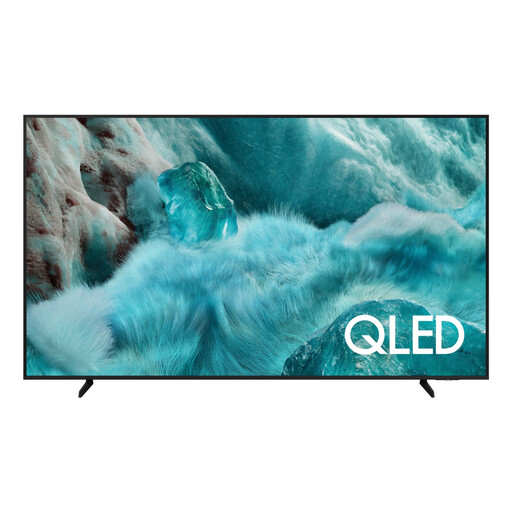
Why This Fits Their Persona: A practical choice for families wanting a large-screen QLED television for everyday streaming, films and television without moving into Mini LED pricing.
Its listing clearly identifies QLED, Quantum HDR and three HDMI inputs, helping buyers avoid assuming that every QLED model includes Mini LED or four HDMI 2.1 ports.
100% Colour Volume with Real Quantum Dot, Q4 AI Processor, Tizen OS and a 5-year manufacturer warranty upon registration.
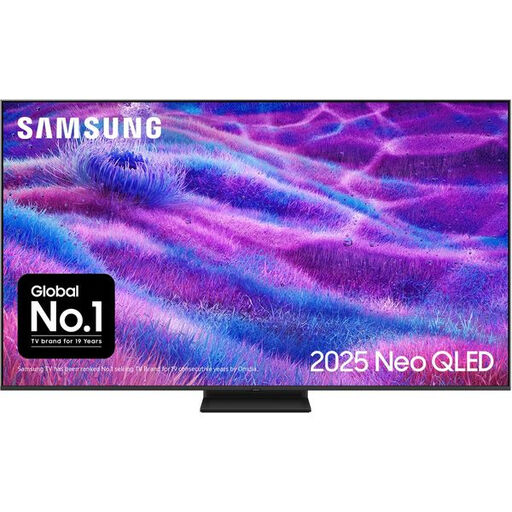
Why This Fits Their Persona: Suits film enthusiasts and technology-focused households seeking Mini LED contrast, enhanced HDR support and a broad gaming specification.
The specification separates its 100Hz native refresh rate from supported 144Hz refresh, making the distinction clearer for buyers comparing gaming claims.
Quantum Matrix Technology Core with Mini LEDs, four HDMI inputs, FreeSync Premium Pro, Tizen and 30W audio output.
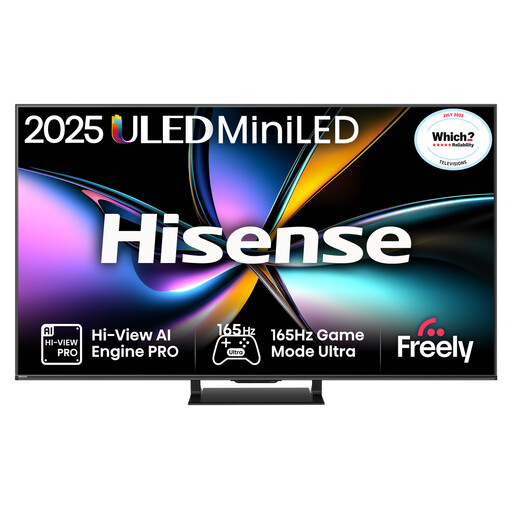
Why This Fits Their Persona: Designed around fast gaming and live sport, with a high native refresh rate and gaming functions across its HDMI inputs.
The specification states 165Hz native refresh, 4K 120Hz input lag information, VRR and ALLM rather than relying only on motion-smoothing terminology.
Mini LED local dimming, Dolby Vision IQ, HDR10+ Adaptive, four HDMI 2.1 ports and a 2.1.2-channel audio system.
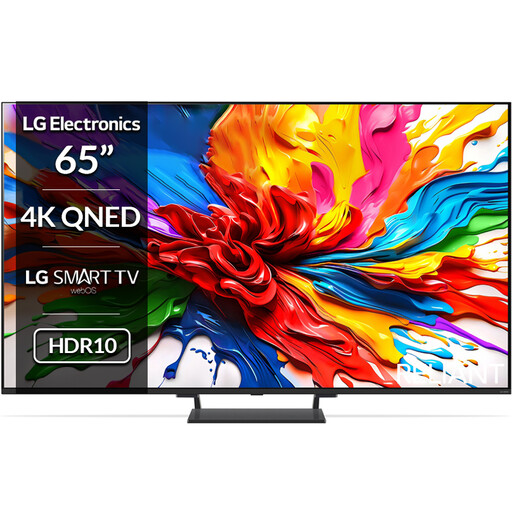
Why This Fits Their Persona: A strong match for viewers who prioritise Dolby Vision films, clear dialogue, wall mounting and high-refresh console or PC gaming.
Its specification identifies a native 120Hz panel separately from VRR up to 144Hz, while also listing four HDMI 2.1 ports and the VESA mounting size.
Mini LED Precision Dimming Pro, Dolby Vision, 40W 2.2-channel audio, webOS 25, Wi-Fi 6 and AMD FreeSync.
We have compiled a complete, real-time list of products that fully satisfy these strict selection criteria and UK safety regulations.
Not necessarily. Viewing distance, room layout and seating position matter more than room size alone. A 65-inch 4K TV is often suitable when viewers sit roughly 2–3 metres away, but measure the space and consider reflections, wall width and furniture height before ordering.
The benefit depends on the console and game. Many console titles target up to 120 frames per second, so a 120Hz panel with VRR and ALLM can be useful. A 144Hz gaming TV may be more relevant to PC users with a compatible graphics card. Always check which HDMI ports support the claimed refresh rate.
Consumption varies according to brightness, HDR content, screen settings and hours watched. Use the UK energy label’s kWh-per-1,000-hours figure to compare models on a consistent basis. Lowering brightness and enabling an appropriate energy-saving mode can reduce day-to-day consumption, although the result will differ between households.