
24/7 Customer Support

Free returns

Same-day & Next-day Delivery

Quality Guaranteed

Unlock Your Welcome Offers: FREE Delivery | Up to 80% OFF | Free 30-day JoyPlus trial
Download the APP
Upgrading to a massive 75-inch screen can transform your gaming setup from a simple hobby into a truly cinematic, immersive experience. However, the path to finding the right large-screen TV is littered with confusing marketing terms and technical specifications that often fail to deliver on their promises. Many buyers end up with a screen that looks impressive in the showroom but disappoints when it matters most—during a fast-paced gaming session.
Before you invest, it is crucial to understand the common pitfalls. Here are a few traps to watch out for:
To avoid disappointment, focus on the core specifications that directly impact gaming performance. Cutting through the clutter means prioritising technology over marketing buzzwords.
For fluid, responsive gameplay, a 144Hz 4K TV with a native panel is the gold standard. A native 144Hz refresh rate means the screen can physically refresh the image 144 times per second, delivering exceptionally smooth motion without the input lag associated with software-based motion smoothing. When paired with Variable Refresh Rate (VRR), such as FreeSync Premium Pro, the TV synchronises its refresh rate with your console or PC's frame rate in real-time. This eliminates screen tearing and stuttering, which is a common issue in graphically demanding games.
The technology used to light the screen is critical for contrast and HDR performance. While standard Direct LED TVs provide uniform light, they struggle to produce deep blacks alongside bright highlights. On the other end, OLED offers perfect blacks but can be susceptible to burn-in and is often more expensive in larger sizes.
A TCL 75 inch Mini LED TV represents a significant advancement. By using thousands of tiny LEDs grouped into hundreds of local dimming zones, it can precisely control which parts of the screen are lit. This allows for deep, inky blacks and brilliant highlights in the same frame, creating the stunning contrast needed for impactful HDR and bringing out hidden details in dark game environments.
A modern gaming TV is also a central hub for all your entertainment. A Smart Google TV 75 inch model integrates your streaming apps, live channels and game inputs into one intuitive interface. Features like a built-in Google Assistant for hands-free voice commands and personalised content recommendations streamline your experience, letting you spend less time navigating menus and more time playing or watching.
We have analysed the market to identify products that align with specific user needs, ensuring they deliver on their technical promises without the marketing fluff.
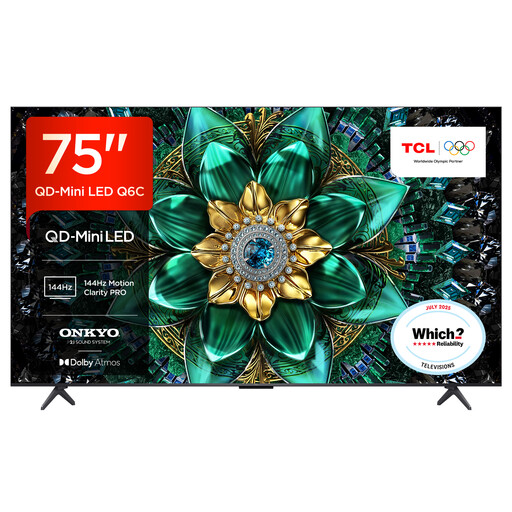
Why This Fits Their Persona: This model is built for gamers who want to extract every bit of performance from their PS5, Xbox Series X or high-end PC. It is a true large screen TV for PS5, offering an uncompromised visual and audio experience for a large UK living room.
It features a native 144Hz display, not software interpolation. Its QD-Mini LED backlight with precise dimming zones delivers genuine HDR impact, and its full-spec HDMI 2.1 ports support 4K@144Hz, VRR and ALLM.
Exceptional contrast and brightness from QD-Mini LED technology. Comprehensive HDR support, including Dolby Vision IQ, which adapts the picture to your room's lighting.
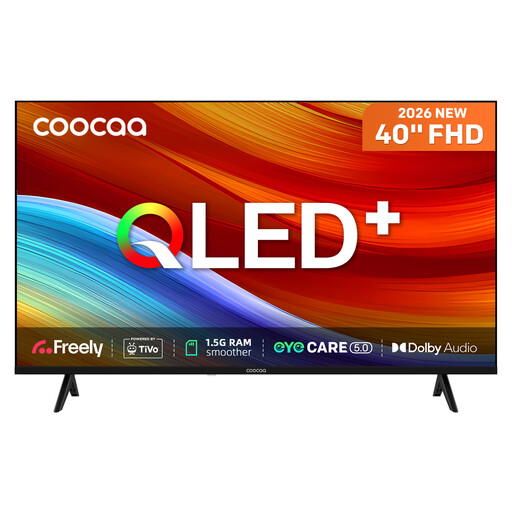
Why This Fits Their Persona: Not everyone has the space for a 75-inch screen. This 40-inch model is a practical choice for a bedroom, study or smaller flat, offering smart features and good picture quality without dominating the room.
It focuses on delivering a solid Full HD experience with QLED technology for better colour, rather than overpromising on 4K or HDR features that can't be properly supported at this price point. It is an honest, well-specified TV for its category.
Features the TiVo OS for a user-friendly smart TV experience and Freely built-in for streaming live TV over Wi-Fi. Hardware-level eye care helps reduce strain during long sessions.
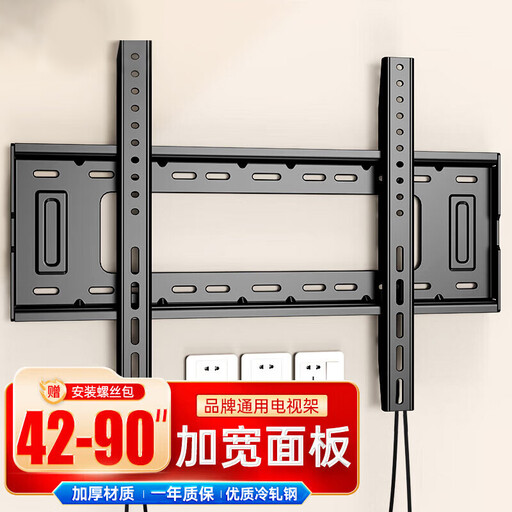
Why This Fits Their Persona: For the homeowner who has invested in a premium large-screen TV and wants to ensure it is mounted securely and aesthetically. This is for those who value safety and a clean, professional finish over a risky DIY job.
Avoids the critical post-purchase trap: improper installation. A heavy 75-inch TV requires secure mounting to wall studs. This service ensures it is done correctly, preventing damage to the TV, the wall or worse.
A heavy-duty fixed bracket suitable for screens up to 90 inches provides a secure fit. The professional installation service handles the entire process, ensuring a safe and perfectly level setup.
Once you have chosen your screen, finding the right furniture is the next step. A sturdy and stylish stand can complete your entertainment setup.
Whether a 75-inch TV is too big depends on your viewing distance. For a 4K screen of this size, the ideal viewing distance is typically between 1.5 and 2.5 metres (around 5 to 8 feet). At this range, the screen fills your field of view for an immersive experience without causing eye strain or forcing you to turn your head to see the action. Unlike older HD TVs, the high pixel density of 4K allows you to sit closer without seeing individual pixels.
Input lag is the delay, measured in milliseconds (ms), between you pressing a button on your controller and the corresponding action appearing on the screen. For gaming, especially competitive or fast-paced titles, low input lag is critical for a responsive feel. A high input lag can make gameplay feel sluggish and disconnected. Look for TVs that feature an Auto Low Latency Mode (ALLM), which automatically switches the TV to its fastest setting when a console is detected, and a dedicated 'Game Mode' with input lag below 20ms.
Currently, the PlayStation 5 and Xbox Series X output games at a maximum of 120Hz. A TV with a native 120Hz panel is therefore sufficient to get the smoothest performance from these consoles. However, opting for a 144Hz 4K TV offers a degree of future-proofing. It ensures you are prepared for any potential console software updates that might enable higher refresh rates and makes the TV an excellent monitor for a high-end gaming PC, which can already push frame rates to 144fps and beyond.