
24/7 Customer Support

Free returns

Same-day & Next-day Delivery

Quality Guaranteed

Unlock Your Welcome Offers: FREE Delivery | Up to 80% OFF | Free 30-day JoyPlus trial
Download the APP
Choosing to upgrade to a 75 inch TV is a significant step towards creating a truly immersive home entertainment experience. The sheer scale can transform your living room into a personal cinema or a competitive gaming arena. However, the market is filled with technical terms like QLED, Neo QLED and varying refresh rates, which can make selecting the right model a challenge.
As a Joybuy Product Recommendation Officer, my role is to help you navigate these options. This guide provides practical, straightforward advice to help you understand the key features that matter, ensuring you find a large screen TV that perfectly suits your home and viewing habits.
Making an informed decision goes beyond just the screen size. Here are a few crucial factors to consider, particularly for the UK market.
Most premium large-screen TVs today use a form of QLED technology. Understanding the difference is key to picture quality.
If you plan to connect a next-generation console or a high-end PC, certain features are non-negotiable for a smooth and responsive experience.
The OS is the brain of your 75 inch smart TV, controlling the interface and app access. The two most common systems you'll encounter are Samsung's Tizen and Google TV. Tizen is known for its fast, minimalist interface, while Google TV excels at content aggregation, pulling recommendations from all your streaming services into one central hub. Both offer access to all major UK streaming apps like BBC iPlayer, Netflix and Disney+.
Here are a few standout models that cater to different needs, from interior design enthusiasts to dedicated gamers.
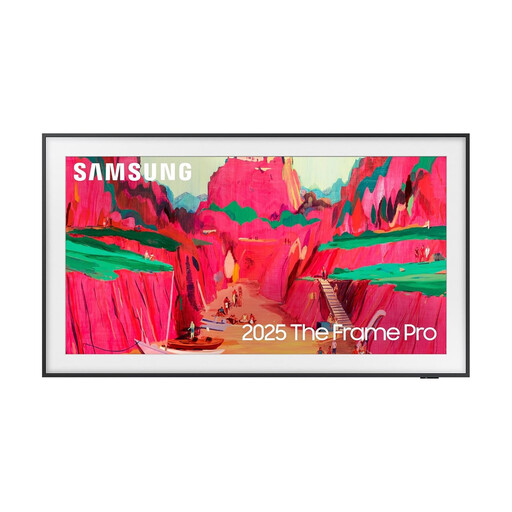
Why It Stands Out: The Frame Pro redefines the concept of a large screen TV for the living room. Its standout feature is the Wireless One Connect Box, which transmits a full 4K 144Hz signal to the screen from up to 10 metres away. This allows for a completely clean, cable-free wall installation. When turned off, Art Mode transforms the screen into a piece of gallery-quality art, enhanced by the new Neo QLED panel and a glare-free Matte Display.
Pros:
Who is it for?: Design-conscious individuals who prioritise aesthetics and a clutter-free environment without compromising on picture quality.

Why It Stands Out: This Samsung 75 inch TV is a fantastic all-rounder that delivers a brilliant cinematic experience. It uses established QLED technology to produce 100% colour volume, ensuring vivid and accurate colours. The Q4 AI Processor does an excellent job of upscaling lower-resolution content to near-4K quality and optimises contrast with Quantum HDR. Its Object Tracking Sound Lite (OTS Lite) feature adds an immersive audio dimension by making the sound appear to follow the action on screen.
Pros:
Who is it for?: Those seeking a reliable and high-performing home cinema TV that delivers impressive picture and sound quality for movies and general viewing.
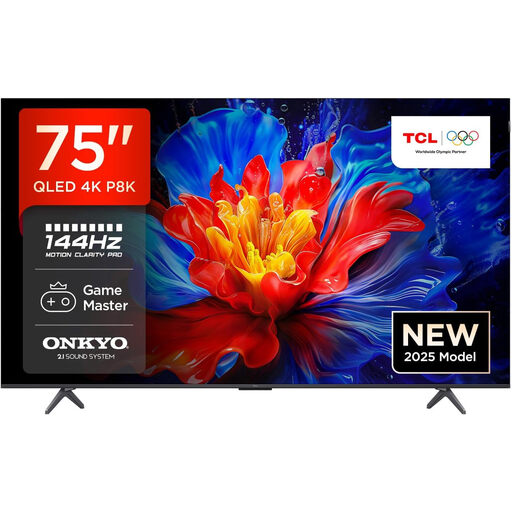
Why It Stands Out: For those looking for a 75 inch TV for gaming, the TCL 75P8K-UK is a compelling option. It is packed with features tailored for performance, including a native 144Hz refresh rate, four HDMI 2.1 ports, VRR and AMD FreeSync Premium. This ensures ultra-smooth, tear-free gameplay. Beyond gaming, it delivers a superb cinematic experience with its QLED panel, support for all major HDR formats (including Dolby Vision IQ) and an integrated Onkyo 2.1 sound system with a built-in subwoofer for powerful audio.
Pros:
Who is it for?: Serious gamers and movie enthusiasts who want high-end performance features and powerful built-in audio without a premium price tag.
If these specific models don't quite match what you're looking for, there are many other excellent televisions available. Our full collection of 4K smart LED television models offers a wider range of brands, technologies and price points to suit any home.
This depends on your viewing distance. A general guideline is to sit at a distance of 1.5 to 2.5 times the screen's diagonal measurement. For a 75-inch screen (approx. 190 cm diagonal), the suggested viewing distance is between 2.8 and 4.7 metres. Many modern UK living rooms can accommodate this comfortably, but it's always wise to measure your space first.
The main difference is the backlight. A standard QLED TV uses a conventional LED backlight. A Neo QLED TV uses much smaller Mini LEDs, allowing for hundreds of local dimming zones. This precision gives Neo QLED models significantly better control over contrast, resulting in deeper blacks, brighter highlights and less "blooming" or haloing around bright objects on a dark background.
You can often find competitive 75 inch TV deals UK-wide during major retail events like Black Friday, Cyber Monday and the Boxing Day sales. It is also worth keeping an eye on retailers like Joybuy throughout the year, as promotions on current and previous-generation models can appear at any time, offering substantial value.