Small-desk level builders
If you type names or scripts and use editor shortcuts, a 75% layout can preserve arrow and function keys while leaving more room for your mouse than a full-size board.


For a small desk used to build and playtest a platform level, start with the keys your editor needs: a 75% layout retains a function row and arrow keys in a compressed arrangement, TKL gives those controls more room, and 60% frees more mouse space but removes dedicated access to them. Consider remapping if you use repeated editor commands or switch devices; adjustable actuation is worth considering when tuning movement inputs is an important part of playtesting, not as a substitute for a workable editing layout.
If you type names or scripts and use editor shortcuts, a 75% layout can preserve arrow and function keys while leaving more room for your mouse than a full-size board.
If you repeatedly test movement and jumps, configurable actuation may be useful when you are willing to spend time adjusting it. The keyboard still needs to accommodate your editing commands.
If mouse space matters more than dedicated navigation keys, consider 60%. Its missing dedicated function, arrow and navigation keys can make editor work less convenient.
For building and playtesting on one small desk, decide which editing keys need direct access before choosing input-tuning or connection features.
Choose it when: You need a function row and arrow keys for editing but want a narrower board.
Trade-off: Navigation keys sit closer together than on a conventional TKL layout.
Choose it when: You want a more conventional arrangement without a numpad, particularly if configurable playtest inputs also matter.
Trade-off: It uses more desk width than a 75% or 60% board.
Choose it when: Mouse room takes priority and you are comfortable using key layers for editor commands.
Trade-off: Function, arrow and navigation keys are not dedicated keys.
| Concern | What to check | Who this matters to |
|---|---|---|
| Editing keys and mouse room | Check the physical layout and the positions of the arrow, function and navigation keys against your editor shortcuts. | When I alternate between placing level objects and using shortcuts, I need direct access to the controls I use most without crowding my mouse; around 33% of consumers put retained editing controls first. |
| Playtest input tuning | On the exact model, check the actuation range, rapid-trigger settings and whether you can change or disable them. | If repeated movement inputs are central to my testing, I want settings I can adjust without making ordinary typing too sensitive; around 27% of consumers prioritise input tuning. |
| Remapping and device switching | Confirm operating-system compatibility, remapping options and the connection modes you intend to use. | When I move between creation devices or reuse editor commands, I want my key assignments and connection choices to fit that workflow; roughly 27% of consumers place workflow customisation first. |
| Desk placement | Measure usable desk depth and check where the keyboard and mouse can sit relative to your chair and screen. | For longer sessions at a shallow desk, I need space to position both keyboard and mouse comfortably; about 13% of consumers make workstation placement their primary concern. |
A 60% board makes room for the mouse but removes dedicated function, arrow and navigation keys, which may add key-layer steps in a level editor.
List your frequent commands and check their physical keys or layer combinations before deciding between 60%, 75% and TKL.
Adjustable actuation can serve repeated movement testing, but a very sensitive setting may be less forgiving while typing.
Check the model's adjustment and rapid-trigger controls, then try a moderate setting for mixed editing and testing.
A compact board alone does not address screen, chair or mouse placement. The UK Health and Safety Executive advises keeping the keyboard central and just below elbow height.
Measure the usable desk area and check that you can position the mouse alongside the keyboard without twisting towards either device.
Keychron UK lists the K3 Max UK-ISO as a low-profile 75% option for a compact editing and playtesting setup.
The G515 RAPID TKL is a low-profile option for users who want a TKL key set and configurable playtest inputs.
The Huntsman V3 Pro Mini is a 60% analogue-optical option for a compact, input-focused test station.
These 75% and 65% keyboards are compact options for a desk shared by level editing and playtesting. Check each model's physical key arrangement and layout against your editor before choosing.
 No image available
Consider this 75% board if you want a compact wireless keyboard for a mixed editing and playtesting desk. Check the exact physical layout and whether its connection options suit your test setup.
 No image available
Its 65% analogue format is relevant if compactness and configurable playtest inputs both matter. Check how your frequent function-row commands work on this layout.
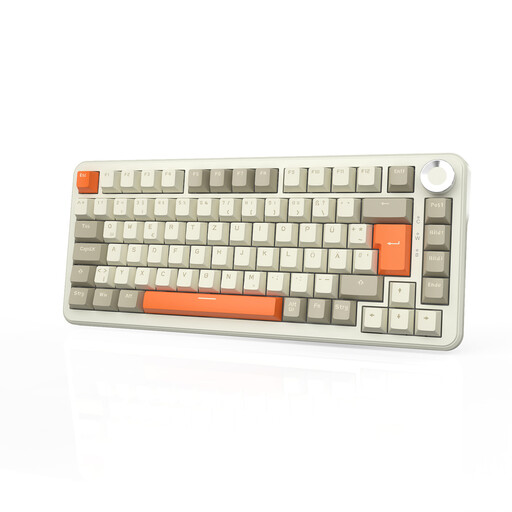 No image available
This 75% keyboard suits a compact desk if its key arrangement works for your editing commands. Its German QWERTZ layout is a material choice: compare the physical keys and operating-system input setting with the layout you intend to type on.
 No image available
Consider its compact 75% format if you want connection choices for an editing and testing desk. The stated modes are wired, Bluetooth and 2.4 GHz; check the key positions and whether the US QWERTY layout suits your typing.
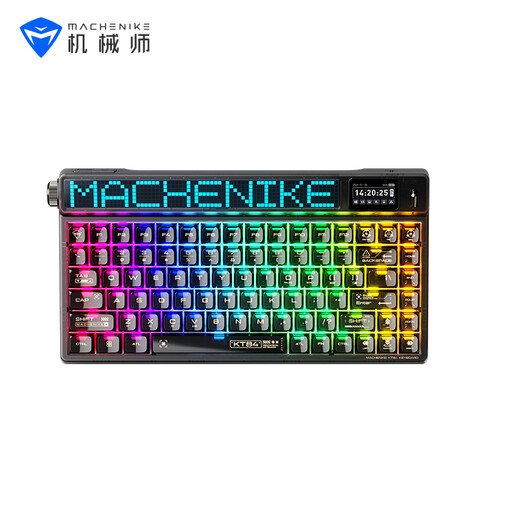 No image available
This 75% keyboard is relevant if you need a compact board with connection-mode choice. Check its physical key positions for editor shortcuts and make sure the US QWERTY layout fits your typing needs.
Choose 60% when mouse space matters more than direct access to editor keys. The layout lacks dedicated function, arrow and navigation keys, so check whether using key layers for your frequent commands is acceptable.
Start with 75% if desk width is tight and you still need arrow keys and a function row. Choose TKL if you have room for a more conventional, less compressed key arrangement; check the exact board's dimensions and key positions either way.
A wired mode is straightforward for a fixed test station, but connection choice depends on the exact keyboard and setup. If you prefer wireless, check its supported modes, charging routine and whether it also offers the wired data mode you want.
Consider it if tuning repeated movement inputs is a significant part of your playtesting. Logitech G specifies adjustable actuation on the G515 RAPID TKL, and Razer specifies it on the Huntsman V3 Pro Mini; check the settings on the exact model and how they feel during ordinary typing.
The UK Health and Safety Executive's placement guidance addresses the whole workstation rather than prescribing a compact keyboard layout. Check that your keyboard can sit centrally, just below elbow height, with the mouse positioned so you do not need to twist towards it.