Small-desk regex learners
If you edit exercises in a text editor or terminal, a compact layout with directly accessible arrows and function keys can matter more than saving the last bit of desk width.


For learning regular expressions on a small desk, a UK-ISO 75% keyboard is a sensible starting point if you want dedicated arrow and function keys without relying heavily on secondary key combinations. Choose a slimmer or quieter compact board if shared-space typing matters more than customisation; consider a 60% board only if the extra desk clearance outweighs less direct access to editing keys. Check the physical key legends on the exact variant before ordering.
If you edit exercises in a text editor or terminal, a compact layout with directly accessible arrows and function keys can matter more than saving the last bit of desk width.
If you repeatedly run the same editor or test commands, remapping may be useful once you know which actions you want to assign to keys.
If you study near other people or type for extended periods, compare the offered switch variant and your workstation setup rather than choosing on keyboard size alone.
Start with the physical layout and the keys you use while editing. Then decide how much desk clearance, customisation and typing noise matter to your setup.
| Concern | What to check | Who this matters to |
|---|---|---|
| Direct editing keys | Compare the exact layout’s arrow, function and navigation keys. Inspect the physical UK-ISO variant rather than relying on a product-family name. | If I move through expressions and use editor commands frequently, I want those keys within easy reach while keeping the keyboard compact. Around 31% of consumers put direct editing-key access first. |
| Desk clearance | Measure the usable desk width, including room for a mouse or notebook. For a raised laptop screen, plan space for a separate keyboard and mouse. | When my study surface also holds a mouse, notes or a laptop stand, I may accept more secondary key combinations to free space. Roughly 31% of consumers prioritise desk clearance. |
| Repeated commands | Identify the commands you would assign, then check the exact model’s remapping options and configuration-software compatibility. | If I keep repeating test commands or text-editing actions, I want to assign them only after I know what is worth setting up. About 23% of consumers put shortcut customisation first. |
| Noise and sustained use | Choose the stated switch variant if sound matters, and position the keyboard as part of the wider workstation. | For study near other people or longer typing sessions, I care about the offered switch and how the keyboard fits my working position. Approximately 15% of consumers prioritise quiet, comfortable use. |
A 60% layout removes the function row and home cluster, so regularly used inputs may require secondary key combinations during editing.
Compare how often you use those keys. A 75% layout keeps more direct access; choose 60% if the desk space gained is worth using layers.
A keyboard family can include different regional layouts. Unfamiliar physical legends can be particularly noticeable when you type punctuation repeatedly.
Check the selected variant’s layout specification and product images for the key shapes and legends you expect.
Remapping takes setup and may depend on compatible configuration software. It does not replace learning regular-expression syntax or ordinary editor shortcuts.
Begin with your usual shortcuts, then identify recurring commands or snippets before choosing a keyboard for its remapping features.
Keyboard size alone does not settle the position of your screen, mouse, chair and hands during longer sessions.
The Health and Safety Executive advises placing a keyboard centrally and just below elbow height. If you raise a laptop screen, use a separate keyboard and mouse.
A reference point for a compact UK-ISO mechanical layout with deeper key remapping.
Relevant if you prefer a slim productivity keyboard or a compact mechanical model with a choice of switch feel.
A reference for consumers considering adjustable positioning rather than a straightforward compact study keyboard.
A reference for weighing the desk-space benefit of a 60% layout against secondary key combinations.
These choices include compact 65% and 75% keyboards, plus a 96% model for consumers considering more direct keys. Check each offered layout against your desk space and the punctuation keys you expect to use.
 No image available
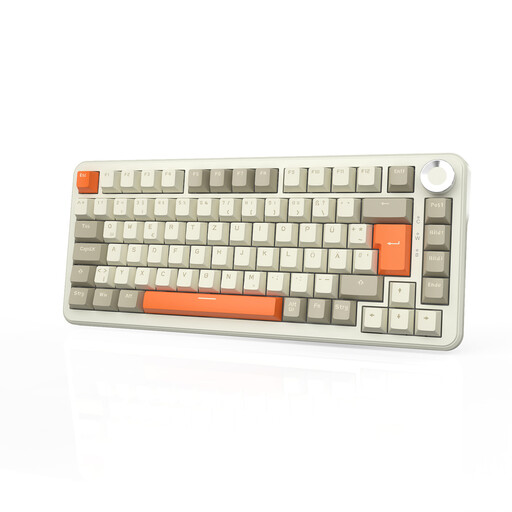
Consider this 75% model if you want a compact keyboard and are comfortable typing regex punctuation on a German QWERTZ layout.
The title specifies Flying Fish switches, a volume knob, tri-mode connectivity and an 8000mAh battery capacity. Inspect the physical legends before choosing it instead of a UK layout.
 No image available
Consider this model if you want a wireless compact keyboard for editing exercises and prefer a listing identified as a UK version.
Before ordering, inspect the offered key legends and confirm that its arrow, navigation and function-key arrangement suits your editor commands.
 No image available
Consider this 65% model if desk clearance matters more to you than direct access to every editing key.
The title identifies a UK-layout variant. Check its physical legends and how you would access function keys during regular practice.
 No image available
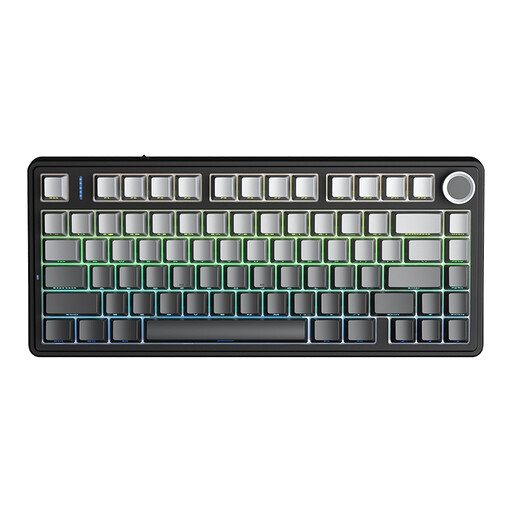
Consider this compact model if you are comfortable with US QWERTY legends and want a 75% mechanical keyboard.
Its title lists Bluetooth, 2.4G and wired connections, hot-swappable switches and RGB backlighting. Inspect the key arrangement before relying on direct access to arrows or function keys.
 No image available
Consider this 96% model if retaining more directly accessible keys matters more than choosing one of the smaller layouts.
Measure your available desk width and inspect the physical UK-layout legends on the offered variant before ordering.
If you normally type on a UK keyboard, an explicitly labelled UK-ISO variant helps you keep familiar physical key shapes and legends. Check the selected variant rather than assuming every configuration in a keyboard family uses that layout.
Not necessarily, but a 60% layout is most suitable when desk clearance matters more than direct access to the function row and home cluster. The Razer Huntsman Mini illustrates that trade-off: those keys are absent from its primary layout, so consider how often you would use secondary key combinations.
Macros may help with repeated editor commands, tests or text templates, but they do not replace learning regex syntax. Identify the actions you repeat before choosing a remappable keyboard and checking its configuration requirements.
Set up the keyboard as part of the whole workstation, not just according to its size. The Health and Safety Executive advises using a separate keyboard and mouse with a raised laptop screen, keeping the keyboard central and just below elbow height, and relaxing your shoulders.