What should you check before choosing?
Start with how you will prepare the drink, then check that the flavour, caffeine statement and pack size fit how you plan to use it.
| Priority |
What to check |
Your needs |
| What goes into the cup |
Check the brewed-drink nutrition information and its preparation basis. Consider sugar, honey, syrup or other additions separately from the tea bag. |
I’d like a hot drink I enjoy without sweetening it. Diabetes UK includes unsweetened tea among drinks that count towards daily fluid requirements. |
| Caffeine and pack size |
Look for an explicit caffeine-free statement and confirm that the box contains 80 bags. Do not assume every product in a brand’s range has the same pack count. |
For an evening drink, I’d prefer a caffeine-free infusion in one larger box. Tesco Groceries lists 80-bag rooibos; ASDA Groceries lists 80-bag Twinings peppermint and lemon-and-ginger options. |
| Ingredients and label |
Read the current ingredient and allergen information, especially for blends. Compare nutrition figures on the same brewed-drink basis when they matter to your choice. |
A single-herb mint tea and a lemon-and-ginger blend give me different ingredients to consider. If I have a specific dietary requirement, I’ll check the pack I receive. |
| Reflux triggers |
Check for ingredients that match your known triggers. Cambridge University Hospitals lists peppermint or mint, citrus fruits and spicy foods as possible GORD triggers for some people. |
If mint or citrus tends to aggravate my reflux, I’d choose a different flavour rather than buying a large box I may not want to drink. |
Brand and product-line references
These references help distinguish an 80-bag box from smaller herbal-tea formats; they do not indicate which brands are stocked on Joybuy.
Twinings
ASDA Groceries lists 80-bag Pure Peppermint and Lemon & Ginger infusions.
- Pure Peppermint lists peppermint as its ingredient and is described as naturally caffeine-free.
- Lemon & Ginger is a multi-ingredient blend; check its components if particular flavours or ingredients affect you.
Tesco
Tesco Groceries lists an own-label 80-bag rooibos infusion.
- The listing identifies an 80-bag, 200 g pack and describes it as naturally caffeine-free.
- Check the current pack for ingredient and nutrition details relevant to your needs.
Pukka
Pukka describes a range of caffeine-free herbal teas with different flavours.
- Its range may interest someone choosing by herbal-blend flavour.
- Tesco Groceries lists a Pukka peppermint-and-liquorice product in a 20-bag format, so check the count if you want 80 bags in one box.
Clipper
Clipper Tea Shop lists an Organic Peppermint Infusion for buyers who prefer a peppermint ingredient list.
- The listed infusion contains organically grown peppermint and is described as naturally caffeine-free.
- That product is a 20-bag pack rather than an 80-bag box.
80-bag options on Joybuy
These two Twinings boxes cover peppermint and lemon-and-ginger flavours for readers considering an 80-bag herbal infusion. Check the current pack and choose a flavour you can enjoy without sweet additions.
 No image available
Twinings Pure Peppermint 80 Pack
An 80-bag peppermint option if you want a single-herb, caffeine-free infusion. ASDA Groceries lists peppermint as the ingredient and negligible sugars for the infusion brewed with water. Cambridge University Hospitals identifies mint as a possible reflux trigger for some people.
View on Joybuy
 No image available
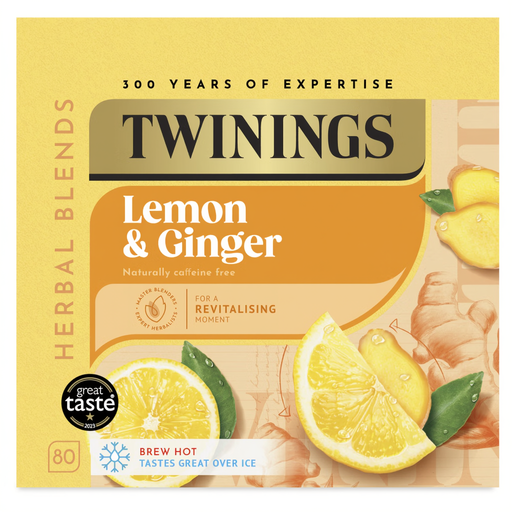
Twinings Lemon & Ginger 80 Pack
An 80-bag, caffeine-free blend if you prefer lemon-and-ginger flavour. ASDA Groceries lists negligible sugars for the brewed infusion. It contains several ingredients rather than a single herb; check the current label, especially if citrus or spicy foods are known reflux triggers for you.
View on Joybuy
Questions about choosing herbal tea
Can unsweetened herbal tea be a regular drink if I have diabetes?
Diabetes UK includes unsweetened tea among drinks that count towards daily fluid requirements. Consider the prepared cup as well as the tea bag: sugar, honey, syrup or other additions change what you drink.
Can herbal tea replace diabetes medication?
No. Diabetes UK says herbal remedies and supplements should not replace diabetes medication. Choose a tea as a drink, not as a blood-glucose treatment.
What should I check on an 80-bag box?
Confirm the bag count, caffeine statement, current ingredient and allergen information, and the basis used for any brewed-drink nutrition figures. If an allergen matters to you, read the pack you receive; GOV.UK explains that specified allergens in prepacked foods must be clearly identified in the ingredients list.
Is peppermint or lemon-and-ginger tea suitable if I have reflux?
Choose according to your known triggers rather than assuming either flavour will suit everyone. Cambridge University Hospitals lists mint, citrus fruits and spicy foods among possible triggers for some people with GORD; check the blend’s ingredients and follow individual clinical advice.
Should I choose a liquorice blend instead?
Check its ingredients and any product-specific cautions before choosing it. For example, Teapigs advises people with hypertension to limit its liquorice-and-peppermint tea to one cup a day. Ask a pharmacist or clinician about concerns involving your blood pressure or medicines.


