Occasional second-home hosts
If tea is mainly for weekends and visitors, check the best-before date and whether you have a cool, dry cupboard for the box between stays.


For a second home used by regular tea drinkers or visitors, an 80-bag black-tea box is a practical starting point. Choose the tea type and the pack’s brewing guidance around the people who will drink it, then check its best-before date and storage instructions before leaving it between visits. An 80-bag count alone does not tell you the pack’s net weight or whether the tea is decaffeinated.
If tea is mainly for weekends and visitors, check the best-before date and whether you have a cool, dry cupboard for the box between stays.
For repeated mugs, compare the tea type, net weight and brewing instructions. Boxes containing 80 bags need not contain the same total weight of tea.
Look at the exact pack’s organic or certification claims separately from its packaging instructions. A plant-based tea bag does not, by itself, establish that your local food-waste collection accepts it.
Start with the tea your visitors will drink, then compare the pack and the cupboard conditions where it will be kept.
| Priority | What to check | Your needs |
|---|---|---|
| Tea and brewing | Check whether the pack is everyday black tea, a named blend or decaffeinated. Follow the brewing time on the pack you buy. | I want to leave tea that regular visitors will actually choose; if someone prefers decaf, I need a separately labelled box. |
| Pack contents | Compare both the 80-bag count and net weight. The listed 80-bag examples include 200g, 232g and 250g packs. | One box may cover my occasional stays, but I do not want to treat every 80-bag pack as the same quantity of tea. |
| Storage and dates | Read the exact pack’s best-before date and storage directions. ASDA Groceries lists cool, dry storage away from sunlight for Yorkshire Tea; Typhoo’s listing also says to close the lid. | The box may sit between visits, so I need a suitable cupboard and a date that works for when it is likely to be used. |
| Sourcing and disposal | Identify which claim applies to the tea, box or bags. ASDA Groceries says PG Tips bags require industrial composting conditions and local council acceptance for food-waste disposal. | If these claims matter to me, I want to check the chosen pack and my local collection rules rather than assume all plant-based bags use the same disposal route. |
The listed 80-bag products range from 200g to 250g, and their tea types and brewing directions differ.
Compare net weight, tea type and the instructions on the exact box, not just the bag count.
Product directions call for cool, dry storage; the Yorkshire Tea listing also specifies keeping its box away from direct sunlight.
Choose a dry cupboard away from a sunny window or damp sink area, and close the box after opening where its instructions require it.
Claims about tea sourcing, recyclable cartons and compostable bags concern different parts of the product. PG Tips’ stated food-waste route depends on industrial composting and local council acceptance.
Check the precise claim on your pack and what the council serving the second home accepts.
These details concern the named 80-bag products, rather than every tea sold under each brand.
Tetley Original is listed by ASDA Groceries as an 80-bag, 250g black tea.
ASDA Groceries lists PG Tips Original as 80 bags of black tea weighing 232g.
The Yorkshire Tea product listed by ASDA Groceries contains 80 bags of black tea weighing 250g.
Twinings offers its named English Breakfast blend in an 80-bag, 200g box.
Clipper describes its Organic Everyday 80-bag tea as made with organically grown black tea; Tesco Groceries lists an 80-bag, 232g pack.
ASDA Groceries lists Typhoo Premium as an 80-bag, 250g tea.
These boxes cover everyday black tea and separately labelled decaffeinated options for a second-home cupboard. Compare the pack each household will use before choosing between them.
 No image available
A separately labelled decaffeinated choice for visitors who prefer decaf. The box contains 80 bags and is labelled 277g; check its best-before date before storing it between visits.
 No image available
For a separate decaffeinated reserve, this Tetley box is labelled 80 bags and 250g. Check the date on the pack if it will remain at the property between stays.
 No image available
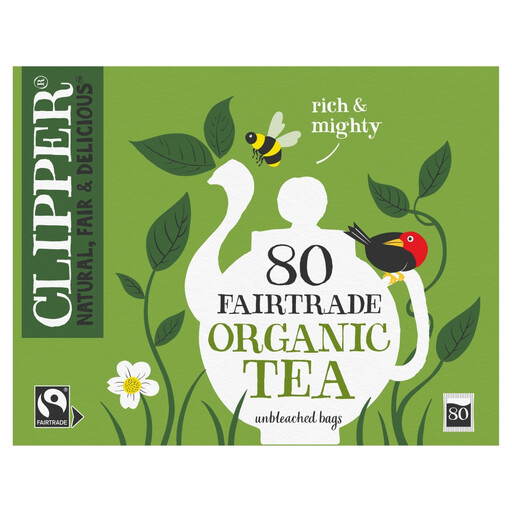
An 80-bag, 232g black-tea option for a household interested in the sourcing claims shown on this Clipper pack. Check the exact label for those claims, brewing directions and the best-before date.
 No image available
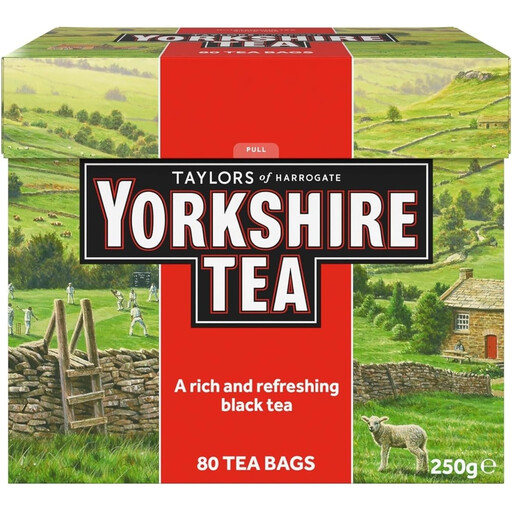
An 80-bag, 250g black-tea box for visitors who choose Yorkshire Tea. Store it somewhere cool and dry, away from direct sunlight, and follow the brewing instruction on the pack received.
 No image available
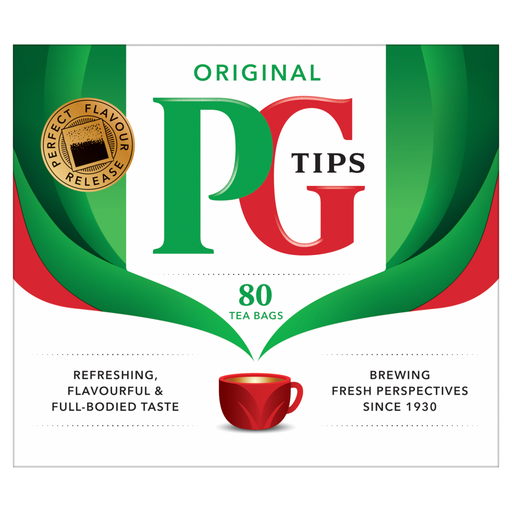
An everyday black-tea reserve containing 80 bags and weighing 232g. Keep it in a cool, dry place between visits; follow the pack’s brewing and tea-bag disposal instructions when it is used.
One box is a starting point for occasional stays or guests. Consider a separate clearly labelled decaffeinated box if visitors prefer decaf, and check the best-before dates before leaving additional stock in the cupboard.
Follow the exact pack’s directions. The Yorkshire Tea listing from ASDA Groceries specifies a cool, dry place away from direct sunlight, while its Typhoo listing also instructs buyers to close the lid.
A best-before date concerns quality rather than safety: GOV.UK says food is usually safe after that date but may not be of the same quality. Follow the pack’s storage instructions and do not confuse best-before with use-by labelling.
Not automatically. ASDA Groceries says PG Tips’ bag claim depends on industrial composting conditions and a local council scheme that accepts the bags. Check both the exact pack and the collection rules at the second home.
No. If guests prefer decaffeinated tea, choose a box clearly labelled decaffeinated and keep it distinct from the everyday black-tea box.