Students taking short revision breaks
An 80-bag box suits you if you want to put a bag straight into a mug rather than measure leaves and clean an infuser after each drink.


Choose an 80-bag box if you want to brew a mug during a revision break without measuring leaves; choose one explicitly labelled decaffeinated if that distinction matters to you. Loose tea is a different format: it calls for measured leaves and a teapot or infuser, so an 80-bag box will not meet a literal loose-leaf requirement.
An 80-bag box suits you if you want to put a bag straight into a mug rather than measure leaves and clean an infuser after each drink.
Look for a product explicitly labelled decaffeinated rather than assuming that a standard black-tea blend or a shorter brew is decaf.
Loose tea suits a teapot or infuser routine when choosing the leaf format matters more to you than buying a box of 80 tea bags.
Choose it when: You want a bag you can brew directly in a mug during a short break.
Bear in mind: Blends have different stated flavour profiles, and a standard box should not be treated as decaf.
Choose it when: You want the same bag-and-mug format but specifically prefer decaffeinated tea.
Bear in mind: Check the exact product label; a lighter-tasting blend is not necessarily decaffeinated.
Choose it when: You want to prepare measured leaves in a teapot or infuser instead of using bags.
Bear in mind: Loose tea does not fulfil an 80-tea-bag requirement and involves more preparation for an individual mug.
| Priority | What to check | Your needs |
|---|---|---|
| Format and count | Check whether the pack contains 80 tea bags or loose tea sold by weight. For loose tea, check that you have a teapot or infuser. | I want a quick mug between study blocks, or I would rather make time to prepare loose leaves. |
| Decaf preference | Look for an explicit decaffeinated label on the particular box. Do not use the blend name or brewing time as a substitute. | For later revision, I would prefer a decaffeinated choice without giving up the convenience of tea bags. |
| Blend and flavour | Read the blend description and distinguish a brand's flavour wording from an independent taste comparison. | Whether I take tea with or without milk, I want to choose a stated flavour profile that appeals to me. |
| Brewing routine | Check the product's brewing instructions. For loose tea in a pot, Yorkshire Tea advises one teaspoon per person plus one for the pot. | I can decide whether measuring leaves fits my break, or whether putting one bag in a mug is simpler. |
A box count tells you how many bags it contains, not that it contains loose leaves. Loose tea also needs a way to hold or strain the leaves while brewing.
Decide on the brewing format before comparing pack sizes.
If you choose loose tea, check whether you already have a suitable teapot or infuser.
Standard Yorkshire Tea and Yorkshire Tea Decaffeinated are separate 80-bag products. A standard black-tea label does not identify a decaffeinated option.
Choose a box explicitly labelled decaffeinated when that is the distinction you need.
Words such as strong or well rounded describe a brand's intended flavour profile; they do not establish which blend you will prefer.
Use those descriptions to narrow the choice, and consider trying a smaller pack before committing to 80 bags if the blend is unfamiliar.
These brand examples help distinguish tea bags from loose tea; they do not imply that every named product appears in the Joybuy selection below.
Twinings lists both English Breakfast and Strong English Breakfast in 80-tea-bag boxes.
Yorkshire Tea has separate bagged, decaffeinated and loose-tea options.
Whittard lists loose tea separately from its traditional teabags.
Fortnum & Mason lists loose-leaf caddies and tea-bag selections as distinct formats.
Bettys lists its Tea Room Blend as an 80-bag, 250g product.
Ringtons lists Boxed Tea Bags as an 80-bag, 250g pack.
These five boxes contain tea bags for mug brewing, including standard and explicitly decaffeinated choices. None is loose-leaf tea.
 No image available
An 80-bag option for mug brewing when you specifically want tea labelled decaffeinated. This is bagged tea, not loose leaf.
 No image available
Another explicitly labelled decaf choice in an 80-tea-bag format. Choose it for bags rather than loose leaves; check the pack if its stated sourcing attributes matter to you.
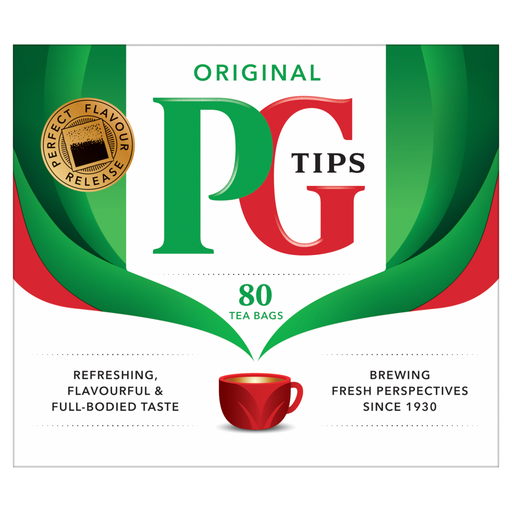 No image available
An 80-bag standard-tea option for individual revision-break mugs. The product description calls the flavour robust and smooth; this variant is not identified as decaffeinated or loose leaf.
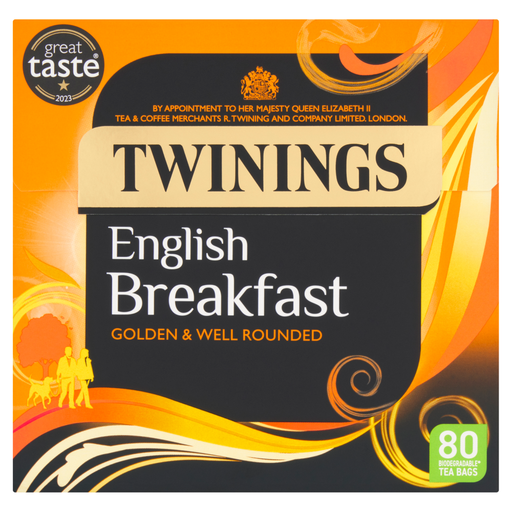 No image available
An 80-bag English Breakfast option for brewing directly in a mug. Twinings describes the blend as full-bodied; the box contains tea bags rather than loose leaves.
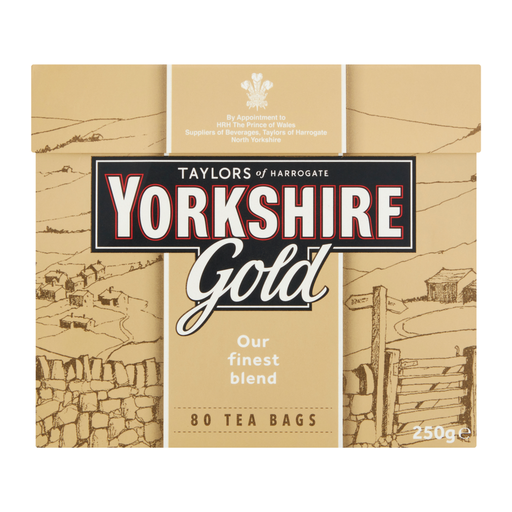 No image available
An 80-bag option for cup brewing; its product description specifies one bag and a 3–5 minute brew. This is not loose tea, so choose it if the bag format fits your breaks.
No. An 80-tea-bag box contains portioned bags, whereas loose tea is prepared from measured leaves. If loose leaf is essential, choose that format and check that you have a teapot or infuser.
For a tea bag, follow the brewing directions on its pack for a mug. If you prefer loose tea in a pot, Yorkshire Tea advises one teaspoon per person plus one for the pot; allow for measuring the leaves and cleaning the equipment afterwards.
If you prefer decaffeinated tea, choose a product explicitly labelled decaffeinated. An 80-bag decaf box keeps the bag-and-mug format; a standard black-tea box should not be assumed to be decaf.