Hosts serving different preferences
A plain instant coffee lets guests add their own milk, plant alternative or sweetener. You can adjust each mug’s strength, although that also changes how many mugs a jar will make.


For around 80 brunch coffees, a large jar gives guests room to choose their own strength, milk and sweetener. NESCAFÉ UK & IE recommends approximately 1.8g of Original per 200ml mug, so a 300g jar works out to about 166 mugs at that measure, or fewer with stronger servings. If you prefer an 80-stick box, check that it contains 80 single-drink portions and whether they are plain coffee; a catering tin is more practical when you will use its much larger quantity again.
A plain instant coffee lets guests add their own milk, plant alternative or sweetener. You can adjust each mug’s strength, although that also changes how many mugs a jar will make.
A stated cup count or product-specific serving weight is more useful than pack weight alone when you need roughly 80 drinks. Allow for guests who use more coffee than the suggested serving.
A catering tin may suit repeated gatherings if there is somewhere to store and use the remainder. An Amazon UK listing describes the 750g Douwe Egberts Pure Gold tin as providing 470 cups—far more than one 80-cup brunch requires.
Start with the number of drinks you need, then decide whether measured coffee or individual portions will work better for your guests.
| Priority | What to check | Your needs |
|---|---|---|
| Enough servings | Look for a stated cup count or divide pack weight by the maker’s grams per mug. NESCAFÉ UK & IE suggests approximately 1.8g of Original with 200ml water; 300g yields about 166 mugs at that measure. Check stock before relying on a particular pack. | I want enough coffee for around 80 drinks, with some allowance if guests make stronger mugs. |
| Pack format | For a box, confirm the number of sticks or sachets and whether each makes one drink. A jar needs measuring; an Amazon UK listing describes a 750g Douwe Egberts Pure Gold tin as providing 470 cups. | Individual portions would simplify serving, but I would rather use a jar than buy a large tin whose remainder I cannot use. |
| Flavour choice | Compare descriptions for the exact coffee. Kenco describes Rich as intensity 9; an intensity rating is not a serving count or a measure shared by every brand. | My guests have different preferences, so I may want a plain base coffee and a stronger alternative rather than one fixed-strength drink. |
| Ingredients | Read the exact pack’s ingredients and allergen information. NESCAFÉ UK & IE notes that some instant-coffee sachets contain added milk; do not assume every sachet is plain coffee. | I want guests to choose their own additions, especially when they have different milk preferences or need to check ingredients. |
A pack count does not tell you whether each portion makes one drink or whether the sachets contain other ingredients.
Check the portion count, preparation instructions and ingredients for the exact box before ordering.
Guests who use more than the suggested amount of coffee will make fewer mugs from the same jar.
Use the maker’s serving size or a stated cup count, and allow extra if stronger drinks are likely.
Some sachets contain added milk, which may not suit every guest’s preferences or ingredient requirements.
Consider plain coffee with milk, plant alternatives and sweeteners offered separately; check the label of any sachets you also serve.
A tin described as making 470 cups leaves a substantial quantity after an 80-cup gathering.
Choose that format when later gatherings or regular group use give you a plan for the remainder.
These examples illustrate serving guidance and formats for particular products, not every coffee sold under each brand.
Original is a plain instant-coffee option when guests will add their own milk or sweetener.
Rich is an alternative to consider when some guests prefer a stronger-tasting coffee.
Pure Gold is available as a catering-size tin for repeated group use.
Classique offers another jar with a stated cup yield to check against the guest count.
Tesco Gold Instant Coffee 200g is an own-label jar listed in Tesco’s instant-coffee range.
This instant-coffee jar suits a brunch where guests can measure their coffee and add milk or sweetener separately; it is not a box of 80 individual portions.
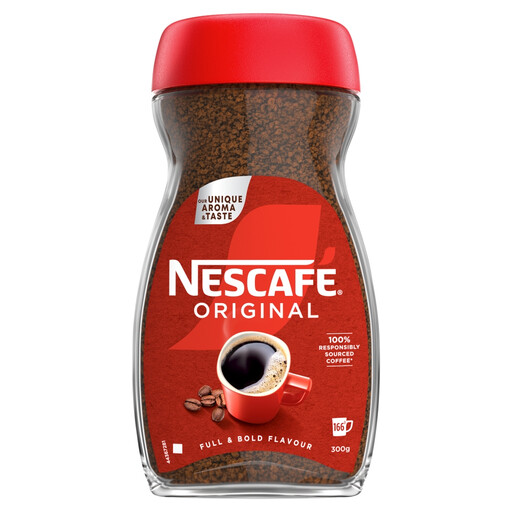 Image unavailable
This plain instant-coffee jar lets brunch guests add their own milk or sweetener, but servings must be measured. NESCAFÉ UK & IE recommends approximately 1.8g with 200ml hot water per typical mug; at that measure, 300g makes about 166 mugs, or fewer if guests use more coffee. Check stock before planning around this jar.
Use its stated cup count or divide its weight by the maker’s suggested grams per mug. For NESCAFÉ Original, NESCAFÉ UK & IE suggests approximately 1.8g with 200ml water, giving about 166 typical mugs from 300g; allow for fewer if guests prefer stronger coffee.
Not automatically. Check that the box contains 80 single-drink portions and whether they are plain coffee or a prepared mix. A jar’s cup count depends on its stated serving size and how much coffee guests use.
Plain instant coffee gives guests more control over milk and sweetener. NESCAFÉ UK & IE notes that some sachets contain added milk, so read the exact pack label and offer pre-mixed drinks as an additional choice if they suit your guests.
Read the ingredients and allergen information on the physical pack you will serve, particularly for pre-mixed sachets. Providing additions separately also lets guests choose what goes into their coffee.
A Sainsbury’s listing for Carte Noire Classique 180g states approximately 100 cups at 1.8g per cup, which covers 80 at that serving size. Confirm the size and current stock before buying; Tesco’s separate 200g listing showed out of stock when checked.