Guests who enjoy a familiar black tea
An 80-bag box makes it straightforward to serve individual cups without measuring loose leaves. Check the blend and its brewing directions if guests have a particular preference.


For an 80-bag afternoon-tea box, standard black tea suits guests who enjoy a familiar cup and are comfortable with caffeine; a decaffeinated variant suits someone who prefers to reduce caffeine. A tea-room blend offers a different choice for an occasion, while a hard-water blend is relevant only where the household has hard water. An 80-bag box contains tea bags, not loose-leaf tea.
An 80-bag box makes it straightforward to serve individual cups without measuring loose leaves. Check the blend and its brewing directions if guests have a particular preference.
A decaffeinated black-tea box keeps the tea-bag format while offering an alternative to a standard blend. This is an individual preference, not a requirement that follows from age.
A blend associated with a tea room may appeal when serving cakes and pastries. Confirm that the particular box contains 80 bags rather than relying on the blend name.
Start with the drinker’s caffeine preference and the exact pack format, then consider the blend, brewing directions and water at the serving location.
| Priority | What to check | Your needs |
|---|---|---|
| Tea style | Check whether the box contains black tea and read the blend description. Follow the directions on the chosen pack for brewing and serving. | I’m serving a familiar black-tea cup with afternoon food, and I want a blend my guests will enjoy. |
| Caffeine | Choose the standard or decaffeinated variant deliberately; check the exact pack when reducing caffeine matters. NHS guidance notes that caffeine can irritate the bladder and worsen urinary incontinence. | If caffeine affects someone I’m serving, I’d rather offer a decaffeinated option than assume standard tea suits them. |
| Pack format | Look for an explicit count of 80 tea bags. Loose-leaf tea is sold by weight and requires a different way of brewing. | I want enough individually portioned bags for straightforward serving, without measuring leaves or using an infuser. |
| Water and brewing | Check whether a blend is specifically labelled for hard water, and read its own brewing instructions. Yorkshire Tea says minerals in hard water can make tea taste darker and thicker. | Our household has hard water, so I want to decide whether a hard-water blend is relevant before choosing the box. |
| Occasion | Check the named blend as well as the bag count. Bettys describes its 80-bag Tea Room Blend as the tea served in its Café Tea Rooms. | For an afternoon tea with guests, the connection to a particular tea room may matter more to me than an everyday blend. |
Loose tea needs measuring and a way to separate the leaves from the drink; an 80-bag box is intended for a different serving routine.
Check that the product page explicitly says 80 tea bags. If you want loose leaves instead, choose that format knowingly and have a teapot or infuser ready.
Caffeine preference varies by person. NHS guidance says caffeine can irritate the bladder and make urinary incontinence worse.
Ask about the guest’s preference where practical, and check the exact variant if decaffeinated tea is wanted.
Standard, decaffeinated and hard-water blends can all come in 80-bag boxes, but they address different preferences and circumstances.
Read the full variant name, bag count, ingredients and brewing directions on the pack you intend to serve.
Its range includes standard and decaffeinated 80-bag boxes, alongside a separate hard-water blend.
Twinings sells tea bags and loose tea as separate formats.
Bettys describes its Tea Room Blend as the tea served in its Café Tea Rooms.
Ringtons describes its boxed tea as an Assam and Kenyan black-tea blend.
Whittard’s Afternoon Tea listing provides a differently sized tea-bag option.
Fortnum & Mason lists tea-bag blends in a range of pack sizes.
These 80-bag options cover standard and decaffeinated tea, plus a blend labelled for hard water. Choose by the guest’s preference and the exact variant rather than treating the boxes as interchangeable.
 No image available
An 80-bag decaffeinated option for a guest who prefers to reduce caffeine. The stated pack weight is 250 g; check the exact pack if its ingredients or preparation directions matter to you.
 No image available
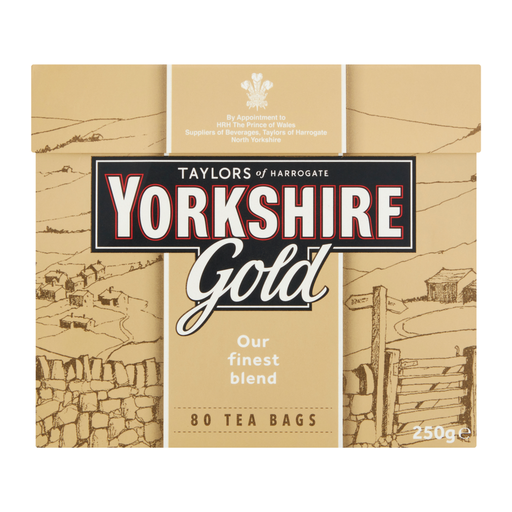
A named Yorkshire Tea variant to consider for a standard afternoon-tea box. It contains 80 tea bags and is labelled 250 g; check the exact variant if caffeine preference is important.
 No image available
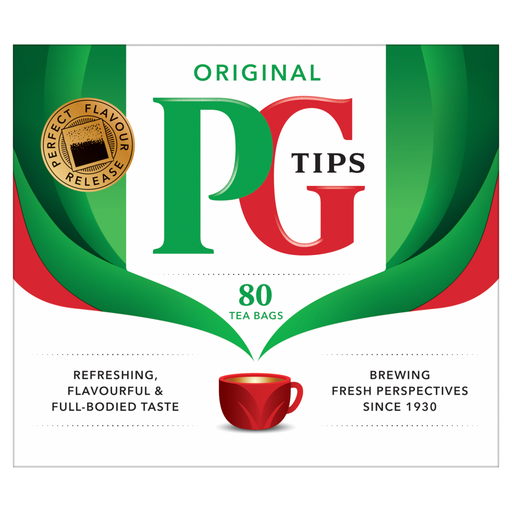
An 80-bag Original variant for straightforward afternoon serving, with a stated pack weight of 232 g. Follow the preparation directions on the pack rather than assuming a brewing time from other blends.
 No image available
Another named decaffeinated option when the guest wants to reduce caffeine. The box is labelled as 80 tea bags and 277 g; check the exact pack for its preparation directions.
 No image available
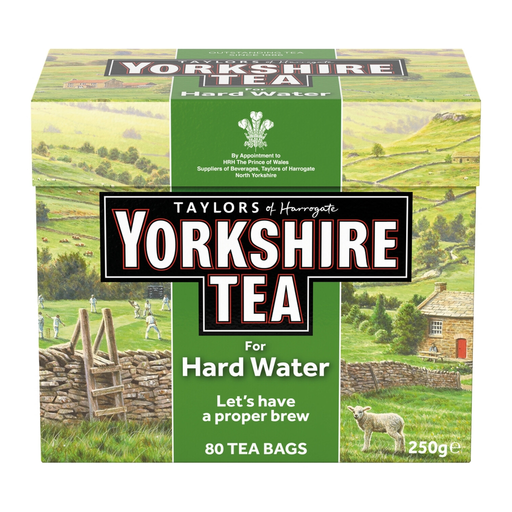
This hard-water variant is worth considering when the tea will be made in a hard-water household. The stated box contains 80 tea bags and weighs 250 g; check its pack directions and caffeine status if either affects your choice.
No. Tea bags and loose leaves are different formats: Twinings lists its Everyday 80-bag box separately from loose tea sold by weight. Choose loose leaves if you want to measure the tea and use a teapot or infuser.
Not on the basis of age alone. Decaffeinated tea is an option when the guest prefers less caffeine; NHS guidance notes that caffeine can irritate the bladder and worsen urinary incontinence. Follow any individual advice the guest has been given.
Use the directions for the exact blend. Bettys gives a 4–5 minute infusion for its Yorkshire Tea 80-bag listing, while Ringtons advises 3–5 minutes for its boxed tea bags; those times should not be assumed for every tea in this article.
Check the ingredients and allergen information for the exact product, particularly if a guest has an allergy or needs to avoid an ingredient. Do not assume a flavoured blend has the same ingredients as plain black tea.