Desk workers with a kettle and mug
An 80-tea-bag box suits a short break when you want to brew in a mug without measuring loose leaves or bringing an infuser. Bettys gives direct mug-brewing instructions for its Yorkshire Tea bags.


Choose an 80-tea-bag box rather than loose-leaf tea if your desk setup is a mug and freshly boiled water: tea bags avoid the separate infuser or teapot that loose tea requires. For black tea, start with a standard blend unless you specifically want a stronger blend, have hard water or need a clearly labelled decaffeinated option; check the brewing directions against the time you have for lunch.
An 80-tea-bag box suits a short break when you want to brew in a mug without measuring loose leaves or bringing an infuser. Bettys gives direct mug-brewing instructions for its Yorkshire Tea bags.
A standard blend, a deliberately stronger blend and a hard-water blend address different preferences. Check whether the water you use is hard before choosing a tea sold specifically for that condition.
If reducing caffeine is the reason for changing tea, look for an explicitly decaffeinated box rather than relying on a shorter brew or a lighter-tasting blend.
Settle the tea-bag-versus-loose-leaf question first, then compare the blend and its preparation instructions with your desk routine.
| Priority | What to check | Your needs |
|---|---|---|
| Pack format | Check that the count means 80 tea bags, not loose tea. Loose tea calls for separate brewing equipment. | I have a mug and hot water, but do not want to measure leaves or use an infuser at lunch. |
| Brewing time | Read the directions for the particular blend. Bettys says to infuse Yorkshire Tea in a mug for 4–5 minutes; Twinings recommends 2–3 minutes for its Strong English Breakfast. | A stated brewing time helps me choose a tea that fits the length of my break. |
| Blend strength | Compare a standard black-tea blend with one explicitly described as strong, and follow its brewing directions. A blend name alone does not establish how every brand will taste. | For my desk mug, I would rather choose the style of black tea I want than assume every English Breakfast blend has the same intensity. |
| Water hardness | Check your water supplier’s hardness information before choosing a hard-water blend. Bettys markets Yorkshire Tea for Hard Water for that particular water condition. | If the water I use is hard, I want to consider a blend made for it; otherwise a standard blend remains an option. |
| Caffeine and ingredients | Look for an explicit decaffeinated label when reducing caffeine. Check the individual pack’s ingredients and allergen information, particularly for flavoured blends. | I want to know which tea I am buying and whether its label fits my caffeine and ingredient requirements. |
Loose tea and tea bags are different formats. A loose-tea purchase will not give you individual bags to put straight into a desk mug.
Choose a pack explicitly labelled as 80 tea bags for that routine. Choose loose tea deliberately if you have an infuser, strainer or teapot.
Loose tea adds equipment to carry or keep at your desk.
Yorkshire Tea for Hard Water is marketed for a particular water condition, not as a general replacement for standard black tea.
Check the hardness of the water you actually use before choosing it. If that condition is not relevant, compare standard and stronger blends by your preferred style and brewing directions.
A standard black tea does not become a labelled decaffeinated product because you brew it for less time.
If reducing caffeine matters, choose a box explicitly marked decaffeinated and check its pack information.
Its named 80-bag products include standard, hard-water and decaffeinated options, each serving a different buying condition.
Twinings lists an 80-bag, 200g English Breakfast box as well as a Strong English Breakfast variant.
Bettys lists its Tea Room Blend in an 80-bag, 250g box and describes it as the blend served in its Café Tea Rooms.
Whittard is relevant if you are choosing between loose tea and tea bags rather than assuming the two formats are interchangeable.
Its wooden box containing 80 tea bags is a presentation-led format to consider when the box itself matters.
These 80-tea-bag boxes include standard and decaffeinated choices for a mug-based desk break. Compare their individual labels and brewing directions; they are tea bags, not loose-leaf tea.
 No image available
An 80-bag decaffeinated black-tea option if reducing caffeine is part of your choice. Check the pack directions for a hot mug brew; the product description instead suggests serving it chilled.
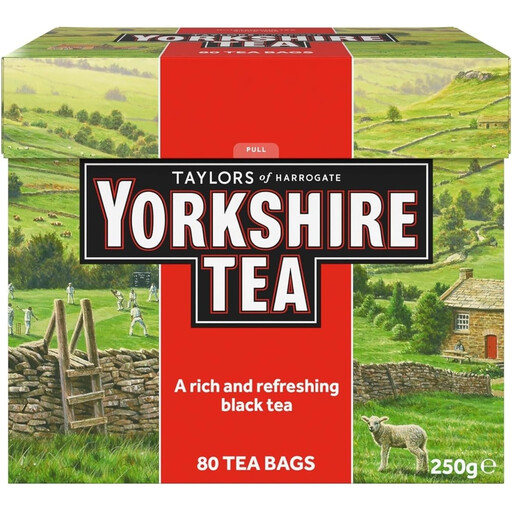 No image available
A standard black-tea option for a mug and freshly boiled water. This product’s directions say to use one bag per cup and brew for 3–5 minutes; check the label if you need a decaffeinated tea.
 No image available
An explicitly decaffeinated 80-bag black tea with a stated 2–3-minute brewing time. Check the pack information if you need to account for residual caffeine.
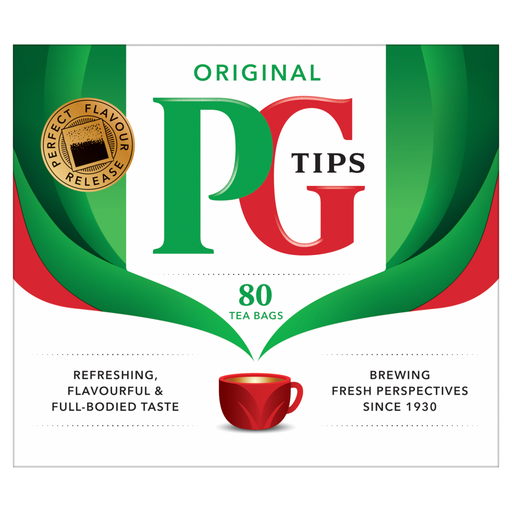 No image available
A standard 80-bag black tea with a stated 2–3-minute brewing reference. Follow the pack’s preparation directions for your mug, and choose a product labelled decaffeinated if that is what you need.
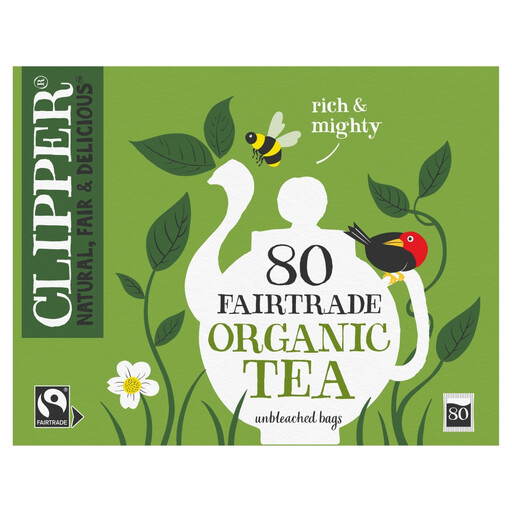 No image available
An 80-bag black tea for buyers interested in the product’s organic and Fairtrade sourcing claims. Check the pack directions before making a hot desk mug; the product description also refers to chilled serving.
No. The 80-count boxes discussed here contain individual tea bags; loose-leaf tea is a separate format. Tea bags fit a mug-and-hot-water desk setup, while loose tea calls for an infuser, strainer or teapot.
Follow the directions for the box you choose: Bettys says to infuse its standard Yorkshire Tea bag in a mug for 4–5 minutes, while Twinings recommends 2–3 minutes for Strong English Breakfast. Different blends need not have the same instructions.
Check first. Yorkshire Tea for Hard Water is marketed for hard-water areas, so your water supplier’s hardness information can help you decide whether that specialist blend is relevant.
No: a shorter brewing time does not make an ordinary black tea a product labelled decaffeinated. If reducing caffeine is your aim, choose an explicitly decaffeinated box and check its pack information.
Yes. Read the individual pack’s ingredients and allergen information, particularly when considering a flavoured blend or a tea with added ingredients; one plain black-tea listing does not describe every box.