Buyers stocking everyday tea
An 80-bag box offers a defined quantity for a shop or communal tea area. Compare standard black-tea blends, their net weights and the space available for unopened stock.


For a retirement shop’s regular 80-bag tea, start with a standard black-tea blend, then keep decaffeinated tea clearly separate if customers or residents request it. An organic blend, English Breakfast tea or a hard-water blend answers a more specific preference; check the exact pack, net weight and ingredients rather than assuming all 80-bag boxes are interchangeable.
An 80-bag box offers a defined quantity for a shop or communal tea area. Compare standard black-tea blends, their net weights and the space available for unopened stock.
Keep a separately identified decaffeinated black tea for people who ask for decaf. Check the delivered pack before placing it alongside regular tea.
An organic tea may meet a sourcing requirement, while a hard-water blend is worth considering where local water is hard. Check claims on the particular box: they do not necessarily apply across a brand’s range.
Decide what the regular tea needs to cover, then identify any separate requests before comparing packs with the same bag count.
| Priority | What to check | Your needs |
|---|---|---|
| Everyday tea | Check that the box contains 80 bags of standard black tea. Compare the blend named on the pack and its net weight. | I need a regular tea for the shop without moving to a larger catering pack. |
| Decaffeinated tea | Look for “decaffeinated” on the delivered box and check its ingredients. Keep its ordering and display distinct from standard black tea. | People who ask for decaf need to be able to identify it separately. |
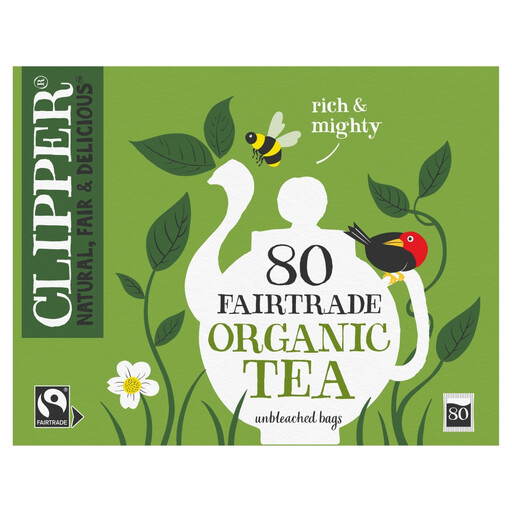
| Sourcing and bags | Check organic and tea-bag material claims on the exact product. Clipper’s Organic Everyday 80-bag product, for example, is described by Clipper Tea Shop as organically grown black tea with unbleached, plastic-free bags. | Organic sourcing or the material of the tea bags matters to this purchase. |
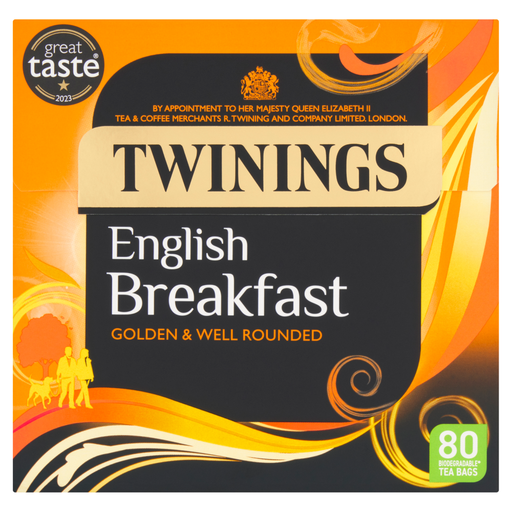
| Blend preference | Check whether the box is an everyday blend or English Breakfast. Twinings lists its 80-bag English Breakfast box at 200 g; bag count alone does not indicate net weight. | I’m looking for a named breakfast-style blend rather than the usual everyday tea. |
| Hard water | Confirm local water conditions and check that the particular box is labelled for hard water. Confirm availability before making it a regular stock line. | Our shop is in a hard-water area, and we want to consider a blend made for that condition. |
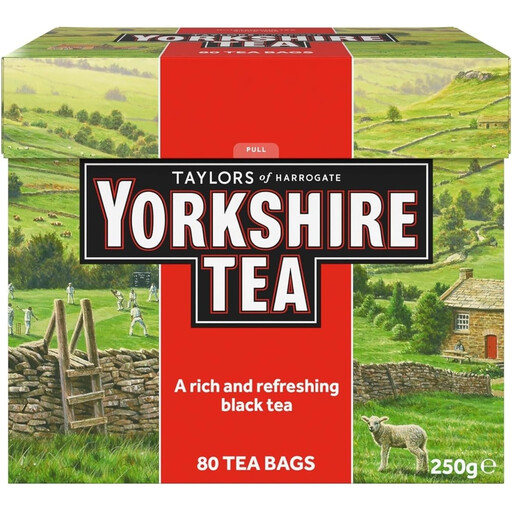
Eighty bags can mean different net weights and blends. The listed Twinings English Breakfast box is 200 g, while the cited Tetley Original and standard Yorkshire Tea boxes are each 250 g.
Read the net weight, ingredients and blend name as well as the bag count before treating two boxes as equivalent.
Standard black tea does not meet a specific request for decaffeinated tea.
Order and display decaf separately, and confirm that the delivered pack is labelled decaffeinated.
Yorkshire Tea for Hard Water is described for hard-water areas, not as a replacement for every everyday blend.
Check local water conditions and current stock before adding it to the shop’s regular range.
These product-specific references help distinguish everyday tea from specialist options; a claim about one box does not apply to every product from the same brand.
ASDA Groceries lists Tetley Original as an 80-bag, 250 g black-tea box.
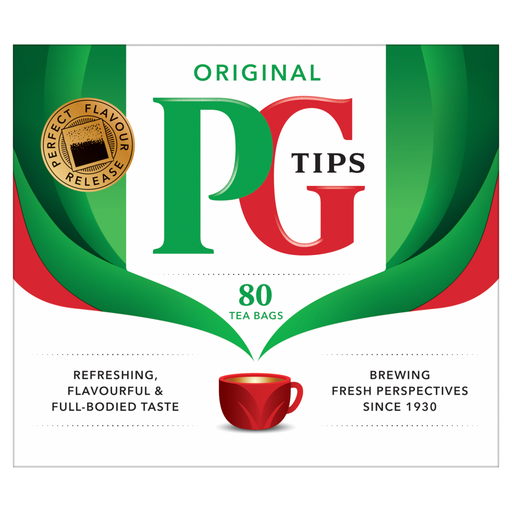
Morrisons lists PG Tips Original as 80 black-tea bags in a 232 g box.
The cited listings distinguish standard black tea, decaffeinated black tea and a blend for hard-water areas, each in an 80-bag format.
Twinings lists an 80-bag English Breakfast black tea with a net weight of 200 g.
Clipper Tea Shop lists an 80-bag Organic Everyday black tea.
Typhoo lists an 80-bag Premium black tea made with Kenyan tea.
These 80-bag boxes include standard black tea and separately named decaf, organic and English Breakfast options. Choose by the preference you need to cover, and check the delivered label before stocking.
 No image available
A separately named decaf option for requests that the regular tea cannot meet. The title states 80 bags and 250 g; confirm that the delivered pack identifies the tea as decaffeinated before shelving it as decaf.
 No image available
An 80-bag option to consider when organic sourcing is part of the shop’s purchasing requirements. The title states 232 g; check the delivered pack for its identity, ingredients and any packaging claims relevant to your choice.
 No image available
An 80-bag standard tea option for the shop’s regular range, with a stated net weight of 250 g. If decaf or a hard-water blend is required, check for that specific variant rather than relying on the Yorkshire Tea name alone.
 No image available
A named English Breakfast blend for buyers seeking that style rather than an everyday blend. This 80-bag box states a net weight of 200 g, so compare weight as well as bag count.
 No image available
An Original black-tea option for the shop’s regular range. The box is labelled as 80 bags and 232 g; keep a separately identified product if decaf is requested.
Not if customers or residents ask for decaf. Keep a separately labelled decaffeinated black tea alongside the regular option, and check the delivered pack so the two are not confused.
That depends on how quickly the shop sells or serves tea and how often it can reorder. Use the 80-bag quantity to plan stock, check the best-before date and follow the pack’s storage instructions.
Follow the instructions for the particular tea rather than using one brewing time for every box. Morrisons lists 1–2 minutes for PG Tips Original, while Yorkshire Tea’s general brewing guidance says 4–5 minutes and recommends adding milk after brewing tea directly in a mug.
Consider it if the shop is in a known hard-water area and wants a blend made for that condition. Yorkshire Tea for Hard Water is labelled for hard-water areas; confirm that the specific box is available before planning to stock it regularly.