Households making regular black tea
If several cups are made during the week, check whether 80 bags suit your usual use. Compare the blend, net weight and brewing instructions rather than relying on the brand name alone.


Choose an 80-bag box around the tea your household drinks regularly: an everyday black tea, an organic-labelled option, an English Breakfast blend or an explicitly decaffeinated tea if reducing caffeine matters. Check the exact pack’s net weight and brewing guidance as well as its bag count; these details differ between 80-bag products.
If several cups are made during the week, check whether 80 bags suit your usual use. Compare the blend, net weight and brewing instructions rather than relying on the brand name alone.
Check the wording on the exact 80-bag pack: a brand’s wider range does not establish the sourcing claims of every product it sells.
An explicitly decaffeinated 80-bag tea is relevant if reducing caffeine is the aim. If a precise caffeine limit matters, check the delivered pack rather than assuming decaf means caffeine-free.
Start with the tea style your household will use, then check the exact pack details before adding a box to the weekly shop.
| Priority | What to check | Your needs |
|---|---|---|
| Tea style | Check whether the pack is everyday black tea or an English Breakfast blend. Treat flavour descriptions as a guide to what the maker intends, not a taste test. | We make regular mugs of black tea, but the blend still needs to suit how we drink it. |
| Brewing time | Read the instructions on the exact pack. The product guidance described by PG Tips, Typhoo and Twinings gives different infusion ranges. | A short brew fits our routine, or we want a box with guidance for a longer infusion. |
| Pack quantity | Check both bag count and net weight: Twinings lists 200g for its 80-bag English Breakfast box, Morrisons lists 232g for PG Tips Original 80, and Typhoo lists 3.125g per bag for Typhoo 80 Premium. | Will we use 80 bags at our usual pace? I also want to know how much tea the box contains. |
| Sourcing labels | Read organic or Fairtrade wording on the specific product. Clipper’s direct listing identifies organically grown black tea in its Organic Everyday 80-bag product. | Organic ingredients or a particular sourcing label matter in our weekly shop. |
| Decaf | Look for an explicitly decaffeinated product. Check the pack for precise caffeine information if that detail is necessary. | We want to reduce caffeine without choosing an ordinary black-tea box by mistake. |
For example, Twinings English Breakfast 80 is listed at 200g, while Morrisons lists PG Tips Original 80 at 232g. Bag count alone does not describe the amount of tea in the box.
Read both figures on the exact pack when comparing options for your household.
Product guidance gives different infusion times, which can affect the cup you make from a new box.
Follow that pack’s brewing instructions before deciding whether its blend suits you.
Twinings Everyday Decaffeinated is labelled decaf, but Twinings’ product information gives inconsistent residual-caffeine figures.
If you need a precise caffeine limit for a health-related reason, check the delivered pack and seek appropriate professional advice.
Pack materials and the collections available to households can differ.
Read the exact pack and your local authority’s collection guidance before disposing of bags or packaging.
PG Tips Original is an everyday black-tea option sold in an 80-bag, 232g box, according to Morrisons.
Typhoo lists its 80 Premium Tea Bags as an everyday black tea, with 3.125g of tea per bag.
Clipper offers an 80-bag Organic Everyday black tea; its direct listing identifies organically grown black tea.
Twinings lists both English Breakfast and Everyday Decaffeinated in 80-bag boxes.
Yorkshire Tea describes standard, Gold, Decaf and Hard Water teas in its range.
An Amazon UK listing describes Tetley Original in an 80-count format containing black tea.
These 80-bag boxes cover everyday black tea, English Breakfast, an organic and Fairtrade-labelled option, and decaf. Check each pack against the style and brewing routine your household wants.
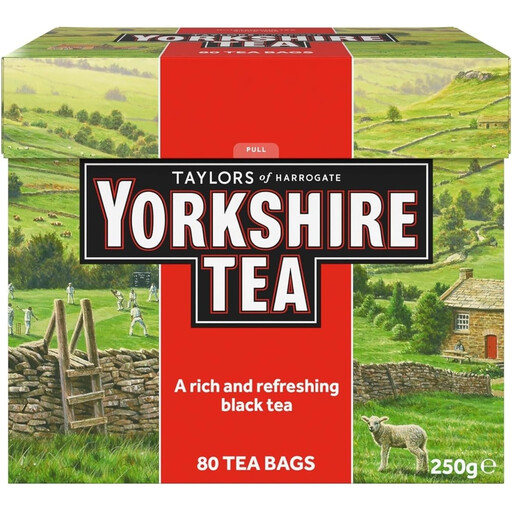 Image unavailable
An everyday black-tea option for a household using 80 bags regularly. The product description gives a 3–5 minute brewing range.
 Image unavailable
An explicitly decaffeinated black tea for households choosing that option. Its product description gives a 2–3 minute brew; check the pack if a precise caffeine figure matters.
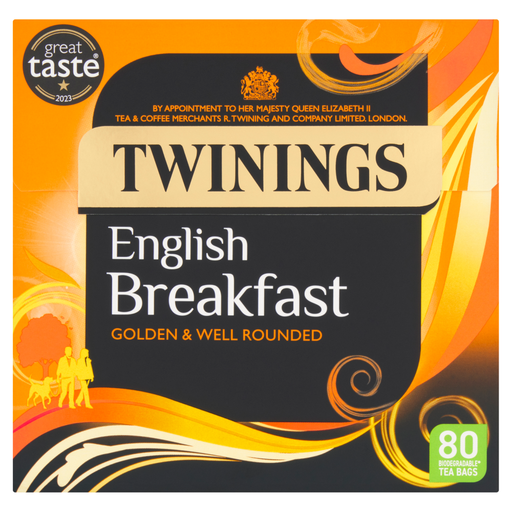 Image unavailable
An English Breakfast black-tea blend if that is your household’s usual style. Twinings suggests brewing this 80-bag product for two to three minutes; its 200g net weight is worth noting alongside the bag count.
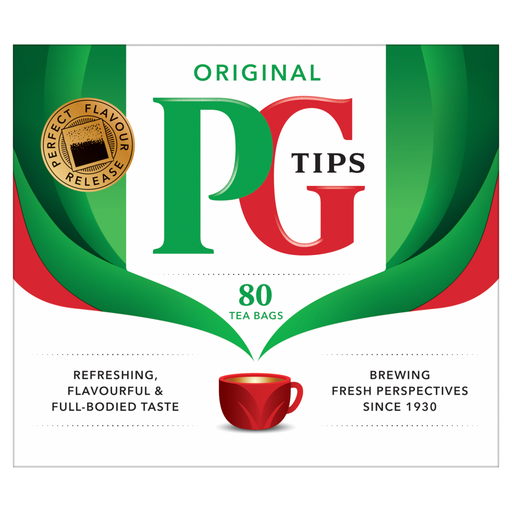 Image unavailable
An everyday black-tea box for regular household cups. This product description gives a 2–3 minute brewing reference; follow the directions on the pack you receive.
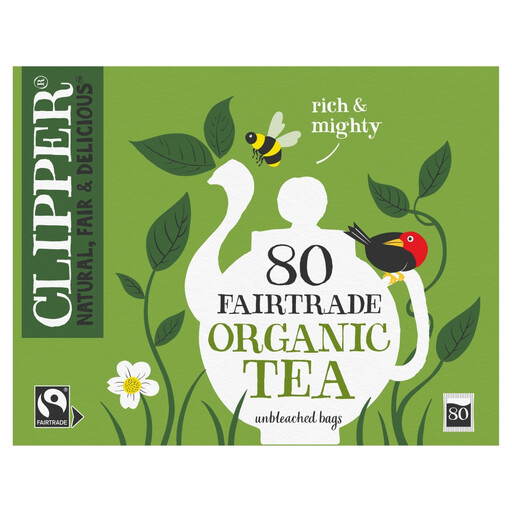 Image unavailable
An 80-bag black-tea option labelled organic and Fairtrade; the product description identifies organically grown tea. Check the pack for its brewing directions and sourcing labels.
That depends on how many bags your household uses each day, including cups made for guests. Count your usual weekly use to see whether an 80-bag box fits your shopping routine, and store the tea as directed on its pack.
The bag count does not fix the amount of tea in each bag. Morrisons lists PG Tips Original 80 at 232g, while Twinings lists its English Breakfast 80 at 200g and Everyday Decaffeinated 80 at 250g; check the exact pack when the quantity of tea matters to your choice.
Check the organic wording on the exact box. Clipper’s direct listing identifies organically grown black tea in its 80-bag Organic Everyday product; its direct listing and Tesco’s listing give different net weights, so confirm which pack you are buying.
An explicitly decaffeinated tea is an option when you want to reduce caffeine in that cup. Twinings Everyday Decaffeinated is sold in an 80-bag box, but check the delivered pack if you need a precise caffeine figure rather than assuming “decaf” means caffeine-free.
Keep tea in a cool, dry place and follow the storage directions on its pack. For used bags and packaging, follow the particular pack’s instructions alongside your local authority’s collection guidance rather than assuming every material belongs in the same bin.