
24/7 Customer Support

Free returns

Same-day & Next-day Delivery

Quality Guaranteed

Unlock Your Welcome Offers: FREE Delivery | Up to 80% OFF | Free 30-day JoyPlus trial
Download the APP
Navigating the world of power tools can be a challenge. When you're looking for a reliable corded electric jigsaw, the market is filled with models boasting features that sound impressive but may not deliver on their promises. For many DIY enthusiasts and home renovators, a powerful and versatile jigsaw is a cornerstone of the workshop, but choosing the right one means looking past the marketing hype.
Many buyers find themselves disappointed with a purchase that either lacks the power for the job or includes features that are more gimmicky than useful. Before you invest, it's worth understanding the common pitfalls that can lead to a poor choice.
A well-chosen jigsaw should be a long-term partner for your projects. By focusing on a few core specifications, you can find a tool that provides the performance and control you need for everything from intricate curves to powerful straight cuts.
To ensure your new tool is up to the task, pay close attention to these three non-negotiable features. They are the difference between a frustrating experience and a job well done.
For a corded jigsaw, the motor's power, measured in Watts (W), is a direct indicator of its cutting capability. While smaller models exist, an 800W corded electric jigsaw provides the necessary strength to handle a wide range of materials without bogging down. This level of power is ideal for a woodworking jigsaw, allowing it to cut through thick worktops, dense hardwood and laminated flooring with ease. It ensures the blade maintains its speed under load, giving you a cleaner, faster and more controlled cut.
Two features are critical for adapting your jigsaw to different tasks:
Modern jigsaws include several features designed to make your work more precise and less strenuous. A jigsaw with a laser guide projects a clear red line onto your workpiece, helping you follow your marked line with greater accuracy. Other vital features include a tool-free blade clamp for quick and easy blade changes, a built-in dust blower or vacuum port to keep your cut line visible and the ability to make bevel cuts (typically up to 45 degrees). Finally, a sturdy jigsaw with a case is a practical addition, protecting your tool and keeping all its accessories organised.
We have filtered through the options to match specific models to common user needs. This is not a list of "the best," but a practical guide to help you find the right tool for your specific DIY profile.
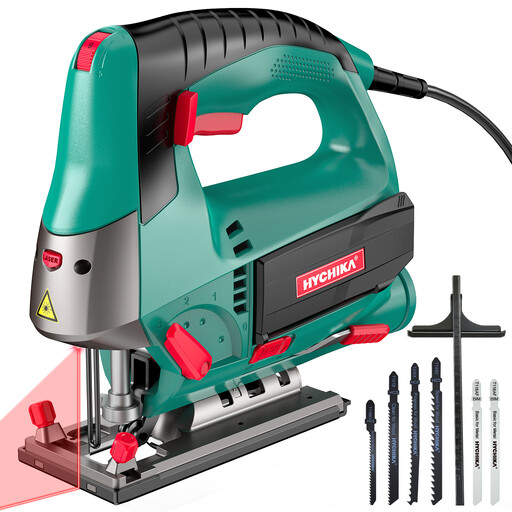
Why This Fits Their Persona: This user needs a powerful, feature-rich tool for a variety of home renovation tasks, from cutting kitchen worktops to shaping custom shelving. The combination of power and precision features makes it a true workhorse for any serious DIY jigsaw user.
Its 800W motor avoids the underpowered trap entirely. It also comes as a complete kit with 6 blades for wood and metal, a guide ruler and a durable case, sidestepping the "bare minimum" accessory issue.
Features a 6-setting variable speed jigsaw control (800-3000 SPM) and a 4-position orbital action jigsaw setting. The built-in laser guide and tool-free blade change offer excellent convenience.
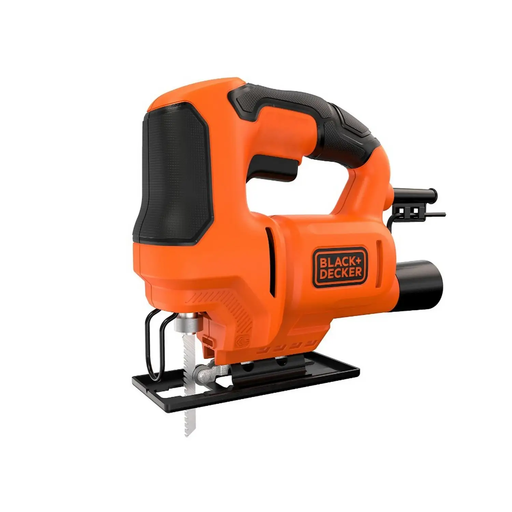
Why This Fits Their Persona: Ideal for someone who needs a jigsaw for infrequent, simple tasks like cutting thin sheet materials for a hobby project or trimming a laminate floorboard. Its simplicity and affordability are its main draws.
This tool is transparent about its capabilities. It doesn't promise heavy-duty performance, thus avoiding the trap of over-promising. It's an entry-level tool for entry-level tasks, and its built-in dust blower is a useful feature at this price point.
A very low-vibration design improves user comfort and control for precise cuts. The clear line of sight to the blade and lock-on switch are practical for straightforward cutting jobs.
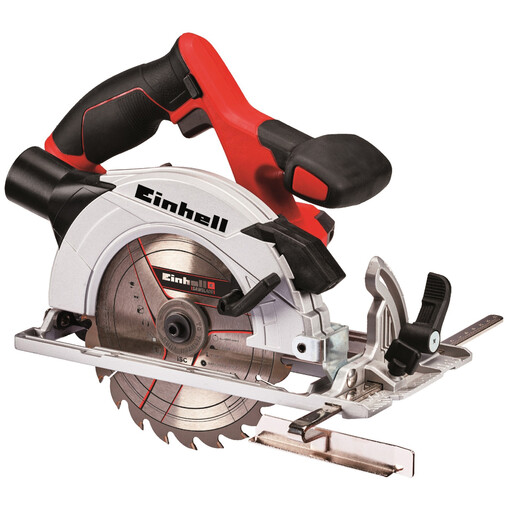
Why This Fits Their Persona: This user is primarily focused on projects requiring long, straight cuts, such as laying decking, installing flooring or building garden structures. While a jigsaw can make straight cuts, a circular saw is the superior tool for this specific job.
It prevents the common mistake of buying a jigsaw (a tool for curves) and expecting it to excel at long, straight rip cuts. This recommendation guides the user to the right tool type for their primary application, ensuring better results and less frustration.
Offers superior speed and accuracy for straight cuts in timber and sheet materials. The cordless design provides excellent portability around the home and garden, and it is compatible with guide rails for perfect precision.
We have compiled a complete, real-time list of products that fully satisfy these strict selection criteria and UK safety regulations.
1. What is the difference between T-shank and U-shank jigsaw blades? T-shank blades are the modern standard and feature a tang that locks into the tool-free clamp found on most new jigsaws. U-shank blades have a U-shaped cutout and are typically held in place by a set screw, common on older models. For convenience and wider availability, a jigsaw that uses T-shank blades is generally the more practical choice.
2. Can I use a jigsaw for cutting wood to cut metal? Yes, provided you use the correct blade. Metal-cutting jigsaw blades are made from high-speed steel (HSS) and have much finer teeth than wood blades. You must also set your variable speed jigsaw to a low speed to avoid overheating and damaging both the blade and the metal workpiece. Never attempt to cut metal with a wood blade.
3. How do I get a perfectly straight cut with a jigsaw? While jigsaws excel at curves, a straight cut requires some help. The most effective method is to clamp a straightedge (like a spirit level or a straight piece of timber) to your workpiece to act as a guide. Run the edge of the jigsaw's baseplate along the guide. Using a jigsaw with a laser guide can also help you stay on track, but a physical guide offers the most reliable results.