Everyday black-tea drinkers
If your winter mug usually contains black tea, perhaps with milk, an 80-bag box gives you several blends to consider. Check the flavour description and brewing instructions for the particular pack.


Choose an 80-bag black tea if you want a familiar brew, particularly one you drink with milk; compare the blend and its pack-specific brewing guidance. If reducing caffeine matters, consider decaffeinated black tea, but do not assume it contains none. For a caffeine-free hot drink, choose an infusion explicitly labelled caffeine free and expect a different flavour from black tea.
If your winter mug usually contains black tea, perhaps with milk, an 80-bag box gives you several blends to consider. Check the flavour description and brewing instructions for the particular pack.
Decaffeinated black tea keeps the black-tea format without implying zero caffeine. Compare caffeine statements only when their cup size and brewing basis are clear.
If avoiding caffeine matters more than retaining a conventional black-tea flavour, look for an infusion explicitly labelled caffeine free and check its ingredients.
Start with tea type and caffeine status, then compare how the particular 80-bag box fits the way you brew, store and dispose of it.
Choose when: You want a conventional black-tea mug, including one you drink with milk.
Consider: Standard black tea is a different choice from decaf or a caffeine-free infusion when caffeine matters to you.
Choose when: You want to reduce caffeine while keeping a black-tea-style drink.
Consider: Decaf need not be caffeine free. Yorkshire Tea states an average 1.5–2mg per 200ml cup of its Decaf brewed for five minutes.
Choose when: You want to avoid caffeine and are open to a herbal rather than black-tea flavour.
Consider: An infusion such as Twinings Lemon & Ginger has different ingredients and will not taste like breakfast-style black tea.
| Priority | What to check | Your needs |
|---|---|---|
| Tea type and flavour | Read the ingredients and blend description. Distinguish black tea from herbal infusions, then check the pack’s suggested brewing time. | I want a familiar black-tea mug, possibly with milk, rather than a herbal flavour. |
| Caffeine | Check whether the pack says standard, decaffeinated or caffeine free. For a stated caffeine amount, note the cup size and brewing time: Yorkshire Tea bases its Decaf figure on 200ml brewed for five minutes. | For a later-day drink, I want to know whether I am reducing caffeine or choosing a product labelled caffeine free. |
| Pack contents | Confirm the bag count and net weight. ASDA lists 80 bags at 250g for Tetley Original and 232g for PG Tips Original; the same bag count does not mean the same pack weight. | An 80-bag box fits my regular tea routine, but I want to compare the actual pack contents. |
| Storage and disposal | Follow the pack’s storage and component-disposal instructions. Check your council’s food-waste rules; Yorkshire Tea says its Decaf bags do not belong in a home compost heap. | I want to keep the remaining bags stored as directed and sort the used bags and packaging correctly. |
Black tea and herbal infusions have different ingredients, while black-tea blends have their own flavour descriptions and brewing guidance. Bag count alone will not tell you whether a box suits your usual mug.
Choose the tea type first, then use the particular pack’s ingredients, flavour description and brewing instructions to narrow the choice.
Yorkshire Tea states that an average 200ml cup of its Decaf brewed for five minutes contains 1.5–2mg of caffeine. Twinings describes its Lemon & Ginger infusion as naturally caffeine free.
If you want less caffeine, check a decaf product’s statement and measurement basis. If you want to avoid caffeine, look for an explicit caffeine-free label and review the ingredients.
Bag materials and collection arrangements differ. Yorkshire Tea says its Decaf bags require industrial composting conditions and should not go in a home compost heap.
Check the pack’s instructions for bags and wrapping separately, alongside your council’s food-waste guidance.
These examples show how particular 80-bag products differ; a brand name alone does not establish the contents of every product it makes.
ASDA lists Tetley Original as an 80-bag, 250g black tea with plant-based bags.
ASDA lists PG Tips Original as an 80-bag, 232g black tea.
ASDA lists an 80-bag, 250g standard black tea; Yorkshire Tea also identifies an 80-bag Decaf format.
Twinings identifies 80-bag English Breakfast, Everyday Decaffeinated and Lemon & Ginger products, covering different tea-type and caffeine choices.
Tesco lists Clipper Organic Everyday as an 80-bag organic tea in a 232g pack.
Typhoo lists an 80-bag black tea and describes it as a Kenyan-tea blend.
These boxes include conventional black tea, a decaffeinated tea and a peppermint option for a different kind of winter mug. Check each product’s pack information against the tea type and caffeine status you want.
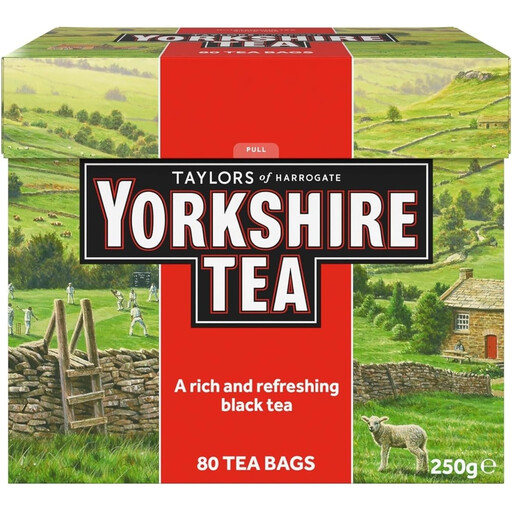 No image available
An 80-bag black-tea option for a conventional winter mug. The ASDA listing for this Yorkshire Tea pack identifies 250g of black tea and advises cool, dry storage away from direct sunlight; follow the current pack’s brewing instructions.
 No image available
Consider this 80-bag, 250g decaffeinated option if you want to reduce caffeine while keeping a tea-bag brew. Decaffeinated does not mean caffeine free; check the current pack if its caffeine statement matters to your choice.
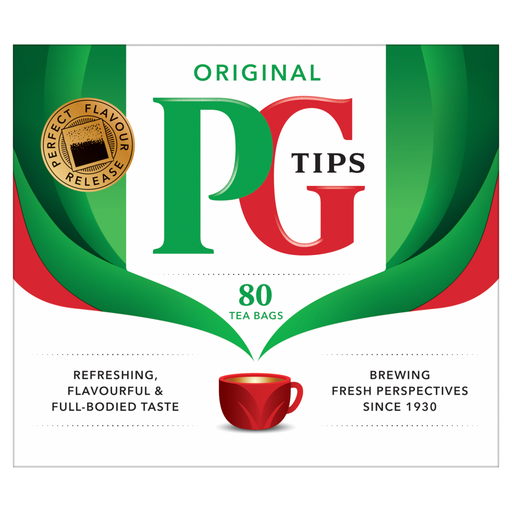 No image available
An 80-bag, 232g black-tea box for a conventional mug. ASDA identifies the ingredients as black tea; use the current pack for brewing and bag-disposal instructions.
 No image available
This peppermint 80-pack is a different flavour choice from a conventional black-tea mug. If you are choosing it to avoid caffeine, confirm the caffeine and ingredient statements on the current pack, along with its brewing instructions.
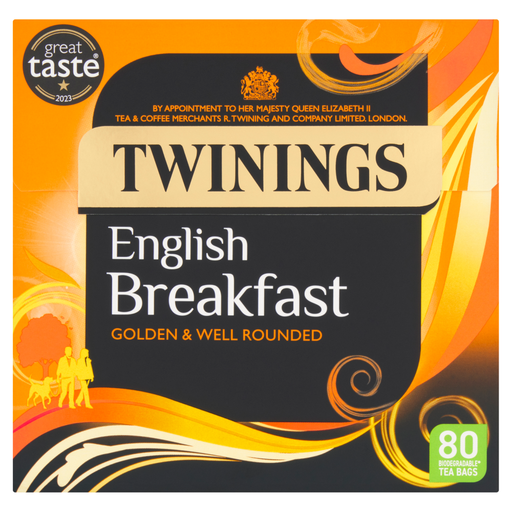 No image available
An 80-bag English Breakfast black tea for a conventional winter mug. Twinings identifies this 200g product as 100% black tea and suggests two to three minutes of brewing if you prefer a stronger cup.
No. Yorkshire Tea states that an average 200ml cup of its Decaf brewed for five minutes contains 1.5–2mg of caffeine. If avoiding caffeine is your aim, look for a product explicitly described as caffeine free; Twinings describes its Lemon & Ginger herbal infusion as naturally caffeine free.
Follow the instructions for the particular pack rather than applying one time to every blend. ASDA lists Tetley Original at 2–3 minutes and PG Tips Original at 1–2 minutes; Yorkshire Tea’s general brewing guidance suggests 4–5 minutes and adding milk after brewing directly in a mug.
Check your local council’s collection rules and the pack. The North London Waste Authority says tea bags can go in a food bin where a local food-waste collection is provided, while Yorkshire Tea says its Decaf bags should not go in a home compost heap.
Follow the storage directions on your pack. ASDA’s listing for Yorkshire Tea specifies a cool, dry place away from direct sunlight, which is worth checking when a box will be used over several weeks.