
24/7 Customer Support

Free returns

Same-day & Next-day Delivery

Quality Guaranteed

Unlock Your Welcome Offers: FREE Delivery | Up to 80% OFF | Free 30-day JoyPlus trial
Download the APP
Replacing tired halogen bulbs can make night driving feel more comfortable, but choosing suitable 9005 HB3 LED headlight bulbs involves more than comparing lumen figures. Compatibility, beam control, cooling and UK road-use requirements all matter.
A product may be advertised as a “direct replacement”, yet still fail to fit beneath the factory dust cover or trigger dashboard warnings. The right choice starts with checking the bulb specification and understanding what the headline claims actually mean.
Listings may quote figures such as 20,000LM or 30,000LM per pair. These figures describe the stated light output, but they do not guarantee a useful beam on the road. Housing design, LED chip position and reflector compatibility affect how light is distributed.
A poorly aligned bulb can create dark patches or glare for oncoming drivers, even when its advertised lumen figure is high. Look for a 1:1 halogen replacement design, correctly positioned LED chips and clear installation guidance.
A 9005 LED bulb, HB3 LED bulb and 9005/HB3 headlight bulb generally refer to the same fitting family, but the fitting alone does not confirm that the bulb is suitable for every vehicle. Available space behind the lamp, polarity, headlight control systems and dust-cover clearance can all affect installation.
CANbus-ready headlight bulbs may reduce the likelihood of flickering or error messages, but no CANbus system is guaranteed to work with every car. Some sensitive vehicles may still require a decoder or different solution.
LEDs produce heat around the chip and base. Fan-cooled bulbs can dissipate heat efficiently, but a fan is also a moving component that may create noise or eventually require attention. Fanless designs remove that component, although they still need a suitable aluminium heat-dissipation structure and enough clearance inside the housing.
Check the stated cooling method, housing material and waterproof rating rather than selecting solely by wattage.
Check your vehicle handbook, existing bulb marking or a reliable vehicle bulb chart before ordering. HB3 and 9005 are commonly used for main beam, driving lights or, on some vehicles, fog-light applications. The same fitting does not mean the same function across every model.
Also confirm whether your vehicle uses a single-filament HB3 bulb and whether the replacement is intended for the front headlamp, fog light or auxiliary LED driving lights.
Many products in this category offer 6000K LED headlight bulbs, described as cool white or xenon white. This produces a noticeably whiter appearance than conventional halogen light. Other listings specify 6500K, which may appear slightly cooler or bluer.
Colour temperature is not the same as brightness. A cool white bulb may look brighter to the eye, but beam focus and road illumination remain more important. For regular UK driving, also consider visibility in rain, spray and mist, where excessive blue content may not provide the practical benefit suggested by marketing images.
A compact plug and play LED bulb with an integrated driver can be useful where the original housing has limited room. A 1:1 body shape may allow the factory dust cover to remain in place, but always compare the product dimensions with your vehicle’s lamp housing.
Fan-cooled options commonly use an aluminium body and built-in turbo fan. Fanless options can be quieter and mechanically simpler. Whichever design you choose, avoid touching the LED chip or lens with bare fingers and allow the original bulb to cool fully before removal.
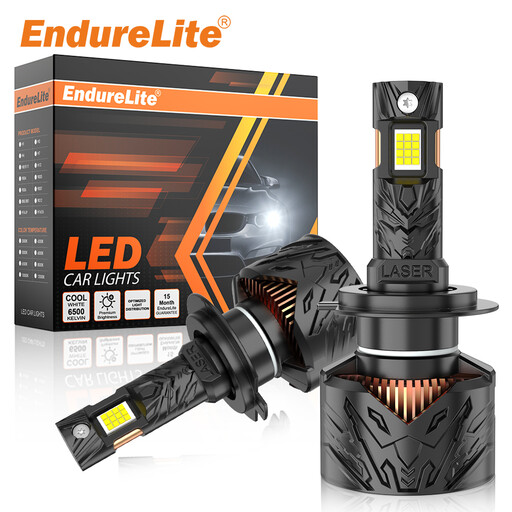
Why This Fits Their Persona: A straightforward option for drivers seeking cool white HB3 headlight bulbs with a familiar 1:1 format and direct installation for everyday commuting.
The listing identifies a 1:1 design, 6000K colour temperature and integrated fan cooling, making the key fit and heat-management details easier to assess.
The listed specifications include 20,000LM per pair, 6000K cool white light, fan cooling and IP68 waterproof construction.
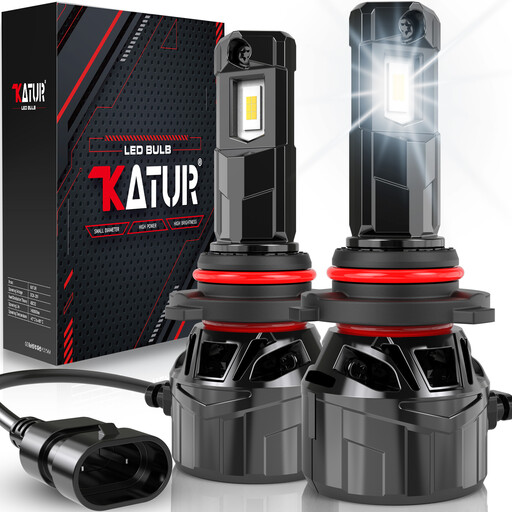
Why This Fits Their Persona: Suits owners who prioritise a high stated output, compact installation and a dedicated cooling system for frequent night-time driving.
Its listing specifies an integrated driver, 1:1 mini size and a 16,000RPM turbo fan rather than relying on brightness wording alone.
The product details list 120W and 30,000LM per pair, 6000K light, aluminium construction and CANbus decoding support.
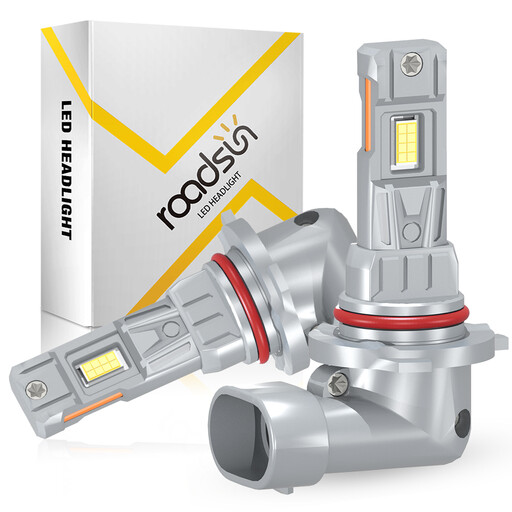
Why This Fits Their Persona: A practical match for drivers using cars, SUVs, trucks or powersport vehicles in wet, dusty or demanding conditions.
The listing states a 1:1 mini format, plug-and-play connection and waterproof, dustproof and shock-resistant construction.
The listed operating range is -40°C to +80°C, with a stated service life of more than 70,000 hours and 6000K cool white output.
Before ordering, check whether an LED retrofit is permitted for your specific vehicle and lamp assembly. UK roadworthiness requirements focus on correct beam performance, glare control and suitable operation. After installation, check the beam pattern and headlamp aim; a bulb that fits physically may still be unsuitable for road use if it produces excessive glare or an incorrect cut-off.
We have compiled a complete, real-time list of products that fully satisfy these strict selection criteria and UK safety regulations.
In most automotive bulb listings, 9005 and HB3 identify the same fitting type. Always confirm the vehicle’s required bulb position and compare the original bulb before purchasing.
Not always. CANbus-ready designs are intended to work with many monitored vehicle systems, but compatibility varies. A sensitive car may still show an error, flicker or require a decoder.
LED products may use a different wattage and are commonly advertised with longer operating-life figures, but actual energy use depends on the specific bulb and driving pattern. Treat lifespan figures as stated product information rather than a guarantee, and compare the pair’s wattage before buying.