
24/7 Customer Support

Free returns

Same-day & Next-day Delivery

Quality Guaranteed

Unlock Your Welcome Offers: FREE Delivery | Up to 80% OFF | Free 30-day JoyPlus trial
Download the APP
Replacing standard halogen bulbs can improve the appearance and perceived brightness of a vehicle, but choosing 9005 HB3 LED headlight bulbs is not simply a matter of selecting the highest lumen figure. Socket fit, beam alignment, heat management and vehicle electronics all affect whether an upgrade performs as expected.
For UK drivers, there is also an important road-use consideration: replacement bulbs must be suitable for the vehicle’s headlamp housing and should not create excessive glare. Always check your vehicle handbook, the original bulb marking and current MOT and road-use requirements before fitting LED bulbs to exterior lamps.
Product listings may quote impressive figures such as 20,000LM or 30,000LM per pair. These numbers do not, on their own, describe usable light on the road. Beam focus, reflector design, chip placement and headlamp alignment are equally important.
A 1:1 halogen replacement bulb attempts to position the LED chips similarly to the original filament. This can help preserve the intended beam pattern, but it is not a guarantee that every vehicle will produce the same result.
A 9005 and HB3 designation generally refers to the same bulb family, but vehicle housings differ. Available space behind the headlamp, dust-cover clearance, polarity and dashboard monitoring systems can all affect installation.
Even CANbus-ready LED bulbs may not work without flickering or warning messages on every vehicle. “CANbus-ready” usually means the bulb includes circuitry intended to reduce compatibility problems; it does not guarantee compatibility with every car, van, motorcycle or powersport machine.
LEDs produce less wasted heat at the light-emitting surface than halogen bulbs, but their electronics still require thermal management. A bulb with a fan may offer active cooling but can introduce moving parts and noise. A fanless design is quieter and simpler, but the housing and heat-sink design become more important.
For vehicles used in wet weather, look for a clearly stated rating such as IP65 or IP68, while remembering that the rating applies to the product’s construction under specified conditions, not necessarily to a poorly sealed vehicle housing.
Check the original bulb, owner’s manual or a reliable vehicle-parts catalogue before ordering. Do not rely only on a marketplace compatibility label. The product must be a 9005/HB3 bulb if that is the socket specified for your headlamp, driving lamp or approved fog-light application.
Also compare the bulb’s base length and rear profile with the space behind the original lamp. A compact mini-size 1:1 design can be useful where the dust cover leaves limited room.
Many 6000K cool white car bulbs produce a crisp white appearance, while 6500K options may look slightly cooler or more blue-toned. A higher Kelvin number does not automatically mean more usable light. In rain, mist or spray, excessive blue content may not provide the visual contrast some drivers expect.
For a neutral-looking upgrade, 6000K is a commonly listed option. Check whether the product is intended for high beam, low beam, driving light or fog light use, and do not install it in a housing for which it is unsuitable.
A suitable 9005 LED bulb should have a well-designed aluminium body, heat sink or cooling system. Fan-cooled LED headlights can remove heat actively; for example, several products in this range list 10,000RPM or 16,000RPM fans. Fanless alternatives avoid fan wear and may suit drivers who prefer a quieter design.
Look for practical details including:
After fitting, check the beam pattern from a level surface and adjust the headlamps if necessary. A brighter-looking bulb is not a benefit if it dazzles other road users.
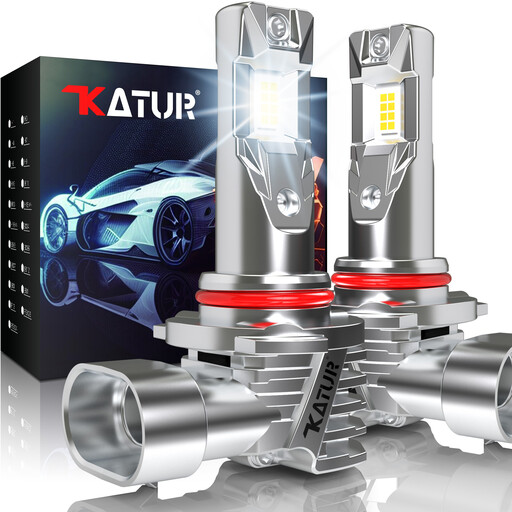
Why This Fits Their Persona: A compact option for a DIY driver seeking a straightforward pair of 9005 LED headlight bulbs without an external driver or cooling fan.
The fanless construction avoids dependence on a moving cooling component, while the listing specifies a 1:1 mini design for restricted spaces.
6000K white light, integrated design, 80W per pair and plug-and-play installation.
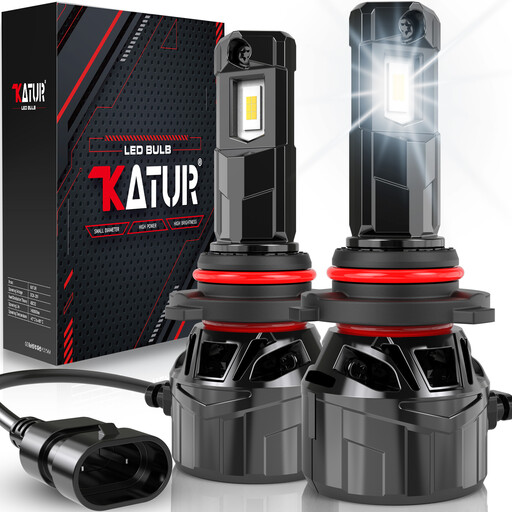
Why This Fits Their Persona: Suits drivers prioritising active thermal management and a compact fit for regular night driving.
The listing identifies a 16,000RPM turbo fan, aluminium housing and CANbus decoding system, rather than relying on brightness figures alone.
6000K xenon-white output, 1:1 sizing, 9–32V operating range and listed 60,000-hour lifespan.
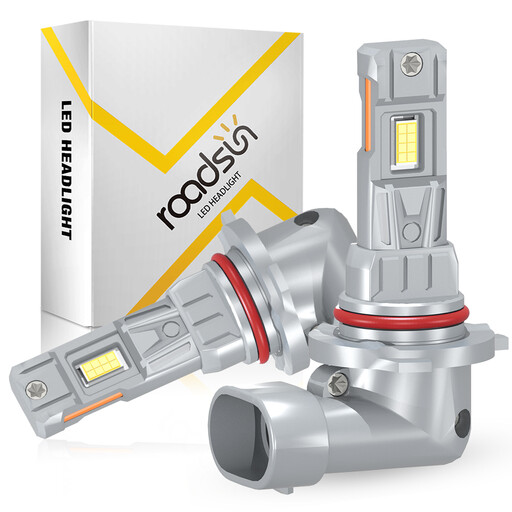
Why This Fits Their Persona: A practical match for trucks, SUVs, motorcycles, ATVs and drivers who use lighting in wet or dusty conditions.
The listing specifies a 1:1 design, fan cooling and IP68 protection, addressing fit, heat and weather concerns.
6000K cool white light, plug-and-play fitting, fan-assisted cooling and stated powersport suitability.
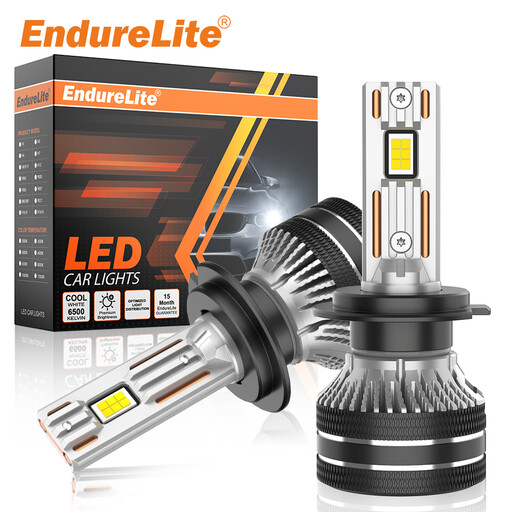
Why This Fits Their Persona: Suitable for drivers who want to reduce the chance of flicker or dashboard warnings on electronically monitored vehicles.
Its listed intelligent driver and CANbus-ready design directly address error-message and flicker concerns, although vehicle-specific verification remains necessary.
6000K cool white output, 1:1 fit, IP68 water protection and a listed 50,000-hour operating life.
We have compiled a complete, real-time list of products that fully satisfy these strict selection criteria and UK safety regulations.
They are commonly used as interchangeable designations for the same bulb size, but confirm the marking on your existing bulb and the vehicle manual before buying. A correct socket does not guarantee adequate housing clearance or road suitability.
They may use less power for a comparable lighting application, but the figures vary by product. Check the stated wattage rather than assuming every LED upgrade has the same electrical demand. Vehicles with bulb monitoring may still require CANbus circuitry or a separate decoder.
Listings in this category commonly state operating lives of 50,000 to 70,000 hours. These are manufacturer-provided figures and actual service life can be affected by heat, vibration, voltage, moisture, installation and usage. A sound heat-management design is therefore more useful than lifespan numbers viewed in isolation.