
24/7 Customer Support

Free returns

Same-day & Next-day Delivery

Quality Guaranteed

Unlock Your Welcome Offers: FREE Delivery | Up to 80% OFF | Free 30-day JoyPlus trial
Download the APP
Replacing standard halogen bulbs can improve the appearance and perceived brightness of your vehicle’s lighting, but choosing the wrong 9005 HB3 LED headlight bulbs may create new problems. UK drivers, SUV and lorry owners, motorcyclists and DIY motorists should look beyond headline lumen figures and check fit, beam control, cooling and vehicle compatibility.
This guide explains the main buying traps and compares suitable options for different driving needs.
Listings may advertise figures such as 20,000LM or 30,000LM per pair. These numbers are product specifications, not a guarantee of useful illumination on every vehicle. Reflector and projector housings distribute light differently, while poor LED positioning can create dark areas or excessive glare.
A suitable 9005 LED bulb should position its LED chips similarly to the original filament. Look for references to 1:1 bulb design, controlled chip spacing and a defined beam pattern rather than relying on brightness figures alone.
9005 and HB3 usually describe the same bulb fitting, but the socket is only one part of the installation. The vehicle may have a tight dust cover, a polarity-sensitive connector or a bulb monitoring system that triggers a dashboard warning.
A CANbus-ready LED bulb may reduce flickering or error messages on some vehicles, but no compatibility statement should be treated as universal. Check the vehicle handbook, original bulb number and available space before ordering.
LED chips produce heat at the rear of the bulb. Fan-cooled LED bulbs can move heat away quickly, but they introduce a moving component and may require adequate rear clearance. Fanless designs are quieter and have fewer moving parts, although the housing and heat sink must be designed to dissipate heat effectively.
Also check the stated IP rating, but remember that waterproof protection does not make every bulb suitable for every housing or immersion scenario.
Check that your vehicle uses 9005/HB3 headlight bulbs in the intended position. Some vehicles use 9005 for high beam or driving lights, while others may use a different fitting for dipped beam or fog lights. Motorcycle and powersport applications can also have different housing depths.
Do not assume that a bulb marketed as a fog-light bulb is automatically approved for use in a headlamp housing. After installation, verify that the light pattern remains correctly aimed.
Many products use 6000K cool white headlight bulbs, while others advertise 6500K. A higher Kelvin figure generally produces a cooler, bluer-looking white. The visual effect may appeal to drivers seeking a modern appearance, but colour temperature alone does not determine beam quality.
For regular UK driving, prioritise a controlled beam, clear lens and suitable road-use approval over a blue-tinted appearance. Check the product documentation and your vehicle requirements before using replacement LED car headlights on public roads.
Review the stated voltage, wattage, cooling method and driver design. Integrated drivers and CANbus systems can simplify installation, while external drivers may require more room behind the headlamp.
Useful specifications to compare include:
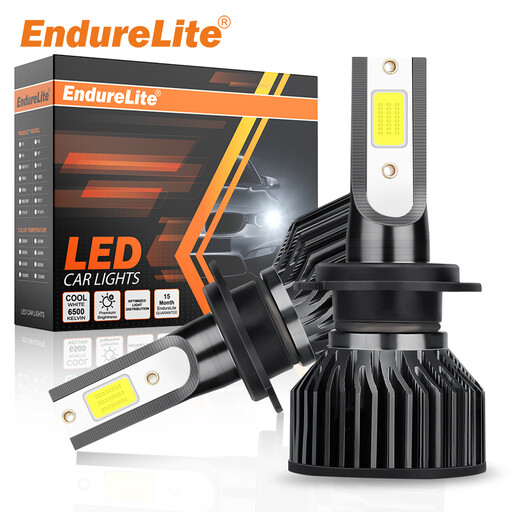
Why This Fits Their Persona: A straightforward option for drivers replacing ageing halogen bulbs and looking for a compact, plug-and-play upgrade for compatible 9005/HB3 sockets.
The listing specifies a 1:1 design, integrated cooling system and 6000K colour temperature, helping buyers assess more than the advertised brightness figure.
6000K cool white output; plug-and-play format; sold as a pair.
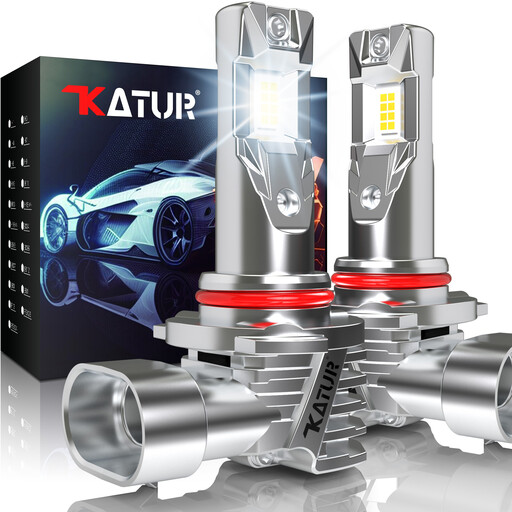
Why This Fits Their Persona: Suitable for motorists who value a compact installation and prefer not to have a cooling fan operating behind the headlamp.
Its fanless construction avoids dependence on a moving fan, while the mini 1:1 format is intended to help with restricted housing space.
Fanless design; 1:1 mini size; 6000K white output.
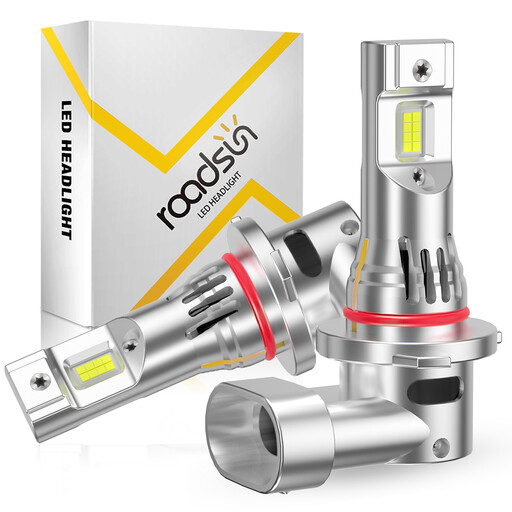
Why This Fits Their Persona: A practical match for frequent night drivers, lorries, SUVs, motorcycles and powersport vehicles that need a stated cooling system and 1:1 replacement format.
The listing identifies turbo-fan cooling, CSP chips, a 1:1 design and a stated 50,000-hour operating life, giving heavy users several specifications to compare.
Turbo-fan cooling; stated no-flicker driver; suitable for compatible 12V vehicle sockets.
Before fitting, switch off the vehicle, remove the key and allow the old bulb to cool. Wear clean gloves and avoid touching the LED chip or lens. Remove the original bulb, align the replacement carefully and lock it fully into place.
After installation:
They generally refer to the same base fitting, but you should still confirm the original bulb number and vehicle application. Connector design, housing depth and electronic monitoring can vary between models.
The products above state operating lives ranging from 50,000 to 60,000 hours, while some listings state longer periods. These are manufacturer specifications, not guaranteed service periods. Heat, vibration, moisture, installation quality and usage affect real-world durability.
They are designed to reduce compatibility issues on many vehicles, but they cannot guarantee error-free operation on every car, SUV, lorry or motorcycle. If a warning or flicker appears, check polarity, reseat the bulb and consult the vehicle manual or manufacturer support for a suitable decoder.