
24/7 Customer Support

Free returns

Same-day & Next-day Delivery

Quality Guaranteed

Unlock Your Welcome Offers: FREE Delivery | Up to 80% OFF | Free 30-day JoyPlus trial
Download the APP
Replacing standard halogen lamps can make night driving feel clearer, but choosing 9005 HB3 LED headlight bulbs is not simply a matter of selecting the largest lumen figure. Compatibility, beam control, cooling and dashboard electronics all affect whether an upgrade works properly in your vehicle.
This guide explains the main buying traps, the specifications worth checking and a selection of products suited to different driving needs.
Listings often promote very high output figures, but a larger number does not automatically mean a more useful beam. Poorly positioned LED chips can create dark patches, scattered light or glare for approaching drivers.
Look for 1:1 LED bulbs that position their chips similarly to the original halogen filament. A focused beam pattern and correct bulb alignment are generally more useful than an impressive headline figure alone.
A plug-and-play fitting normally means the bulb connects to the original 9005/HB3 socket without cutting wires. It does not guarantee that every vehicle’s body control module will accept the different electrical load.
Some cars may show a bulb warning, flicker or experience radio interference. CANbus-ready LED bulbs can reduce these issues, but “CANbus-ready” should not be treated as universal compatibility. Check the vehicle model, year, headlamp position and whether an additional decoder is required.
LED chips produce heat around the rear of the bulb. Fan-cooled LED bulbs can dissipate it quickly, but the fan needs clearance and may eventually become noisy or fail. Fanless designs avoid a moving component, though they require an effective aluminium heat sink and sufficient room inside the housing.
Before buying, check whether the bulb and its driver can fit beneath the factory dust cover. A 1:1 mini design is particularly useful where the rear of the headlamp assembly is cramped.
In most product listings, 9005, HB3 and 9005/HB3 refer to the same bulb family. However, socket type alone is not enough. Your vehicle may use different bulbs for dipped beam, main beam or fog lights.
Check the owner’s manual, the marking on the original bulb or a reliable vehicle bulb-fitment guide. Do not assume that a 9005 bulb will replace an H7, H11 or HID/D3S unit.
Many 9005 headlight bulbs use 6000K cool white LED bulbs, while some products specify 6500K. This produces a white appearance that many drivers prefer over the warmer tone of halogen lamps.
Colour temperature is not the same as brightness. A higher Kelvin rating does not automatically provide more useful light, and an excessively blue appearance may be less comfortable in rain or mist. Consider the road conditions around your regular UK journeys rather than choosing by colour alone.
Useful details include:
The products below specify operating-life figures between 50,000 and 70,000 hours. Actual service life depends on temperature, voltage, installation and vehicle use.
LED retrofits may not be suitable for every original headlamp housing or road-use application. Check the product documentation and your vehicle requirements before installation. After fitting, confirm that the beam remains correctly aimed and does not dazzle other road users. An MOT failure or an unsafe beam can outweigh any claimed brightness improvement.
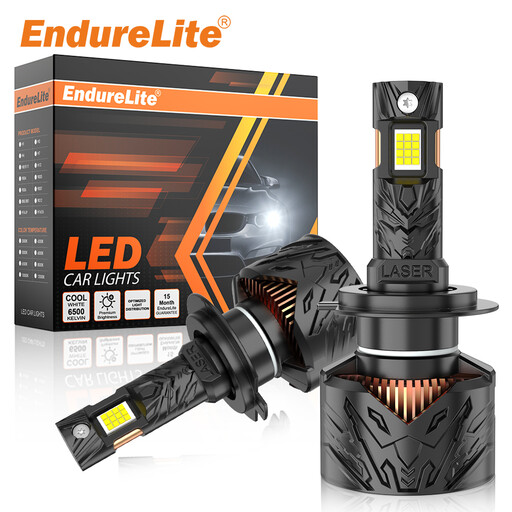
Why This Fits Their Persona: A straightforward option for drivers replacing standard 9005 headlight bulbs and looking for a 1:1 plug-and-play installation.
The listing specifies a 1:1 design, integrated cooling and CANbus-ready electronics, addressing fitment and dashboard-warning concerns.
6000K cool white output, aluminium housing, IP68 protection and a stated 50,000-hour operating life.
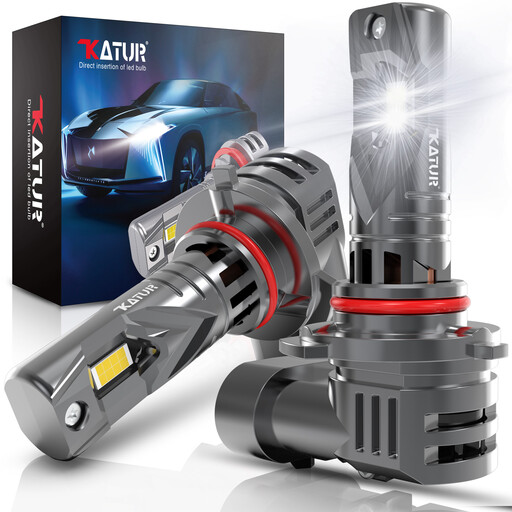
Why This Fits Their Persona: Suited to drivers who want a compact bulb with active cooling and a stated high output for regular night-time journeys.
Its stated 1:1 mini format helps address tight housings, while the external driver and CANbus-ready design target common installation and electronics issues.
16,000RPM fan, 6063 aviation aluminium body, 6000K light and stated IP65 waterproof protection.
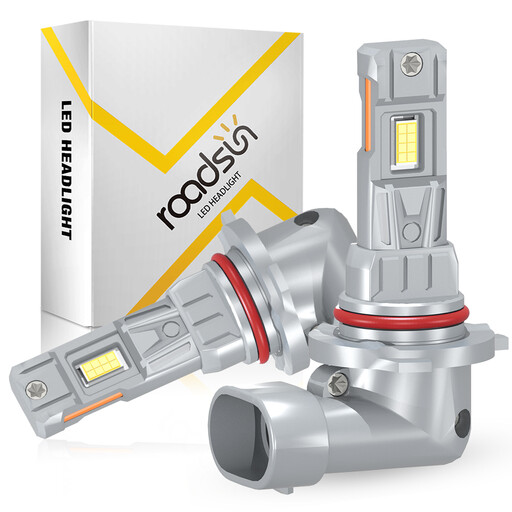
Why This Fits Their Persona: A practical match for powersport users, off-road vehicles and drivers who need weather-resistant lighting for varied conditions.
The listing identifies a 1:1 fit, plug-and-play connection and IP68 waterproof and dustproof construction, rather than relying only on a brightness claim.
Suitable for cars, SUVs, trucks and powersport applications, with a stated 70,000-plus-hour lifespan.
Avoid touching the LED chips with bare fingers. If the vehicle displays an error message, consult its manual and check whether a CANbus decoder is required.
We have compiled a complete, real-time list of products that fully satisfy these strict selection criteria and UK safety regulations.
They generally describe the same bulb fitment, but always confirm the socket and vehicle application. A car may use HB3 for one lighting position and a different fitting elsewhere.
Product listings commonly state 50,000 hours or more, but this is an estimated specification. Heat, voltage, moisture, vibration and installation quality can affect real-world service life.
Many LED replacement bulbs are marketed as using less power than equivalent halogen lamps, but the actual wattage varies by product. Check the listed wattage and your vehicle’s electrical requirements. CANbus-ready electronics may also be needed to prevent bulb warnings.