
24/7 Customer Support

Free returns

Same-day & Next-day Delivery

Quality Guaranteed

Unlock Your Welcome Offers: FREE Delivery | Up to 80% OFF | Free 30-day JoyPlus trial
Download the APP
Upgrading your car's standard halogen bulbs to a modern set of 9005/HB3 LED headlight bulbs seems like a straightforward way to improve night-time visibility and safety. The promise of brighter, whiter light is appealing. However, the market is flooded with options, and many UK drivers find themselves disappointed with their purchase. Before you buy, it's crucial to understand the common pitfalls that lead to wasted money and poor performance.
Many buyers are caught out by a few key issues:
As the Joybuy Product Recommendation Officer, my role is to help you see past the marketing hype. This guide will break down the essential features to look for, ensuring your HB3 LED upgrade is a lasting and worthwhile investment.
Instead of focusing solely on the highest lumen number, pay attention to the technical specifications that determine real-world performance and safety.
The single most important factor for any car headlight bulb replacement is its ability to replicate the precise beam pattern of the original halogen bulb. A poor pattern creates dark spots and dangerous glare for other road users.
Look for bulbs that feature a 1:1 halogen design, meaning the LED chips are positioned to mimic the exact location of the halogen filament. This, combined with ultra-thin chip spacing, ensures the light is correctly focused by your vehicle's headlight housing, creating a sharp cut-off line and illuminating the road ahead, not the sky. This is critical for both safety and passing an MOT inspection.
CANbus (Controller Area Network bus) is the system modern cars use to monitor their electronic components. Because LEDs use significantly less power than halogens, the car's system can mistakenly believe a bulb has failed, triggering a warning light.
A truly CANbus ready LED bulb has an integrated driver or resistor that communicates correctly with the vehicle's computer. While many bulbs claim "99% compatibility," some sensitive European models may still require an additional decoder. However, choosing a bulb with a robust, built-in CANbus system is the first and most important step to a hassle-free, plug and play headlight installation.
Heat is the enemy of an LED. Without an effective cooling system, the LED chips will overheat, causing their brightness to drop and leading to premature failure.
Look for models constructed from aviation-grade aluminium and equipped with a high-speed cooling fan (often 10,000 RPM or higher). This combination actively draws heat away from the LED chips, ensuring the bulb maintains its initial brightness and achieves a genuinely long operational life. A well-engineered cooling system is a clear indicator of a quality product.
To help you choose, we've matched some options to common UK driver profiles, focusing on how they address the pitfalls mentioned earlier.
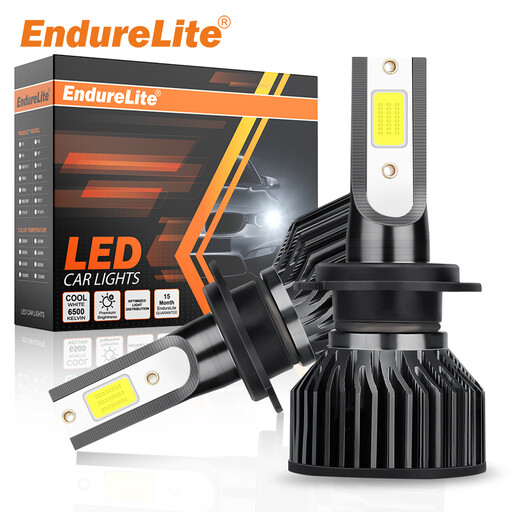
Why This Fits Their Persona: This user wants a noticeable and reliable improvement over stock halogen bulbs for their daily commute without overspending. They value a straightforward DIY installation and want to avoid dashboard errors on their family car.
It avoids the "compatibility trap" by featuring a built-in intelligent driver and CANbus-ready design, making it a true plug-and-play solution for the vast majority of UK vehicles.
Focuses on a perfect beam pattern with its 1:1 size match to stock bulbs, prioritising safe, usable light over inflated lumen figures. The active fan cooling system ensures consistent performance.
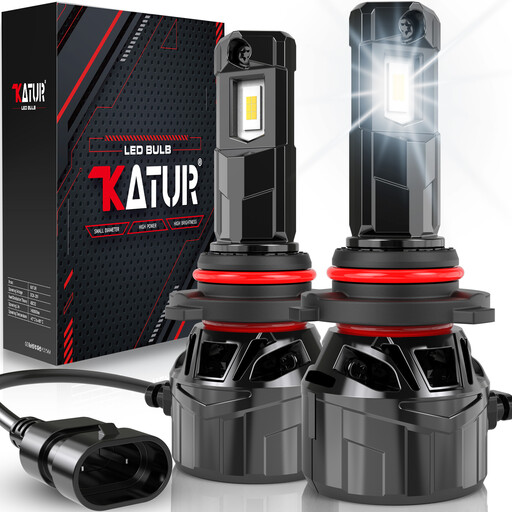
Why This Fits Their Persona: This driver wants the most powerful and technologically advanced option for maximum road illumination on dark B-roads and motorways. They prioritise longevity and are willing to invest in a product with a superior cooling system.
It directly counters the "poor cooling" pitfall with a highly efficient system, featuring a 16,000 RPM turbo fan and a copper heat pipe to prevent dimming and ensure a long lifespan.
Offers exceptionally high brightness (30,000LM per pair) backed by a robust thermal management system. The compact 1:1 design ensures this power is channelled into a usable, safe beam pattern.
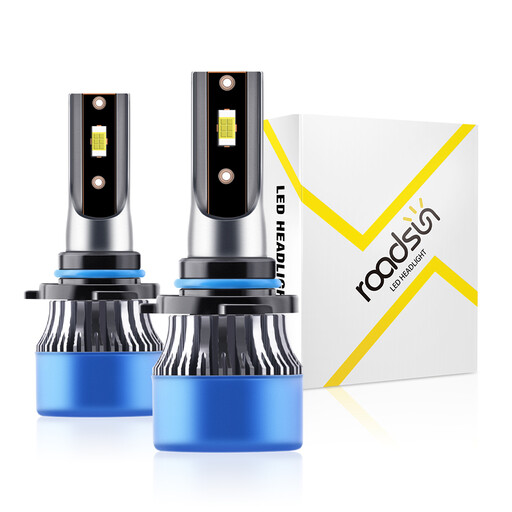
Why This Fits Their Persona: Living in an area with unpredictable weather, this driver needs reliable car driving lights that perform consistently in rain, fog and on dark country lanes. Durability against the elements is a top priority.
This bulb is built to last, avoiding premature failure with an IP68 waterproof and dustproof rating, ensuring it can withstand the harshest UK weather conditions without compromise.
Its robust, all-weather construction provides peace of mind. The 6000K cool white light offers excellent clarity for spotting road signs and hazards in poor visibility.
We have compiled a complete, real-time list of products that fully satisfy these strict selection criteria and UK safety regulations.
The legality of aftermarket LED bulbs in the UK is a key consideration. For a vehicle to pass its MOT, the headlight beam pattern must be correct, without causing dazzle to other drivers. While many high-quality LED bulbs are designed to replicate the original halogen pattern perfectly, it is the driver's responsibility to ensure their headlights are correctly aligned and meet the legal requirements after installation. Always choose bulbs that explicitly state they produce a correct, glare-free beam pattern.
For most cars, a good quality CANbus ready LED bulb will work without issue. These have built-in components to prevent errors. However, a small percentage of vehicles, particularly certain models from brands like Volkswagen, BMW and Mercedes-Benz, have highly sensitive monitoring systems that may still require an additional, external CANbus decoder to prevent flickering or dashboard warnings.
The "K" stands for Kelvin and measures the colour of the light. A standard halogen bulb is typically around 3200K, producing a warm, yellowish light. A 6000K cool white LED produces a crisp, modern, pure white light similar to natural daylight. Some bulbs are 6500K, which has a very slight blue tint. Both 6000K and 6500K offer a significant visual upgrade and improve the perception of contrast on the road compared to halogen.