
24/7 Customer Support

Free returns

Same-day & Next-day Delivery

Quality Guaranteed

Unlock Your Welcome Offers: FREE Delivery | Up to 80% OFF | Free 30-day JoyPlus trial
Download the APP
Replacing tired halogen lights can improve the appearance and perceived brightness of a car, SUV, truck or motorcycle. However, choosing 9005 HB3 LED headlight bulbs is not simply a matter of selecting the largest lumen figure on a product page. Socket fit, beam control, heat management and vehicle electronics all affect whether an upgrade works properly.
This guide explains the main buying pitfalls and compares suitable options for different driving needs.
Listings may advertise outputs such as 20,000LM or 30,000LM per pair. These figures can be useful for comparing stated specifications, but they do not guarantee a longer or safer beam on your particular vehicle. Headlamp housing design, reflector condition, bulb positioning and lens clarity also influence the result.
A poorly positioned high-output bulb can scatter light, create dark patches or produce glare for other road users. For UK driving, a controlled beam and correct lamp aim matter more than a headline number alone.
9005 and HB3 generally refer to the same bulb base, but that does not mean every vehicle using this socket will accept every LED replacement. Some housings have limited space behind the bulb, while others may have dust covers or wiring that interfere with a cooling fan or external driver.
Check your owner’s manual and existing bulb marking before ordering. Also confirm whether the 9005 headlight bulbs are intended for high beam, low beam, fog light or another application on your vehicle.
LED bulbs use different electrical characteristics from halogen bulbs. On some vehicles, this can result in flickering, dashboard warnings or a bulb-out message. CANbus-ready LED bulbs can reduce the likelihood of these issues, but no compatibility statement should be treated as a guarantee for every UK model.
Heat is another overlooked issue. LED chips produce heat at their base, so an aluminium body, heat sink or fan is important. A fan-based bulb may cool efficiently but can produce audible noise and requires enough rear clearance. Fanless bulbs are quieter and have fewer moving parts, but their design must still provide adequate heat dissipation.
Confirm that your vehicle uses 9005/HB3 bulbs, rather than H11, H7, H4 or 9006. A 1:1 mini size LED bulb is designed to closely follow the dimensions of an original halogen bulb, which can make installation easier in compact housings.
Measure the available space behind the headlamp where possible. A bulb with an integrated driver is often simpler to install, while an external driver may need to be secured inside the housing.
Look for descriptions covering ultra-thin chip spacing, 360-degree illumination or a beam designed to imitate the original filament position. These features are intended to place light in a more controlled pattern. They are not substitutes for checking the beam after installation.
After fitting, inspect the light on a flat surface and arrange a professional alignment check if the beam appears uneven or too high. UK vehicles must continue to meet applicable roadworthiness and lighting requirements, and an LED replacement may not automatically be approved for every headlamp housing or road use.
6000K cool white headlight bulbs produce a crisp white appearance, while some products use 6500K for a slightly cooler tone. Colour temperature is not the same as brightness or beam distance, so select based on visibility preference and housing performance.
For wet UK weather, an aluminium body and a stated water-resistance rating such as IP65 or IP68 may provide useful protection. Treat advertised operating-life figures as estimates dependent on usage, temperature and vehicle conditions.
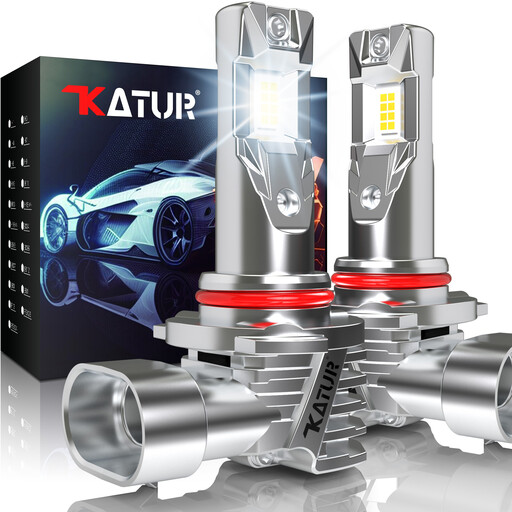
Why This Fits Their Persona: A straightforward option for drivers seeking a 6000K white upgrade with simple installation and no fan noise.
Its fanless design avoids dependence on a moving cooling component, while the 1:1 mini format is intended to fit original bulb spaces.
Fanless construction; 6000K white light; plug-and-play, all-in-one design; pack of 2.
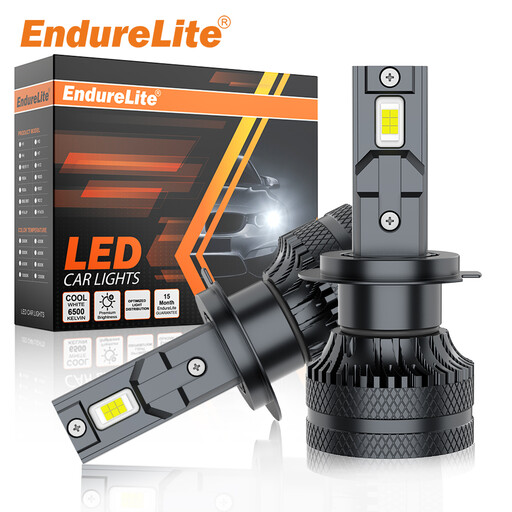
Why This Fits Their Persona: Suits regular commuters and motorway drivers who prioritise beam positioning, weather resistance and electronics compatibility.
The listing specifies 1:1 beam-pattern technology, IP68 waterproof construction and a built-in CANbus-ready driver.
Integrated 10,000RPM fan; stated 50,000-hour operating life; 6000K cool white output; pack of 2.
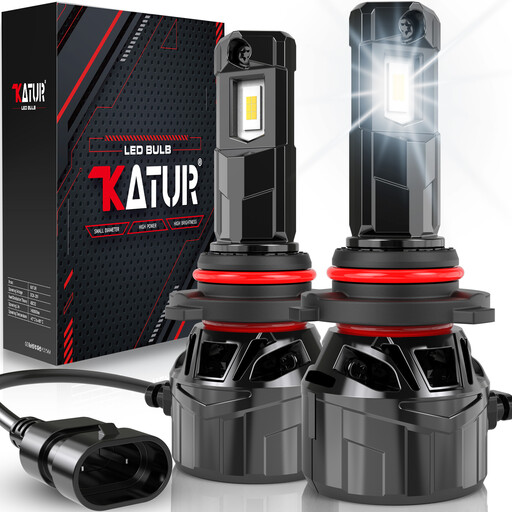
Why This Fits Their Persona: Designed for drivers covering long distances or using cars, SUVs and trucks frequently in dark rural conditions.
Its cooling system combines a 16,000RPM turbo fan, copper thermal ring and aviation aluminium housing rather than relying on the advertised power figure alone.
Stated 30,000LM per pair; 6000K xenon white; compact 1:1 fit; upgraded CANbus decoding system.
Before fitting HB3 LED bulbs, switch off the ignition and allow the original bulbs to cool. Wear gloves, avoid touching the LED chip and confirm that the dust cover can be refitted securely.
Once installed:
A bulb that fits the socket may still be unsuitable for a particular reflector or projector housing. Keep the original halogen bulbs so the vehicle can be returned to its previous configuration if necessary.
We have compiled a complete, real-time list of products that fully satisfy these strict selection criteria and UK safety regulations.
In most applications, 9005 and HB3 identify the same bulb type and base. Always verify the marking in your owner’s manual or on the removed bulb, as the bulb’s permitted position and vehicle fitment still vary.
Not always. Many CANbus-ready LED bulbs include an intelligent driver designed to reduce flickering or warning messages. Sensitive vehicles, particularly some European models, may still require an additional decoder. Check the product instructions and test the bulbs after installation.
LEDs can use less electrical power for a comparable lighting function, but the actual difference depends on the vehicle, bulb design and hours of use. Purchase price, cooling components and replacement availability should also be considered rather than judging running cost from wattage alone.