
24/7 Customer Support

Free returns

Same-day & Next-day Delivery

Quality Guaranteed

Unlock Your Welcome Offers: FREE Delivery | Up to 80% OFF | Free 30-day JoyPlus trial
Download the APP
Replacing tired halogen bulbs can make a noticeable difference to the appearance and colour of your vehicle’s lighting. However, choosing 9005 HB3 LED headlight bulbs is not simply a case of selecting the highest lumen figure. Fitment, beam control, heat management and vehicle electronics all affect whether an upgrade performs as expected.
This guide explains the main buying pitfalls, the specifications worth checking and our top recommendations for different UK driving needs.
Listings for 9005 LED bulbs often advertise very large brightness figures. These numbers may refer to the combined output of a pair, and they do not necessarily describe how much light reaches the road in the correct pattern.
A bulb with poorly positioned chips can create bright patches, dark areas or excessive glare. Look for a 1:1 LED headlight bulb design, chip placement that imitates the original filament position and clear information about beam pattern. After fitting, the headlamp alignment should still be checked.
HB3 and 9005 are commonly used interchangeably, but the socket is only one part of compatibility. Your vehicle may have limited space behind the headlamp, a tightly fitted dust cover, polarity-sensitive wiring or a monitoring system that detects changes in electrical load.
Check your owner’s manual, the existing bulb marking or a reliable vehicle fitment guide before ordering. A claimed CANbus-ready design can reduce the risk of dashboard warnings or flickering, but it cannot guarantee compatibility with every UK vehicle.
LED chips produce heat even when the light feels cooler in colour. Fan-cooled LED bulbs can remove heat efficiently, but the fan needs clearance and may eventually become noisy or fail. Fanless designs reduce moving parts, although their heat sink still needs sufficient airflow.
Also check whether the bulb and driver fit under the original cover. A product that requires permanent housing modifications may not be suitable for a straightforward DIY replacement.
The 9005 headlight bulbs and HB3 headlight bulbs in this guide use the same common bulb designation. Confirm whether your vehicle uses HB3 for high beam, driving lights or fog lights, as the same socket does not automatically mean the same approved application.
A pack of 2 is usually practical when replacing both sides at the same time, helping maintain consistent colour and output.
Many buyers look for 6000K cool white LED bulbs because they provide a crisp white appearance. Colour temperature is not the same as brightness, however. A carefully formed beam is more important than a blue-looking light.
Features such as CSP chips, ultra-thin chip spacing and 1:1 positioning are intended to replicate the original halogen light source. They may support a more controlled beam, but the result still depends on the vehicle’s reflector or projector housing.
Aluminium housings help conduct heat away from the LED chips. Product listings may also specify IP65 or IP68 water protection and an integrated fan. These ratings describe resistance to dust and water under defined conditions; they are not a promise that every installation will remain trouble-free.
For vehicles with bulb monitoring, consider CANbus-ready LED bulbs or a built-in intelligent driver. After installation, test for flickering, warning messages and radio interference. If a warning appears, the vehicle may require a compatible decoder or a return to the original bulb type.
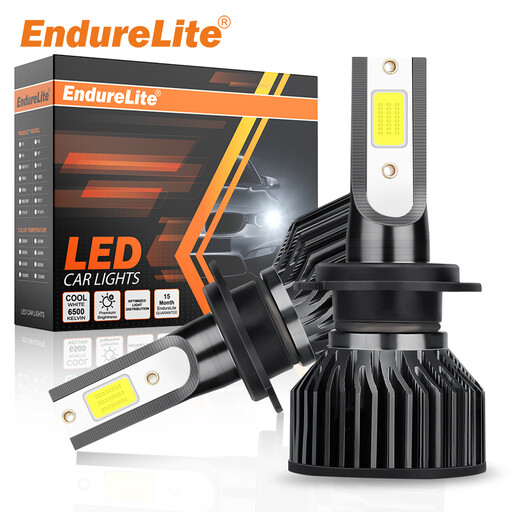
Why This Fits Their Persona: A straightforward option for UK drivers replacing both standard bulbs without wanting additional wiring or an external driver.
Its listing specifies a 1:1 form factor, plug-and-play installation and a built-in cooling system, helping avoid bulky conversions.
6000K cool white light, a pack of 2 and an advertised 50,000-hour operating life.
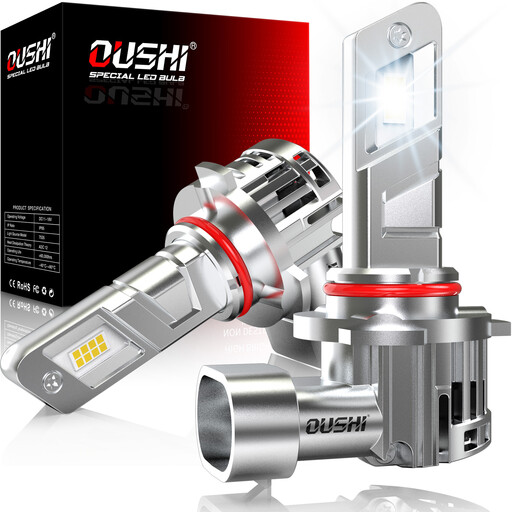
Why This Fits Their Persona: Suitable for drivers who prioritise a compact installation and a cooler xenon-white appearance in a compatible car, SUV or lorry.
The compact 1:1 design avoids external wiring, while the listing acknowledges that some sensitive vehicles may still need a CANbus decoder.
Built-in turbo fan, 1:1 mini size and an advertised CANbus system for reduced warning-light risk.
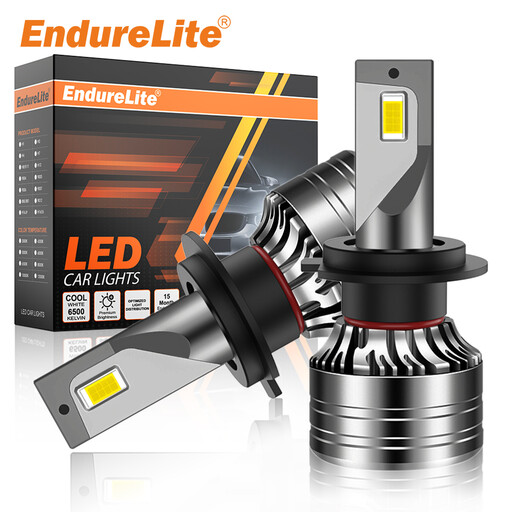
Why This Fits Their Persona: A practical match for motorists seeking 9005/HB3 bulbs for a specified driving-light or fog-light application.
The product information identifies the intended fog-light use and includes fan cooling, reducing the chance of choosing a bulb solely by brightness claims.
6000K cool white output, plug-and-play format and an advertised 50,000-hour operating life.
We have compiled a complete, real-time list of products that fully satisfy these strict selection criteria and UK safety regulations.
Before fitting car LED headlight bulbs:
For road use, check that the retrofit is suitable for your vehicle and intended lamp position. UK roadworthiness checks can identify poor beam patterns, insecure lamps and excessive glare. A cool-white appearance alone does not establish compliance, so retain the original bulbs if you need to reverse the conversion.
They are commonly used as equivalent designations for the same bulb base, but you should still confirm the vehicle’s required bulb type and application. Some vehicles use 9005/HB3 for high beam or driving lights rather than dipped beam.
Not always. CANbus-ready LED bulbs may work without extra components on many vehicles, but sensitive electrical systems can still show an error, flicker or fail to recognise the bulb. Check the product information and test the vehicle after installation.
LEDs can offer a different power-to-light arrangement, but the actual load varies by product. Compare the stated wattage and vehicle requirements rather than assuming every LED replacement reduces running costs. Cooling fans and electronic drivers also form part of the bulb’s operating system.