
24/7 Customer Support

Free returns

Same-day & Next-day Delivery

Quality Guaranteed

Unlock Your Welcome Offers: FREE Delivery | Up to 80% OFF | Free 30-day JoyPlus trial
Download the APP
Replacing tired halogen bulbs can improve the appearance and illumination of a compatible vehicle, but choosing the wrong 9005 HB3 LED headlight bulbs may create beam-pattern problems, dashboard warnings or installation headaches. Before buying, UK motorists should look beyond impressive lumen figures and check fitment, cooling, electrical compatibility and the intended road use.
This guide explains the important specifications and highlights suitable options for different driving needs.
9005 and HB3 are commonly used interchangeably, but the bulb must still match your vehicle’s original fitting and position. A 9005 bulb may be used for main beam, dipped beam, driving lights or fog lights depending on the vehicle. Consult the handbook, inspect the original bulb marking or use a reliable vehicle fitment reference before ordering.
A universal-fit description is not a guarantee that the bulb will work with every car. Housing depth, dust-cover clearance and connector design can vary.
Large lumen figures are frequently used in product titles, but they do not automatically indicate a useful beam on the road. The position of the LED chips, reflector design and bulb alignment affect whether light is directed where it is needed.
Look for 1:1 mini-size LED bulbs, thin chip spacing and an alignment system designed to imitate the original halogen filament. After installation, check the beam pattern and headlight aim. A poorly aligned bulb can produce glare for oncoming drivers, even if the bulb appears bright.
LED chips produce heat around the base and driver, so a compact bulb still needs a suitable heat-management system. Fan-cooled LED bulbs can dissipate heat effectively, but the fan is a moving component that may produce a small operating noise. Fanless designs avoid that component but rely on passive heat dissipation.
Modern vehicles may also monitor bulb resistance. CANbus-ready headlight bulbs can reduce the chance of flickering or dashboard warnings, although “CANbus-ready” does not guarantee compatibility with every sensitive vehicle. Some cars may still need a decoder or a vehicle-specific solution.
Confirm the original bulb code is 9005 or HB3. Check whether the chosen model has an external driver, cooling fan or extended base. A 1:1 mini-size LED bulb is generally easier to fit behind a factory dust cover, particularly where space is limited.
Also confirm whether you are replacing a headlight, driving light or fog light. LED fog light bulbs may share the same fitting but still require correct positioning and suitable beam control.
Many available HB3 LED bulbs use 6000K cool white headlight bulbs or xenon white LED bulbs. This gives a clean white appearance, but colour temperature alone does not determine useful illumination. A focused beam with correctly positioned chips is more important than a blue-looking output.
After fitting, make sure the bulb is locked into the housing and rotated into the correct orientation. If the beam looks scattered or creates bright patches, refit or seek professional assistance.
Useful features to compare include:
Some listings state operating-life figures of 50,000 or 60,000 hours. These are manufacturer or seller specifications rather than a guarantee of real-world service life. Temperature, moisture, driving time and vehicle electronics can all affect longevity.
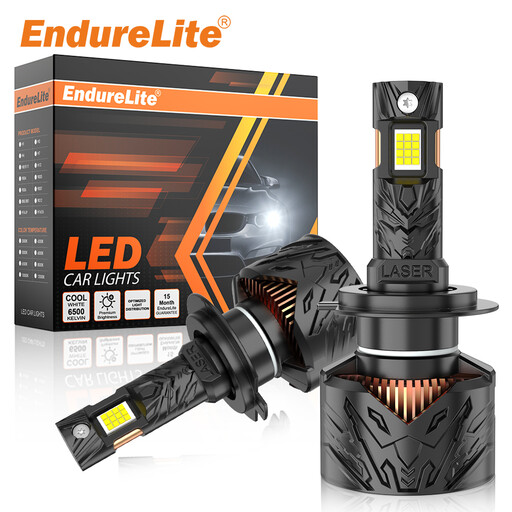
Why This Fits Their Persona: A straightforward option for DIY motorists wanting a pair of cool-white 9005 LED bulbs without wiring modifications.
Its listed 1:1 design and plug-and-play format address the common problem of bulky bulbs requiring housing modifications.
6000K colour, integrated fan cooling, IP68 protection listed and supplied as a pack of 2.
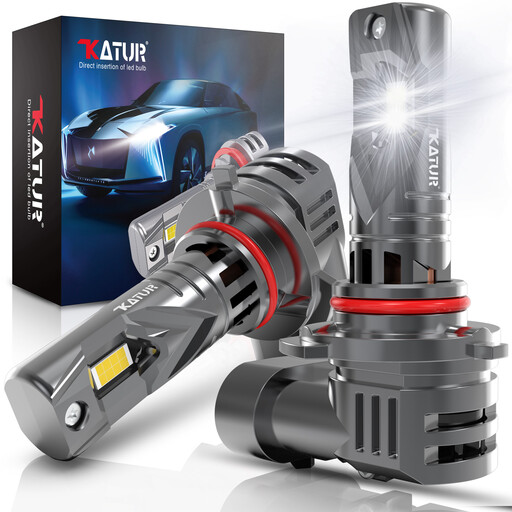
Why This Fits Their Persona: Suitable for drivers prioritising a compact installation, active heat management and a bright white appearance for regular night driving.
The product listing specifies 1:1 mini sizing, a focused chip arrangement and a CANbus-ready external driver.
6000K xenon white output, 16,000RPM turbo fan, aviation aluminium body and IP65 waterproof rating listed.
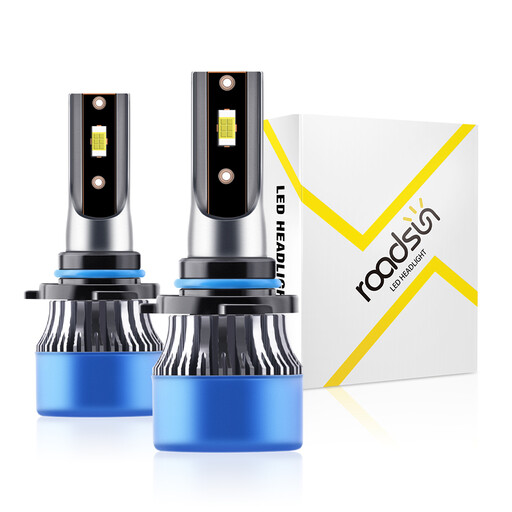
Why This Fits Their Persona: A practical match for cars, SUVs, trucks or compatible powersport vehicles used in wet and demanding conditions.
Its listed IP68 protection and fan-based cooling address moisture exposure and heat build-up during frequent use.
6000K cool white light, 1:1 plug-and-play format, integrated fan and IP68 water protection listed.
We have compiled a complete, real-time list of products that fully satisfy these strict selection criteria and UK safety regulations.
Switch off the vehicle, remove the key and allow the original bulb to cool fully. Wear clean gloves and avoid touching the LED chips or optical surfaces. Remove the original bulb, fit the replacement in the same orientation and make sure it is securely locked.
Test both sides for flickering, warning messages and correct beam height. UK drivers should also check the vehicle handbook, MOT requirements, insurance position and any applicable approval requirements before using an LED retrofit in a headlamp designed for halogen bulbs. Correct alignment matters for road safety and glare control.
They are commonly used as equivalent bulb codes, but always confirm the original part number and application position. The connector, housing depth and vehicle electronics still need to be compatible.
Listings commonly state figures such as 50,000 or 60,000 hours. Treat these as stated product specifications rather than a guaranteed service period. Cooling, moisture, vibration and usage conditions influence actual service life.
LED bulbs may use less power than some halogen alternatives, but the saving depends on the vehicle, bulb wattage and driving time. Compare the stated power consumption rather than relying only on brightness claims.