
24/7 Customer Support

Free returns

Same-day & Next-day Delivery

Quality Guaranteed

Unlock Your Welcome Offers: FREE Delivery | Up to 80% OFF | Free 30-day JoyPlus trial
Download the APP
Replacing tired halogen bulbs can make night driving feel more comfortable, but choosing 9005 HB3 LED headlight bulbs is not simply a matter of picking the highest lumen figure. Compatibility, beam control, heat management and UK road-use requirements all affect whether an upgrade is worthwhile.
The 9005 bulb is also known as HB3. However, its role varies between vehicles: it may be used for main beam, dipped beam, fog lights or auxiliary driving lights. Always confirm the original bulb number and intended position before ordering.
Listings may advertise 20,000LM, 30,000LM or even higher figures. These numbers are often stated for a pair, and the measurement method may not be clear. A high headline figure does not automatically produce a well-focused beam on the road.
A bulb with correctly positioned LED chips and a suitable 1:1 design can be more useful than one with a larger advertised output but poor optical control. Look for information about beam pattern, chip position and compatibility with the original reflector or projector housing.
Most plug-and-play LED bulbs connect directly to the original 9005/HB3 socket, but vehicle housings differ. Space behind the bulb, dust-cap clearance and the car’s bulb-monitoring system can all cause problems.
Some vehicles may show a dashboard warning, flicker or require an additional CANbus decoder. Product listings commonly describe bulbs as “CANbus ready” or compatible with a percentage of vehicles, but these figures should not be treated as a guarantee for every UK model.
LED chips produce heat at their base. Fan-cooled designs can manage this actively, while fanless bulbs rely on their aluminium body and passive heat dissipation. A fan may improve cooling but introduces a moving component and requires enough clearance to operate.
Before installation, switch off the vehicle, allow the original bulb to cool and avoid touching the LED surface with bare fingers. After fitting, check the beam aim and confirm that the rear cover can close properly.
Check the vehicle handbook, original bulb marking or a reliable registration-based parts catalogue. 9005 and HB3 generally refer to the same bulb format, but not every vehicle using a 9005 socket uses it for the same lighting function.
A compact, 1:1 mini-size design can be useful where the headlight housing has limited room. Check the listed dimensions, base shape and connector before buying, particularly for motorcycles, ATVs and powersport vehicles.
A 6000K cool white appearance is common among 9005 LED bulbs. It produces a white light that looks different from the warmer tone of many halogen bulbs. Colour temperature alone does not determine road illumination, so prioritise a controlled beam with limited stray light.
For headlight use, the bulb should work with the original housing rather than creating excessive glare. If the replacement changes the beam pattern, have the lamps checked and adjusted. A 9005 fog light bulb should also be suitable for the actual fog-light housing and function, not merely share the same socket.
Aluminium alloy housings are used on many LED car headlight bulbs because the material helps conduct heat away from the chips. Fan-cooled LED headlights may include a small high-speed fan, while fanless designs offer quieter operation and remove the risk of fan noise or fan failure.
IP ratings such as IP65 or IP68 describe resistance to dust and water under specified test conditions; they do not mean the entire vehicle housing is permanently waterproof. Also check the voltage range and whether an integrated driver or CANbus system is included.
For UK motorists, confirm that the conversion is appropriate for the vehicle, MOT requirements and insurance position. A bulb that fits physically may still not be suitable for every road-going application.
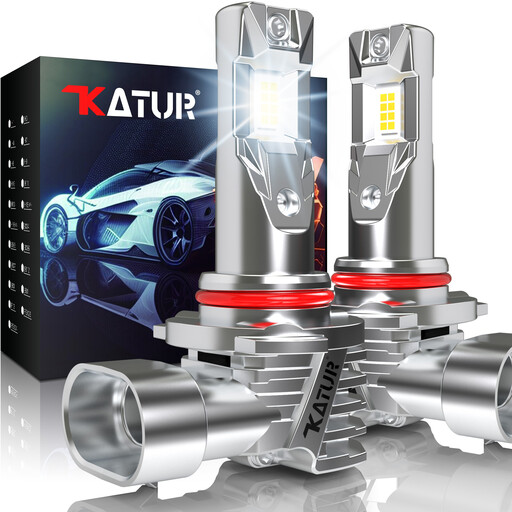
Why This Fits Their Persona: A compact option for drivers seeking a straightforward upgrade for a compatible 9005 socket, without a separate external driver.
The listing specifies a 1:1 mini design and fanless construction, helping address rear-housing space and moving-fan concerns. Confirm clearance before purchase.
6000K white output, 1:1 mini form, fanless design and plug-and-play installation are stated in the product information.
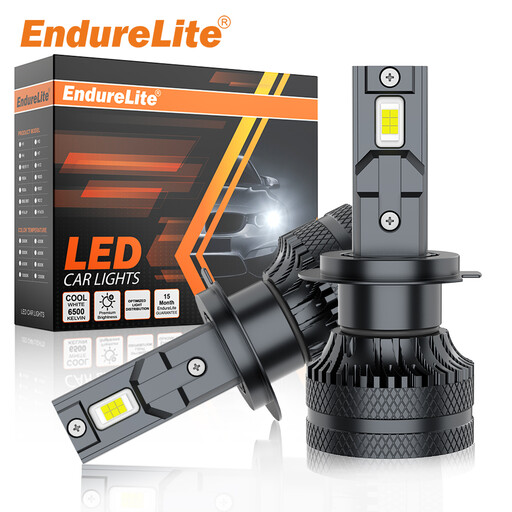
Why This Fits Their Persona: Suitable for motorists prioritising beam positioning, integrated electronics and active cooling for regular night driving.
The listing describes 1:1 chip positioning, a focused beam pattern, an integrated driver and CANbus-ready operation rather than relying only on a brightness headline.
The product information states 6000K output, a built-in fan, IP68 construction and a claimed 50,000-hour operating life.
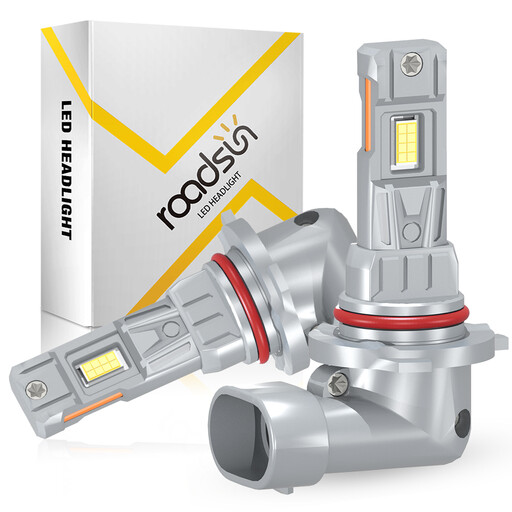
Why This Fits Their Persona: A practical match for trucks, SUVs, motorcycles, ATVs and off-road equipment exposed to wet, dusty or vibrating conditions.
The listing identifies 1:1 fit, plug-and-play connection and IP68 water and dust resistance, helping buyers compare practical protection rather than output alone.
The product details state a 6000K colour temperature, aluminium construction, plug-and-play fitting and suitability for powersport applications.
We have compiled a complete, real-time list of products that fully satisfy these strict selection criteria and UK safety regulations.
They generally identify the same bulb format, but the vehicle’s lighting function can differ. Check the original bulb number and the vehicle handbook before purchasing.
LED bulbs may use a different wattage, but actual consumption depends on the design and driver. Check the stated voltage and wattage rather than assuming every LED replacement reduces electrical load.
Many listings state operating-life figures between 50,000 and 70,000 hours. These are manufacturer or seller specifications, not a guarantee of service life in every vehicle. Heat, vibration, moisture and operating conditions can affect durability.