
24/7 Customer Support

Free returns

Same-day & Next-day Delivery

Quality Guaranteed

Unlock Your Welcome Offers: FREE Delivery | Up to 80% OFF | Free 30-day JoyPlus trial
Download the APP
Replacing ageing halogen bulbs can make a noticeable difference to the appearance and performance of your vehicle’s lighting. However, choosing 9012 HIR2 LED headlight bulbs is not simply a matter of selecting the highest lumen figure on a product page. Socket fit, beam control, cooling and vehicle electronics all affect whether a bulb is suitable.
This guide explains the main buying traps, the specifications worth checking and a selection of 9012 LED bulbs for different driving needs.
A 9012 bulb is also known as HIR2, but it is not interchangeable with H8, H9, H11, 9005/HB3 or 9006/HB4 sockets. Some product listings group several fitting types together, which can make compatibility unclear.
Check your owner’s manual, the marking on the existing bulb or a reliable vehicle bulb-finder before ordering. A 9012/HIR2 bulb must match the original socket and locking mechanism.
Listings may advertise figures such as “300% brighter” or 20,000–30,000 lumens per pair. These figures are product specifications or marketing claims, rather than a guarantee of improved illumination on every vehicle. Reflector design, lens condition, bulb alignment and electrical output all influence the result.
A controlled beam pattern is particularly important. An incorrectly positioned LED chip can create dark areas or excessive glare for oncoming drivers, even if the bulb has a high stated output.
LED chips produce heat at their base. A bulb with no suitable heat management may suffer reduced performance or a shorter service life. Fan-cooled LED bulbs can move heat away quickly, but the fan needs clearance and may produce a small amount of operating noise.
Modern vehicles can also detect a lower electrical load as a failed bulb. CANbus-ready LED bulbs may reduce warning messages or flickering, but compatibility is not guaranteed for every model. Sensitive vehicles may still require an additional decoder or resistor module.
Look for the exact 9012/HIR2 designation if your car uses that fitting. A 1:1 halogen replacement bulb is designed to follow the approximate dimensions of the original, helping it fit inside the factory housing and allowing the dust cover to be replaced.
For high and low beam LED bulbs, check whether the product is designed for both functions or only one position. The LED chips should sit in a position that closely imitates the original halogen filament. After installation, inspect the beam on a flat surface and have the headlamp aim checked if necessary.
Many drivers seeking a modern appearance choose 6000K cool white headlight bulbs. This generally produces a whiter-looking light than a conventional halogen bulb. A 6500K product may appear slightly cooler or bluer.
Colour temperature should not be confused with brightness. A whiter appearance does not automatically mean greater usable road illumination, especially in poor weather. UK motorists should also ensure that their lighting remains suitable for their vehicle and complies with applicable road-use and MOT requirements.
Aluminium housings, heat sinks and built-in fans are common on performance-oriented HIR2 LED bulbs. Product listings in this selection specify operating lives of up to 50,000 or 60,000 hours, but actual service life depends on heat, vibration, voltage and usage.
For vehicles regularly driven through rain, spray and winter road conditions, an IP65 or IP68 waterproof car light bulb design may provide useful protection against dust and water ingress. It is still important to refit the factory dust cover correctly after installation.
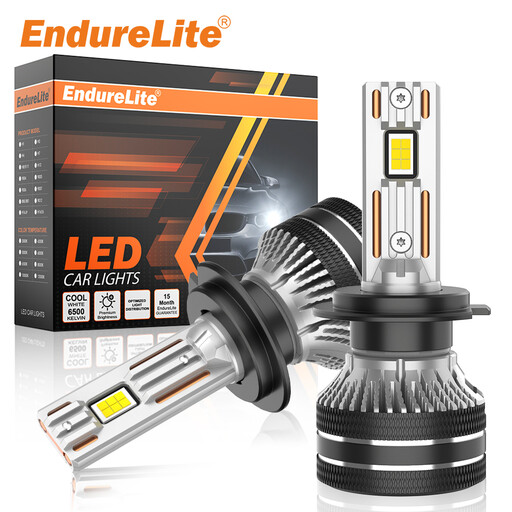
Why This Fits Their Persona: A straightforward option for commuters replacing tired halogen bulbs and looking for a 6000K appearance without an external driver.
The listing identifies the exact 9012/HIR2 fitting, 1:1 sizing, CANbus readiness and a plug-and-play format.
6000K cool white output, built-in fan, IP68 waterproof specification and pack of 2.
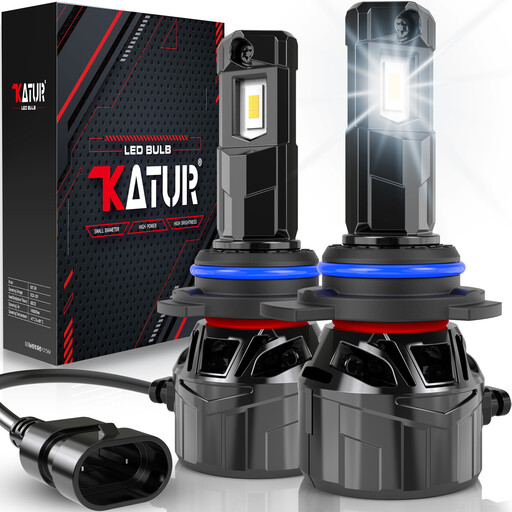
Why This Fits Their Persona: Suitable for drivers who prioritise high stated output, thermal management and a compact installation for regular night driving.
Its specification lists a 1:1 mini size and integrated CANbus decoding, while also noting that some vehicles may still display errors.
120W per pair, 30,000LM per pair as listed, 16,000RPM cooling fans and 9–32V support.
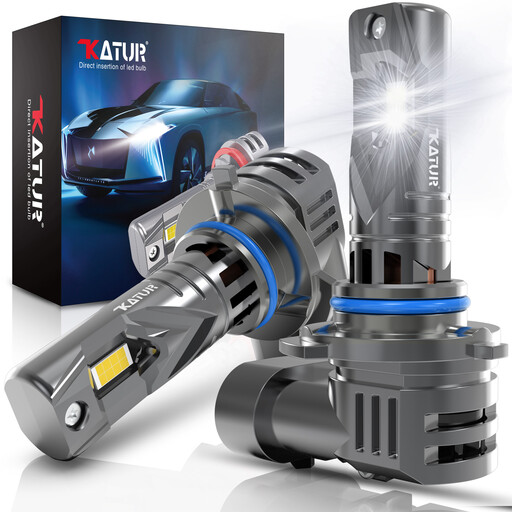
Why This Fits Their Persona: A practical choice for drivers who want a compact bulb and active cooling for frequent evening or rural-road use.
The product specifies 1:1 halogen sizing, an external driver with CANbus functions and an IP65 waterproof design.
16,000RPM turbo fan, 6000K output and 100W per pair as stated in the listing.
Before fitting, switch off the vehicle, remove the key and allow the original bulbs to cool. Wear gloves and avoid touching LED chips or glass surfaces. Check polarity, connector seating and chip orientation, then replace the dust cover securely.
After installation:
We have compiled a complete, real-time list of products that fully satisfy these strict selection criteria and UK safety regulations.
In automotive bulb terminology, 9012 is commonly used as the equivalent fitting number for HIR2. Always verify the vehicle’s original bulb specification, as similar-looking sockets are not necessarily interchangeable.
Not always. Some CANbus-ready LED bulbs include an intelligent driver intended to reduce error messages and flickering. Certain vehicles have more sensitive monitoring systems and may still require an additional decoder or resistor. Check the listing and test the bulb after installation.
LEDs can have a lower stated power draw than some halogen replacements, but energy use varies by product. Purchase decisions should also consider the initial price, cooling system, compatibility and expected service life rather than relying only on lumen or wattage figures.