
24/7 Customer Support

Free returns

Same-day & Next-day Delivery

Quality Guaranteed

Unlock Your Welcome Offers: FREE Delivery | Up to 80% OFF | Free 30-day JoyPlus trial
Download the APP
Replacing tired halogen lamps with 9012 HIR2 LED headlight bulbs can give your vehicle a cooler white appearance, quicker start-up and a different light output. However, choosing by lumen figures alone can lead to poor beam control, installation problems or dashboard errors.
This guide from the Joybuy Product Recommendation Officer focuses on the checks that matter before ordering 9012 LED bulbs, whether you need high and low beam LED bulbs or LED fog light bulbs.
Listings may promote very high lumen numbers, but output figures do not automatically indicate useful illumination on the road. The reflector, projector housing, chip position and bulb alignment all affect how light is distributed.
A poorly positioned LED can create dark areas or excessive glare, even when the advertised output looks impressive. Look for a 1:1 halogen replacement bulb design and chip placement intended to imitate the original filament position.
A 9012 or HIR2 socket does not guarantee that an LED conversion will fit every headlamp housing. Check:
CANbus-ready LED bulbs can reduce the likelihood of flickering or bulb warnings, but no universal compatibility statement should replace checking your exact vehicle.
LED chips still produce heat. Fan-cooled bulbs use a small motor and heat sink, so you need sufficient room behind the lamp. Fan noise or eventual fan failure may also be undesirable for some drivers.
Fanless designs avoid moving parts, but their aluminium body and heat-dissipation structure still need ventilation. Check the product dimensions and dust-cover clearance before purchasing.
The first non-negotiable detail is the bulb standard. 9012 and HIR2 are commonly used as interchangeable designations, but confirm that your vehicle is specified for this fitting. The products below are intended for standard 12V automotive LED bulb systems, while some listings also state a wider operating range.
Do not force an HIR2 bulb into a different socket. If your car uses H4, H7, H11 or H13, select the correct category instead.
Many of these products specify 6000K cool white LED bulbs. This produces a noticeably cooler appearance than traditional warm halogen light. One listed option specifies 6500K, which is slightly cooler still.
Colour temperature is not the same as brightness. A higher Kelvin rating does not necessarily provide more usable road illumination, and very cool light may be less appealing in rain, mist or other low-contrast conditions.
A useful replacement should sit correctly in the factory housing. Features such as 1:1 mini size, ultra-thin chip spacing and adjustable orientation are intended to help reproduce the original beam shape.
After installation, check the beam against a wall on level ground. The cut-off should be even and correctly positioned. If the beam scatters or points too high, remove and realign the bulb rather than assuming the issue will resolve itself.
Aluminium alloy housings, built-in fans, hollow heat sinks and waterproof ratings are common features in this category. Product listings describe ratings such as IP65 or IP68, but these ratings relate to resistance to dust and water under specified test conditions; they do not guarantee suitability for every installation.
Before fitting, inspect the seal, connector and dust cover. Keep the lamp switched off and fully cool, and use gloves when handling the bulb.
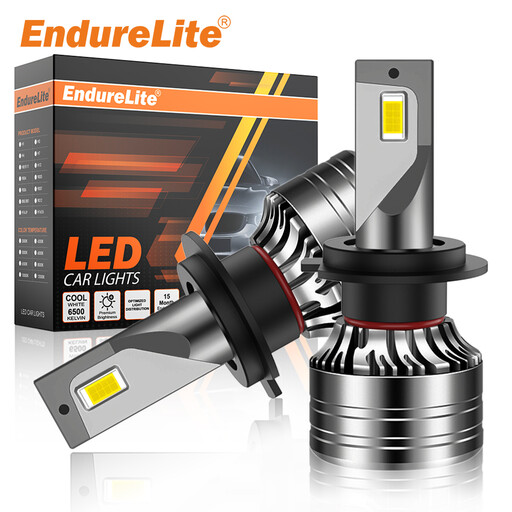
Why This Fits Their Persona: A straightforward pack for drivers moving from halogen to cool-white lighting and prioritising a compact installation.
Its listed 1:1 mini form and built-in CANbus-ready driver address common fit and flicker concerns, subject to vehicle compatibility.
6000K light, built-in 10,000 RPM fan, IP68 waterproof specification and a two-bulb pack.
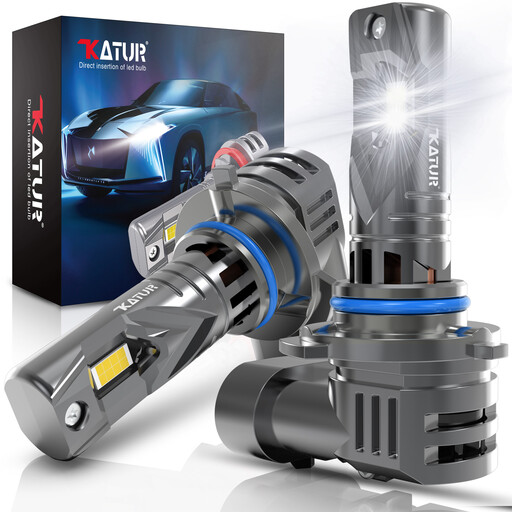
Why This Fits Their Persona: Suitable for drivers seeking a high-output specification with active cooling and a compact, wireless format.
The listing specifies 1:1 sizing, ultra-thin chip spacing and a 16,000 RPM fan rather than relying only on an output headline.
Listed 30,000-lumen-per-pair and 100W-per-pair specifications, IP65 protection and an external driver with CANbus function.
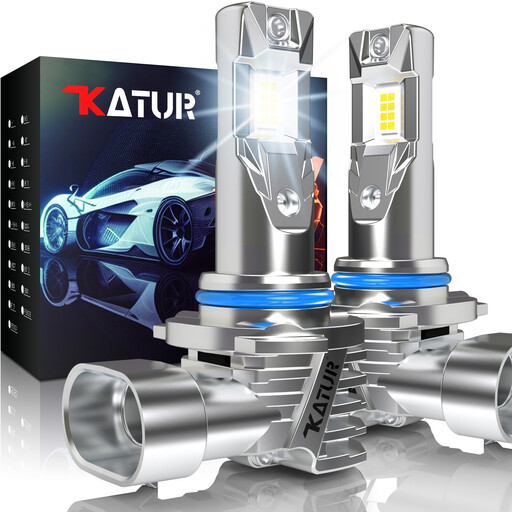
Why This Fits Their Persona: A practical option for drivers who regularly use their lights and prefer quiet operation without a cooling fan.
Its fanless construction removes the moving-part failure concern, while the listing provides specific installation and dust-cover clearance guidance.
Fanless 6063 aviation aluminium body, 6000K white light, 1:1 mini design and listed 26,000-lumen-per-pair output.
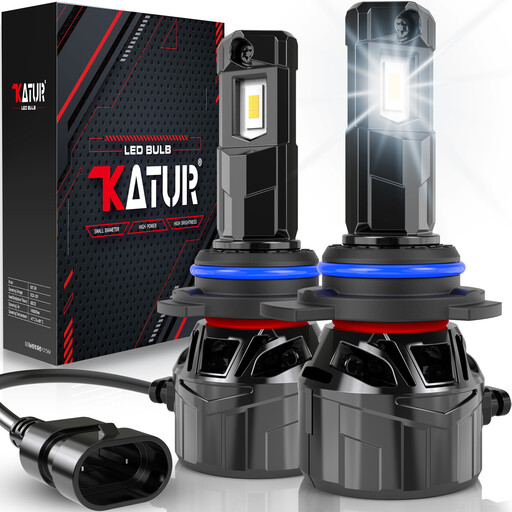
Why This Fits Their Persona: Designed for users who want a high-output specification and an active heat-management system for frequent night driving.
The specification combines 1:1 sizing with a 16,000 RPM fan and copper heat-conduction components, rather than treating output as the only consideration.
Listed 30,000-lumen-per-pair output, 9–32V operating range, 6000K colour temperature and claimed 60,000-hour service life.
Before fitting HIR2 headlight bulbs, switch off the vehicle and allow the original bulbs to cool. Remove the factory bulb carefully, avoid touching the LED chips or optical surfaces, and make sure the sealing ring sits correctly.
After installation:
For UK road use, confirm that the retrofit is suitable for your specific vehicle and lamp assembly. The Road Vehicles Lighting Regulations and MOT requirements concern correct lamp function, alignment and glare. A product described as plug and play is not automatically approved for every road-going application. If the installation affects beam control or warning systems, consult a qualified vehicle technician and check your insurer’s requirements.
We have compiled a complete, real-time list of products that fully satisfy these strict selection criteria and UK safety regulations.
They are commonly used as alternative names for the same bulb standard, but you should still confirm the marking in your owner’s manual or on the removed halogen bulb. Socket shape, retaining tabs and vehicle electronics can vary.
The products listed here specify service lives ranging from 50,000 to 60,000 hours. These are manufacturer or listing specifications rather than a guarantee of real-world service life. Heat, vibration, moisture, fan wear and electrical conditions can affect longevity.
They are designed to reduce the chance of bulb warnings, flickering and radio interference. However, some sensitive vehicle systems may still require an additional decoder or resistor. Test the lights after installation and follow the product’s vehicle-specific instructions.