
24/7 Customer Support

Free returns

Same-day & Next-day Delivery

Quality Guaranteed

Unlock Your Welcome Offers: FREE Delivery | Up to 80% OFF | Free 30-day JoyPlus trial
Download the APP
A 90cm dual fuel range cooker can provide the flexibility of a gas hob with the consistent heat of electric ovens, making it suitable for family meals, batch baking and entertaining. However, the large format and extensive feature lists can make comparison difficult.
Before choosing a cooker, look beyond the finish and burner count. The most common buying mistakes involve fitting dimensions, misleading capacity figures and underestimating installation requirements.
A cooker described as a 90cm range cooker may measure slightly below or above 900mm. For example, some models list a width of 896mm, while others measure 900mm. Height can also vary because of adjustable feet and rear splashbacks.
Measure the available space carefully, including:
Do not assume a cooker will fit simply because it is marketed as 90cm.
A cooker may advertise a large combined litre capacity, but this can include a grill cavity as well as one or two ovens. A multi-cavity range cooker is useful when you regularly cook dishes at different temperatures, but a single large oven may be more practical for large roasting trays.
Check whether the product has:
For everyday family cooking, separate cavities can reduce the need to wait for one dish before starting another.
An A-rated range cooker can indicate efficient oven operation within the relevant energy-rating system, but actual electricity use depends on cooking temperature, programme duration, cavity size and how often the appliance is used. A large cooker can consume more energy during long cooking sessions simply because it has more capacity.
Compare the energy label and product specification, then consider whether you genuinely need every cavity. Using the smallest suitable oven and avoiding unnecessary preheating can help manage household energy use.
A 5 burner gas hob range cooker is a practical layout for most households. Check the position and output of each burner rather than counting burners alone. A central wok burner rated at 4.0kW, for example, is suited to rapid boiling and high-heat stir-frying, while smaller burners may be more appropriate for simmering.
Cast-iron pan supports provide a stable surface for heavier pans, but they are also weightier and may require more careful cleaning. Look for automatic ignition, flame-failure protection and clear manufacturer instructions.
An electric fan oven range cooker circulates heated air around the cavity, helping distribute heat across multiple shelf levels. This can be useful for batch cooking, although recipes may require a temperature adjustment compared with conventional cooking.
Multifunction ovens offer more programme choices, such as fan cooking, conventional heat, grilling, defrosting and base heat. These options are helpful for households that prepare varied meals, but simpler controls may be preferable if you mainly roast, bake and grill.
A black range cooker can create a strong focal point and may coordinate with darker appliances. A stainless steel range cooker offers a neutral appearance that can suit modern kitchens, although fingerprints and cooking splashes may be more visible.
Also check for:
The finish should be considered alongside cleaning requirements, not as a substitute for practical features.
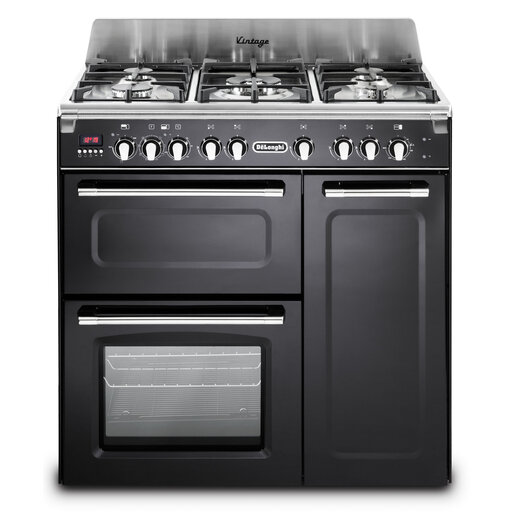
Why This Fits Their Persona: A freestanding black range cooker with a three-cavity layout can suit households upgrading from a standard cooker while wanting separate oven and grill areas.
Its listed 900mm width, separate grill, main oven and secondary oven make the cavity arrangement clear rather than relying only on a combined capacity figure.
Five gas burners include a 4kW wok burner; the cooker has an A-rated electric oven system and a two-year parts and labour warranty.
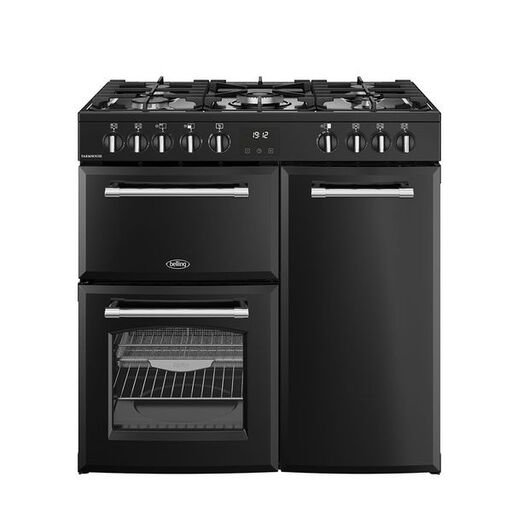
Why This Fits Their Persona: The traditional black-and-chrome styling suits a country-inspired UK kitchen, while three independent cavities support varied family cooking.
The specification separates its 174-litre total into a 60-litre fan oven, 81-litre tall fan oven and 33-litre grill cavity, making the available space easier to assess.
It includes a 4.0kW wok burner, AirFry function and tray, easy-clean enamel interiors and a three-year manufacturer warranty.
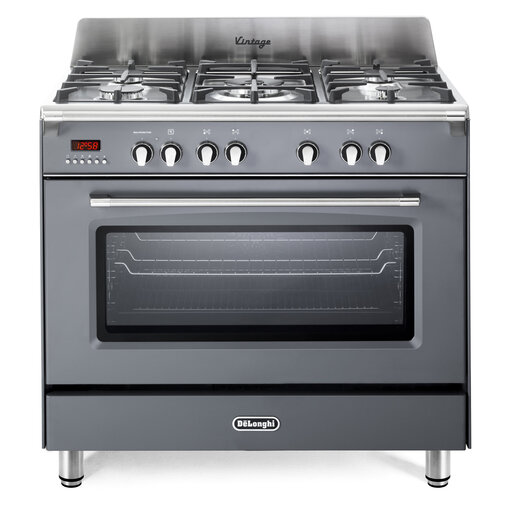
Why This Fits Their Persona: Its two electric fan ovens and large main cavity are suited to frequent batch cooking, Sunday roasts and meals prepared at separate temperatures.
The product specification lists a 90-litre main oven and 55-litre secondary oven, alongside the stated 7.5kW total electrical power, so capacity and supply planning can be checked together.
The five-burner gas hob has a triple-ring wok burner, while the cooker includes cast-iron supports, easy-clean enamel and a triple-glazed cool-touch door.
We have compiled a complete, real-time list of products that fully satisfy these strict selection criteria and UK safety regulations.
A dual fuel appliance needs both a gas connection and an electrical supply. Installation should be completed by an appropriately qualified professional. Gas work must be carried out by a Gas Safe registered engineer, while the electrical connection should follow the manufacturer’s instructions and UK wiring requirements.
Several listed models require substantial electrical connections, including the Belling Farmhouse model’s specified 32-amp hardwiring. Confirm the rating with the installer before purchase. Do not rely on a standard plug unless the product documentation explicitly allows it.
Check that:
Running cost depends on electricity and gas tariffs, cooking frequency, selected temperatures and how many cavities are used. An A-rated oven may use energy efficiently within its rating category, but a large cooker can still require more energy during extended cooking. Use the smallest suitable cavity and avoid heating unused ovens.
Often, yes. Electric ovens can require a dedicated circuit or hardwired connection rather than a standard socket. The precise requirement varies by model, so check the installation guide and have the supply assessed before delivery.
Lifespan depends on build quality, cleaning, usage and servicing. Regularly clean burners and enamel surfaces, avoid forcing oven doors or shelves, and follow the manufacturer’s care instructions. Warranty length is useful for comparing after-sales cover, but it does not guarantee a particular service life.