
24/7 全天候客户支持

免费退货

当日/次日达

品质保障

开启新人专享福利: 全场免邮 | 低至 2 折 | 免费试用 30 天 JoyPlus 会员
下载 Joybuy
A 9kg heat pump tumble dryer can make a noticeable difference to a busy UK household, particularly when the washing basket is full of bedding, towels, school clothes and everyday garments. However, a large drum alone does not guarantee economical or convenient drying.
The main buying traps are often hidden in the specification sheet:
A 9kg capacity is suitable for many medium-to-large households and can reduce the number of cycles needed each week. It is particularly useful for towels, cotton clothing and some bedding. Nevertheless, check the manufacturer’s guidance for duvets and oversized items rather than assuming every 9kg load can be dried together.
Most freestanding tumble dryers in this guide are approximately 85cm high and 60cm wide, but depth varies. Allow room for the door to open fully, ventilation and access to the water tank and lint filter. Some models require a specified clearance at the sides, top or rear, so consult the installation instructions before ordering.
A heat pump tumble dryer recycles warm air within the appliance and generally dries at lower temperatures than traditional vented or condenser designs. This can support lower electricity use and gentler treatment of fabrics, although cycles may take longer.
Energy labels should be compared carefully. The supplied models include A++ and A+++ tumble dryer options, while the Russell Hobbs model listed below carries an E rating. Do not assume two dryers with the same capacity have identical consumption. Look for the stated energy information, cycle duration and any half-load or sensor functions.
An energy-efficient tumble dryer is most useful when paired with a washing machine that spins laundry thoroughly. Removing more water during the wash can reduce the work required during drying.
A sensor dry tumble dryer monitors moisture and can stop or adjust the cycle when the selected dryness level is reached. This may help avoid unnecessary drying, but sensors cannot compensate for a tightly packed drum or mixed fabrics with very different drying times.
Useful features to consider include:
Smart functions are optional. A smart tumble dryer or Wi-Fi tumble dryer can provide notifications, remote monitoring and additional programmes, but check whether the app is compatible with your phone and home network.
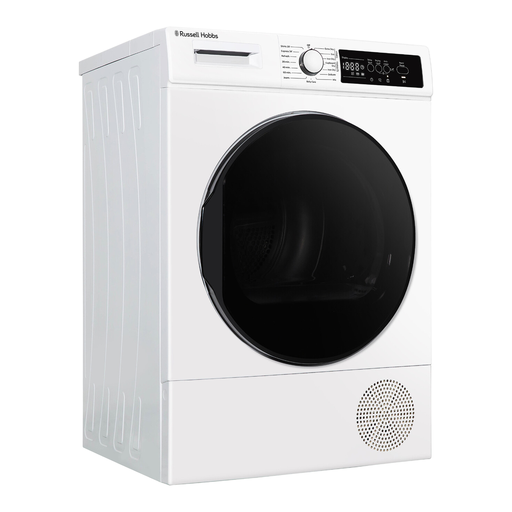
Why This Fits Their Persona: It offers a straightforward 9kg drum, LED controls and practical programmes for households wanting a simple white freestanding tumble dryer without app connectivity.
Its specification clearly states an E energy rating, so running-cost expectations are easier to set rather than being inferred from the heat pump label alone.
15 programmes, a 34-minute express cycle, a 20-minute shirt cycle, anti-crease and child lock.
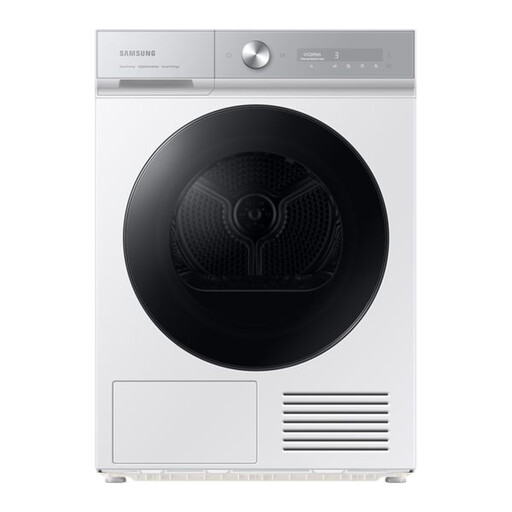
Why This Fits Their Persona: It suits homeowners seeking a connected white appliance with flexible installation and detailed cycle management.
OptimalDry sensors are specified to adjust drying according to moisture and temperature, rather than relying solely on a fixed timed cycle.
A+++ rating, Wi-Fi through SmartThings, reversible door, 62dB noise rating and a stated 81-minute Super Speed programme for up to 5kg.
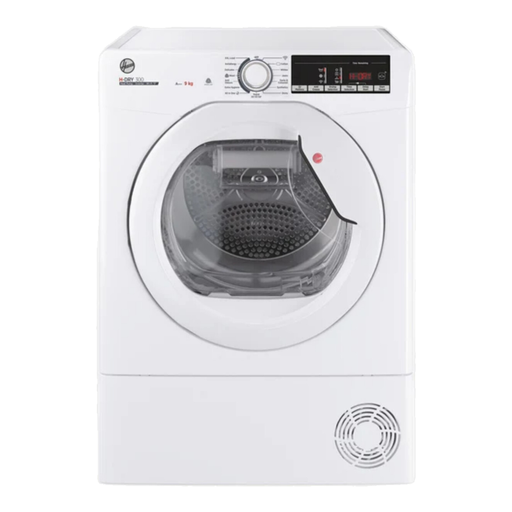
Why This Fits Their Persona: Its large drum, 15 programmes and four dryness levels suit families processing frequent mixed loads, towels and everyday bedding.
The combination of sensor-style dryness selection, adjustable levels and a delay timer reduces dependence on one generic programme for every load.
A+++ rating, Wi-Fi via the Hoover Wizard App, 63dB operation, front-accessible water tank and 24-hour delay timer.
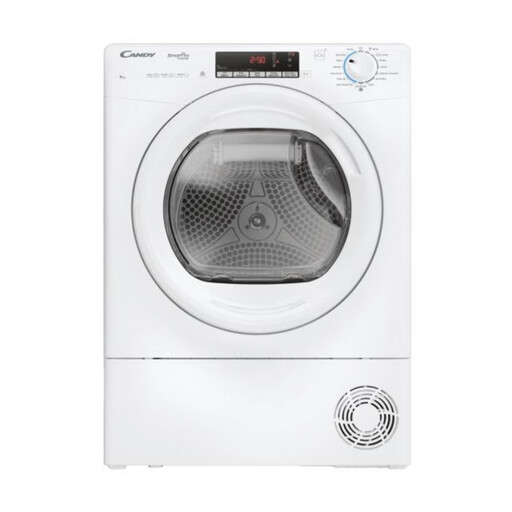
Why This Fits Their Persona: It is suited to busy homeowners who want remote notifications, programme management and a white finish in a standard freestanding format.
The product specification identifies the connectivity method, sensor drying and water-container design, making the convenience features tangible rather than vague.
A+++ rating, Wi-Fi and Bluetooth, sensor dry, anti-crease, EasyCase door-integrated water container and approximately 66dB noise.
We have compiled a complete, real-time list of products that fully satisfy these strict selection criteria and UK safety regulations.
Before the first cycle, level the appliance on a stable floor and connect it directly to a suitable earthed wall socket. Avoid extension leads and keep the required ventilation clear. Clean the lint filter after every use and empty the water tank unless automatic drainage has been installed.
Do not dry fabrics exposed to petrol, oils, solvents or other flammable substances. Check garment care labels, avoid overloading and remove laundry promptly when the cycle finishes to reduce creasing.
For many UK families, yes. A 9kg drum can accommodate substantial clothing loads, towels and some bedding. The correct choice depends on how often you wash, available space and whether the dryer’s programmes match your fabrics.
They can use less electricity than some conventional dryer types because they recycle warm air and operate at lower temperatures. Actual cost depends on the appliance’s energy rating, cycle duration, load size, electricity tariff, washing-machine spin speed and maintenance.
Lifespan varies according to construction, usage and maintenance. Regularly cleaning the lint filter, keeping ventilation clear, emptying the water tank and following the manufacturer’s care instructions can support consistent operation. Check the supplied guarantee and any registration requirements before purchase.