
24/7 Customer Support

Free returns

Same-day & Next-day Delivery

Quality Guaranteed

Unlock Your Welcome Offers: FREE Delivery | Up to 80% OFF | Free 30-day JoyPlus trial
Download the APP
A4 notebooks are useful when your notes need to accommodate diagrams, printed documents, revision tables or project plans. They are also easy to store in standard lever-arch files when pages are punched or perforated for removal. However, choosing by cover colour or page count alone can lead to wasted money.
The most common buying pitfalls are:
Standard A4 paper measures 210 mm wide by 297 mm high. This is the size to look for when you need pages to fit conventional folders, binders or document wallets.
A useful feature is a four-hole punched margin. It allows pages to be filed while retaining a true A4 writing area. If pages are only perforated without punched holes, you may need to punch them yourself, which can reduce usable space or affect alignment.
For project work, also check whether dividers include storage pockets. This can prevent loose handouts, receipts and printed instructions from becoming separated from your notes.
An 80 gsm notebook is a practical everyday option for pencils, ballpoint pens and many gel pens. It offers a balance between writing comfort, portability and page capacity. Heavier paper may feel more substantial, but it can also make a notebook bulkier.
A lined A4 notebook with approximately 8 mm ruling is suitable for meeting minutes, lecture notes, lists and general office stationery. Feint lines are less visually dominant, which can help when combining handwriting with diagrams or headings.
Paper performance can vary with the writing tool. Test felt-tip, fountain or liquid ink pens on a spare page if bleed-through would be a problem. Keep paper products away from moisture and avoid excessive pressure or bending during storage.
An A4 wirebound notebook can open flat and is convenient for writing at a desk or during meetings. It may also be easier to turn pages quickly. Check that the wire is not likely to catch on bags or other stationery.
A notepad with perforated pages is more suitable when notes need to be removed, shared or transferred into a filing system. For long-running subjects, a project book with dividers provides more structure than a simple pad.
A wipe-clean polypropylene cover is useful in environments where notebooks are handled frequently. It can be wiped with a suitable dry or lightly damp cloth, while the paper inside should still be protected from liquid.
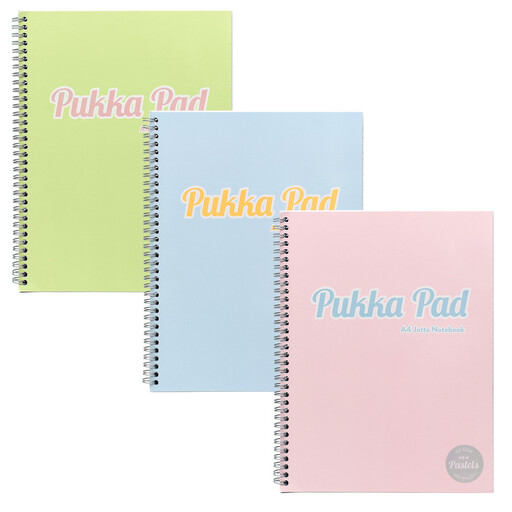
Why This Fits Their Persona: Three assorted pastel notepads give students, home-office users and new stationery buyers separate pads for different subjects or tasks.
The pack format gives a clear cost-per-pad comparison, while perforated pages make removal more practical than tearing from an ordinary bound book.
Pack of three; 200 pages per pad; 80 gsm paper; perforated pages; personal-details section and yearly planner.
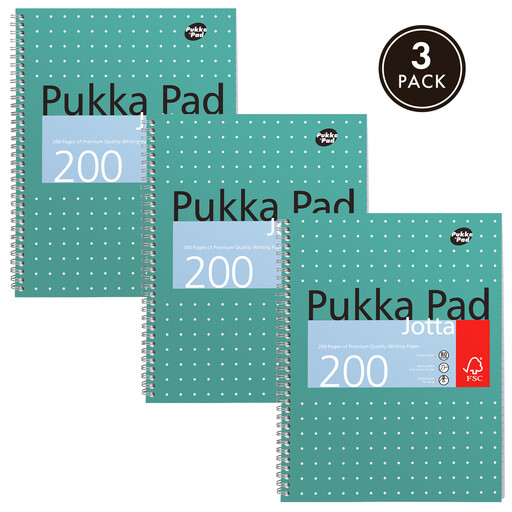
Why This Fits Their Persona: A metallic cover and wirebound construction suit professionals, tutors and students who want a more structured notebook for meetings, classes or personal projects.
The four-hole punched margin helps pages remain usable for filing after removal, avoiding the mismatch between decorative design and practical storage.
Pack of three; 200 pages each; 80 gsm paper; 8 mm lines; wirebound format; true A4 pages with punched margin.
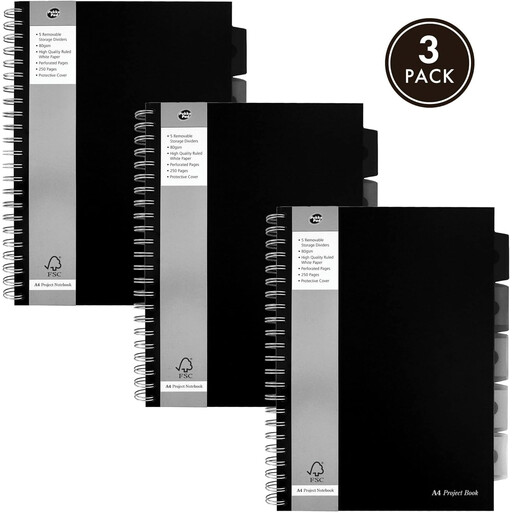
Why This Fits Their Persona: Project managers, teachers, business owners and office teams can assign each book to a client, module, workflow or meeting stream.
The wipe-clean polypropylene cover addresses everyday scuffs and spills, while dividers and pockets prevent project paperwork from being mixed together.
250 pages per book; FSC-certified 80 gsm paper; five repositionable dividers with storage pockets; perforated pages; black cover.
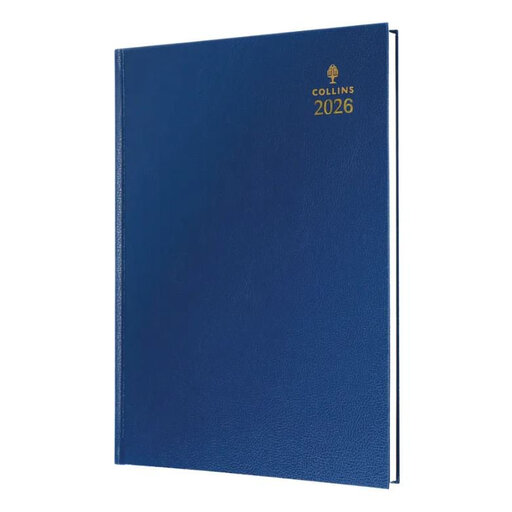
Why This Fits Their Persona: Suitable for users who need appointments, deadlines, bills and expenses in one planning system at home, school or work.
The structured sections offer more than blank pages, helping users avoid buying a general notebook when a diary layout is the actual requirement.
Lay-flat binding; three-year calendars; current and forward planners; financial expenses tracker; bills organiser. Check the listed dimensions before ordering, as the specification describes the item as A5.
We have compiled a complete, real-time list of products that fully satisfy these strict selection criteria and UK safety regulations.
Before adding A4 notebooks to your basket, check:
For students, pastel notepads can separate modules visually. For offices, black project books offer a consistent appearance across client or team work. For meetings and classes, a wirebound notebook can open flat, while a diary is more appropriate for scheduling than extended notes.
Many are, but the filing method differs. Look for four-hole punched margins if you want to remove pages and place them directly into a standard UK A4 ring binder. Perforated-only pages will generally require a separate hole punch.
80 gsm paper is commonly suitable for pencils, ballpoint pens and many gel pens. If you use fountain pens, marker pens or wet ink, check for bleed-through before committing to a full set.
Lifespan depends on page count, binding, storage and frequency of use. A 200-page pad may suit a single subject or short project, while a 250-page project book with dividers can support longer-running work. Keep notebooks dry, avoid bending the covers and do not overload pockets with bulky documents.