
24/7 Customer Support

Free returns

Same-day & Next-day Delivery

Quality Guaranteed

Unlock Your Welcome Offers: FREE Delivery | Up to 80% OFF | Free 30-day JoyPlus trial
Download the APP
Choosing the right A4 printer paper can feel like a minor decision, but for any busy UK office, it has a significant impact on daily operations. The wrong choice can lead to frustrating printer jams, faded prints and wasted resources. For office managers and procurement officers tasked with buying bulk A4 paper, finding a reliable product that balances quality with cost-efficiency is essential.
This guide is designed to simplify that process. We will walk through the key factors to consider when selecting office paper and highlight a few standout options that deliver consistent performance for different business needs.
Before you purchase your next box of A4 paper, understanding a few technical specifications can help you make a more informed decision.
Paper weight is measured in grams per square metre (gsm) and is the most common indicator of quality and thickness.
Paper brightness, often measured on the CIE whiteness scale, affects the contrast and vibrancy of your prints. A higher number indicates a whiter sheet, which makes black text appear sharper and colours more vivid. Opacity refers to how much light passes through the paper. High opacity is crucial for double-sided printing to prevent text and images from showing through on the other side.
Consider what you will be printing. For internal documents and drafts, a standard copy paper like 75gsm or 80gsm is perfectly adequate. For external communications, marketing materials or important presentations, investing in a heavier presentation paper (100gsm or more) can significantly enhance the professional appearance of your documents.
Here are our recommendations for reliable A4 printer paper, selected to meet the diverse needs of a modern office.
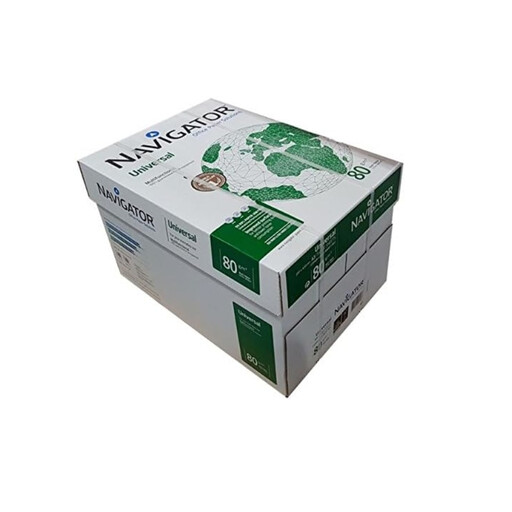
Why It Stands Out: This Navigator paper is engineered to be a dependable workhorse for any office. Its 80gsm weight strikes an excellent balance between everyday functionality and a quality feel. The ultra-smooth finish not only contributes to sharp, clear prints but also helps reduce wear on printer components over time. According to the manufacturer, its 99.99% jam-free guarantee is a key feature for offices where printer downtime is a critical concern.
Pros:
Who is it for? Office managers and small businesses looking for a reliable, high-performing multipurpose paper that handles everything from text documents to colour graphics with consistent quality. It is an ideal choice for those who want to minimise printing errors and maintenance issues.
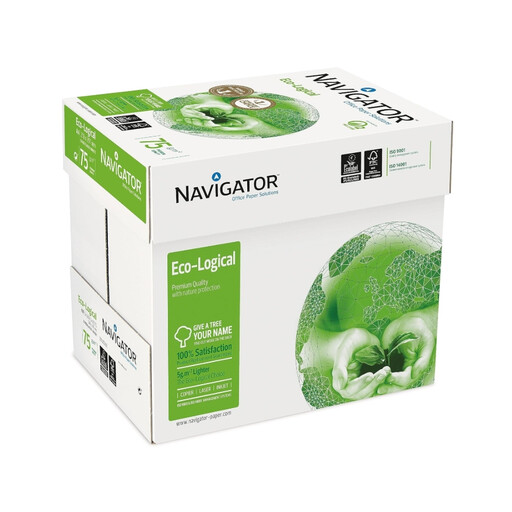
Why It Stands Out: This 75gsm paper offers a practical solution for businesses prioritising both cost-efficiency and sustainability. It is produced using fewer natural resources and holds the EU Ecolabel certification, verifying its lower environmental impact. Despite being lighter, it maintains a high level of whiteness (169 CIE) and good opacity, making it perfectly suitable for general office use and double-sided printing of internal documents.
Pros:
Who is it for? Procurement officers and businesses focused on reducing operational costs and their environmental footprint. It is an excellent choice for internal communications, drafts and everyday copying where premium thickness is not a requirement.
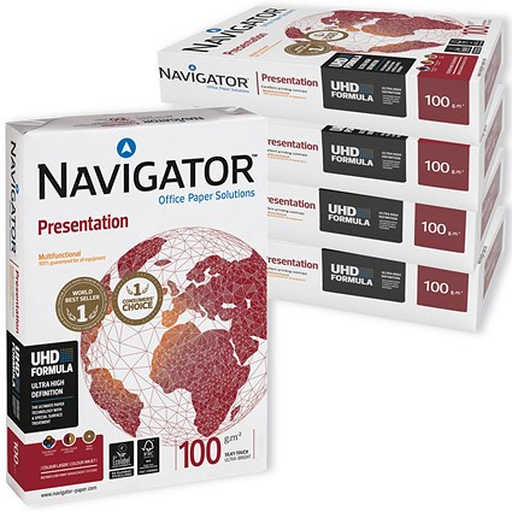
Why It Stands Out: When first impressions matter, this 100gsm paper delivers. Its superior thickness and silky-smooth finish provide a tangible sense of quality that elevates important documents. It is specifically engineered for high-impact colour printing and its excellent opacity makes it ideal for professional, double-sided reports and presentations with no show-through. The special surface treatment also helps optimise ink and toner usage.
Pros:
Who is it for? Businesses and professionals who regularly produce client-facing materials, such as proposals, contracts and marketing brochures. This presentation paper ensures your most important documents look and feel professional.
If these recommendations don't quite fit your specific requirements, or if you're interested in exploring a wider variety of paper types and brands, we invite you to browse our complete collection.
Explore our full range of copy paper here.
The primary difference is thickness and weight. 80gsm paper is slightly thicker and more opaque than 75gsm paper. While 75gsm is excellent for high-volume, internal use and is often more economical, 80gsm is considered the standard for multipurpose paper due to its enhanced durability and feel, making it suitable for a broader range of applications.
Most modern office printers and copiers are designed to handle a range of paper weights, typically from 60gsm to 120gsm or higher. While most standard A4 printer paper (75gsm, 80gsm and 100gsm) will be compatible, it is always a good practice to check your printer's specifications, especially before using very thick or specialised paper. Using a compatible paper, like the universally guaranteed Navigator paper, helps ensure smooth, jam-free operation.
Yes, for most businesses, buying a box of A4 paper (which typically contains 5 reams, or 2,500 sheets) is significantly more cost-effective than purchasing individual reams. Buying bulk A4 paper reduces the cost per sheet and minimises the frequency of reordering, saving both time and money for the procurement department.