
24/7 Customer Support

Free returns

Same-day & Next-day Delivery

Quality Guaranteed

Unlock Your Welcome Offers: FREE Delivery | Up to 80% OFF | Free 30-day JoyPlus trial
Download the APP
As a Joybuy Product Recommendation Officer, my role is to help you find practical, reliable products that genuinely meet your needs. When it comes to staying organised, whether for university, the office or personal projects, the right A4 project book can be a game-changer. However, the market is filled with options that look good on the shelf but fail in practice. This guide will help you sidestep the common purchasing mistakes and identify the features that truly matter.
Many of us have been let down by stationery that doesn't last. Before you buy another notebook that falls apart by November, let's look at the three most common pitfalls that lead to wasted money and disorganised notes.
To ensure your next office organiser notebook or student project book is a worthwhile investment, focus on these three non-negotiable parameters.
The dividers are the heart of any A4 notebook with dividers. You have two main types:
The writing experience is defined by the paper. The key metric to check is GSM (Grams per Square Metre).
Also, consider the page count. A 250 page A4 notebook offers substantial capacity for a full academic year or a large-scale project, preventing the need to carry multiple books. Finally, look for a perforated ruled notebook; micro-perforated pages allow you to tear out sheets cleanly for filing or sharing without a messy, ripped edge.
The cover is your notebook's first line of defence. While a simple card cover is light, it offers minimal protection. For a notebook that needs to survive daily commutes and busy schedules, a polypropylene (polyprop) cover is a far more practical choice. This durable plastic is resistant to bending, scuffs and spills. It can be wiped clean, keeping your notes looking professional throughout their use.
Based on these practical criteria, here are a few recommendations matched to different user needs.
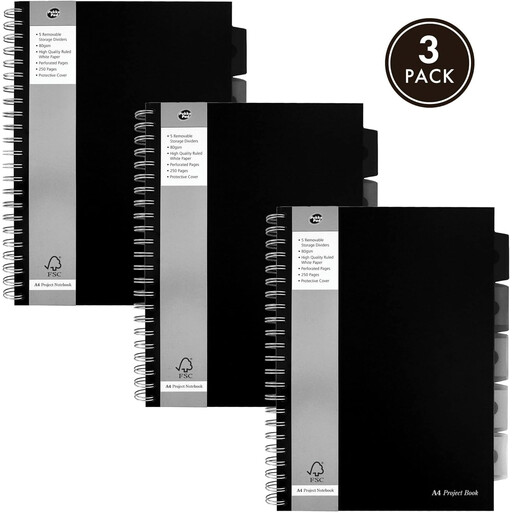
Why This Fits Their Persona: Ideal for the university student or project manager juggling multiple subjects or clients. This A4 multipack notebook provides a comprehensive system for long-term organisation, removing the need for separate notebooks for each topic.
It directly solves all three common pitfalls with a durable, wipe-clean polypropylene cover, five sturdy and repositionable colour-coded dividers with storage pockets and high-quality 80 gsm paper.
The combination of 250 pages, pocketed dividers and micro-perforated pages creates a complete organisational tool in a single, robust package.
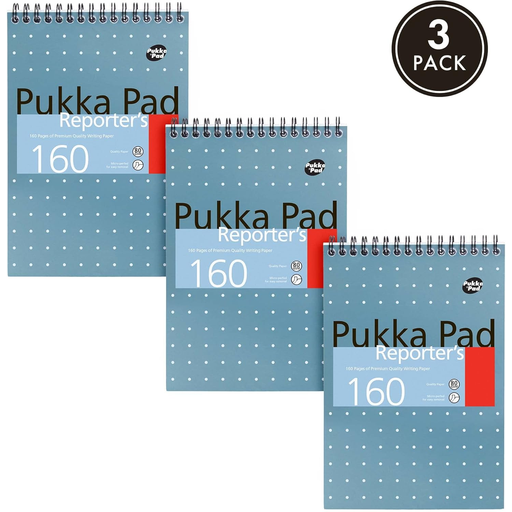
Why This Fits Their Persona: Perfect for professionals, journalists or anyone who takes notes while standing or in meetings. Its compact size (140mm x 205mm) is far more practical for portability than a full A4 book.
It avoids the trap of buying a large, heavy project book that gets left at the office. It uses quality 80 gsm paper, so notes are clear, and the head-bound wire binding provides a sturdy, flat writing surface anywhere.
The perforated pages allow quick-fire notes to be cleanly removed and filed into a larger A4 project book or ring binder back at your desk, creating a flexible two-part system.
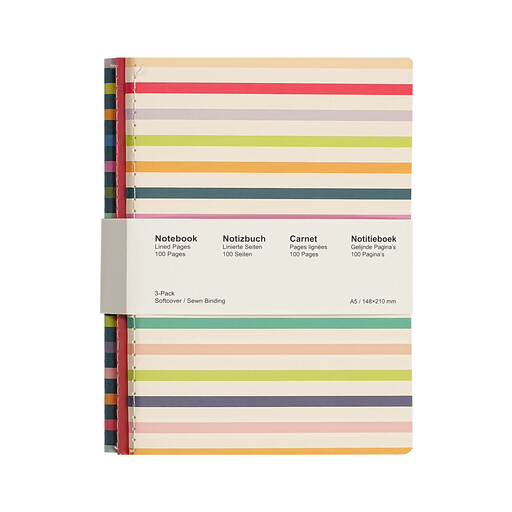
Why This Fits Their Persona: For students who prefer a lightweight, flexible system. This 3-pack allows you to dedicate a separate, slim notebook to each subject, avoiding the bulk of a single large book while still keeping work organised.
Instead of one cheap, low-quality book, this multipack provides three well-made notebooks. The stitch binding allows them to lay flat, and the 80g cream-coloured paper prevents ink bleed-through, ensuring a good writing experience.
This is a cost-effective and highly portable system. You only need to carry the specific notebook for that day's classes, lightening your bag load significantly.
We have compiled a complete, real-time list of products that fully satisfy these strict selection criteria and UK safety regulations.
The key difference lies in organisation. A standard notebook is a simple book of lined or plain paper. An A4 project book is specifically designed to manage multiple topics within one volume. Its defining features are built-in dividers (ideally repositionable), a higher page count and often includes extras like storage pockets and perforated pages for filing.
For most users, 80gsm paper is a reliable choice for fountain pens and other 'wet' writers like gel or rollerball pens. It provides a good balance of smoothness and thickness, preventing the majority of ink feathering and bleed-through. While users of exceptionally broad nibs or very saturated inks might still notice some minor ghosting (where the writing is faintly visible on the reverse), it is a significant improvement over standard 70gsm paper and is suitable for everyday academic and professional use.
Durability starts with your purchase. Choose a model with a sturdy polypropylene cover and robust wire binding. During use, avoid overstuffing the storage pockets, as this puts strain on the dividers and binding. If you have fixed card dividers, you can reinforce the tabs with clear tape before they show signs of wear. By selecting a well-constructed student project book from the start, you give it the best chance of lasting through to your final exams.