Who needs which kind of print?
The useful starting point is what the printed portrait must do in the studio: support frequent drafts, provide a larger working reference or help people evaluate colour consistently.
Studios printing frequent reference sheets
If portrait studies, mood boards and annotated drafts are printed regularly, pay attention to the ink-replacement routine, paper handling and how easily colleagues can repeat a print. Epson United Kingdom and Canon UK describe refillable photo-printer routes, but their supported print sizes differ by model.
Artists working from larger portraits
For references that need space around the image for tonal or composition notes, decide whether A4 is enough before choosing a printer. Epson United Kingdom and Canon UK list A3+ photo models as well as smaller-format options; check the exact model’s supported paper size.
People evaluating portrait colour and tones
When several people compare prints with edited images, a shared choice of paper, media settings and ICC profiles helps keep the workflow consistent. Epson United Kingdom and Canon UK describe profile-setting tools, but the settings still need to match the paper and printer being used.
What matters when choosing?
Set the largest required sheet size first. Then decide whether frequent refilling, access for several users or a managed colour workflow is the studio’s main priority.
| Concern |
What to check |
Who this matters to |
| Print size |
Confirm the largest supported sheet and whether your chosen paper needs a particular feed. Canon UK specifies borderless printing up to A4 for the PIXMA G650; its PIXMA PRO-200S and imagePROGRAF PRO-310, and Epson United Kingdom’s EcoTank ET-8550, offer A3+ output. |
If I annotate a large portrait, I need room for the image and my notes on the same sheet. Around 31% of consumers put larger-format references first. |
| Repeated printing |
Check the replacement-ink format and the print size behind any stated photo yield; a figure for small photos cannot be applied directly to larger portraits. |
With regular rounds of portrait drafts, I want ink replacement to interrupt studio work as little as possible. Around 31% of consumers primarily prioritise the repeated-print workflow. |
| Shared access |
Match the exact model’s Wi-Fi, Ethernet or direct-print options to the studio network and users’ devices. Assign someone to maintain shared print settings. |
If several artists send files from different devices, I need a printing method they can all use. For around 23% of consumers, shared access is the main concern. |
| Colour consistency |
Check that settings and ICC profiles are available for the intended paper, then use a consistent print preset. Canon UK and Epson United Kingdom both describe paper-profile workflows. |
When I compare dark tones across portrait prints, changing paper settings makes those references harder to judge. Repeatable colour is the primary need for around 15% of consumers. |
Brands to consider for portrait-reference printing
These examples show different printer routes within each brand’s range, not a reason to treat every model from that brand as interchangeable.
Epson
Epson United Kingdom lists both the refillable EcoTank ET-8550 for A3+ photos and the SureColor SC-P700 professional photo printer.
- The ET-8550 specifies A3+ borderless printing and Wi-Fi, Wi-Fi Direct, Ethernet and Apple AirPrint.
- The SC-P700’s UltraChrome Pro 10 ink and black-enhance-overcoat technology do not remove the need to choose suitable paper and settings for a portrait workflow.
Canon
Canon UK describes an A4 refillable multifunction route in the PIXMA G650, an A3+ eight-dye-ink route in the PIXMA PRO-200S and an A3+ pigment route in the imagePROGRAF PRO-310.
- These models give studios a choice between smaller refillable prints and larger dedicated photo-printing routes.
- Their paper-size limits, ink systems and scan or copy functions differ; choose by exact model rather than brand name alone.
HP
HP Support UK lists the ENVY Inspire 7920 as an option for smaller references when document, copy and scan tasks also matter.
- The specified features include dual-band Wi-Fi and a separate photo tray.
- HP specifies borderless printing only up to 216 × 297 mm for this model, so it does not meet an A3 reference-sheet requirement.
Joybuy products for this studio setup
For larger portrait-reference sheets, consider the Epson model alongside the studio’s paper and colour-setting needs. The Canon model is a narrower choice for smaller references when copying and scanning are also useful.
 No image available
Epson EcoTank ET-18100
Consider this model when the studio needs larger portrait-reference sheets and shared printing. Before choosing it, confirm support for your intended paper and colour settings, and assess ink use at your usual portrait size.
View on Joybuy
 No image available
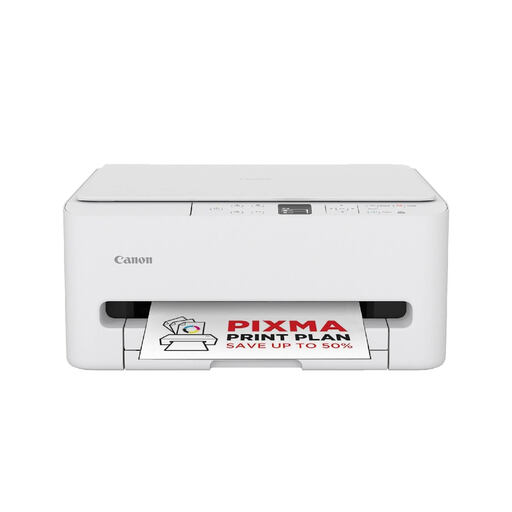
Canon PIXMA TS6550i
Consider this model if smaller portrait references and scanning or copying suit the studio’s work. It is not the choice for sheets larger than A4; check its supported photo papers and colour settings before relying on it for portrait evaluation.
View on Joybuy
Common questions
Is A4 enough for shared-studio portrait references?
A4 is enough if the studio mainly prints handouts or smaller portrait studies; choose an A3 or A3+ model if artists need larger sheets for viewing and annotation. Canon UK specifies borderless output up to A4 for the PIXMA G650, while Canon’s PIXMA PRO-200S and imagePROGRAF PRO-310 and Epson United Kingdom’s EcoTank ET-8550 offer A3+ output.
Can several artists use the same photo printer?
Yes, if the exact printer’s connection methods work with the studio network and each artist’s device. Epson United Kingdom lists Wi-Fi, Wi-Fi Direct, Ethernet and Apple AirPrint for the ET-8550; Canon UK lists Wi-Fi and Ethernet for the PRO-310. Check device support and guest-network arrangements before purchase.
How can we keep portrait prints more consistent between users?
Use the same paper, matching media setting and ICC profile, then keep those choices in a shared print preset. Canon UK describes profiles selectable through its driver and professional photo applications, while Epson United Kingdom describes installing profiles together with media settings for supported media.
Can a stated photo yield tell us how long ink will last for portraits?
Not without checking the print size and conditions behind that figure. Canon UK’s PIXMA G650 photo-yield claim concerns 4 × 6-inch colour photos, so it should not be applied directly to A4 portraits. Use the studio’s intended sheet size and paper when planning ink replacements.


